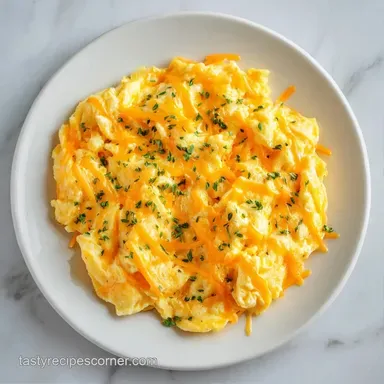
Fluffy Cheesy Scrambled Eggs: Soft and Rich
- Time: 2 min active + 5 min cook
- Flavor/Texture Hook: Gooey, rich, and soft folds
- Perfect for: Speedy weekday mornings
That sound of butter foaming in a pan is basically my alarm clock. There is nothing quite like the smell of sharp cheddar melting into warm eggs to actually wake you up when you're still half asleep.
I used to just throw everything in a pan and hope for the best, but that usually led to dry, rubbery chunks that tasted more like sponges than breakfast.
The trick is all about patience and the right timing with the cheese. You want a result that stays soft and creamy, not something that weeps water on your plate. This is a quick win that takes less than ten minutes from start to finish.
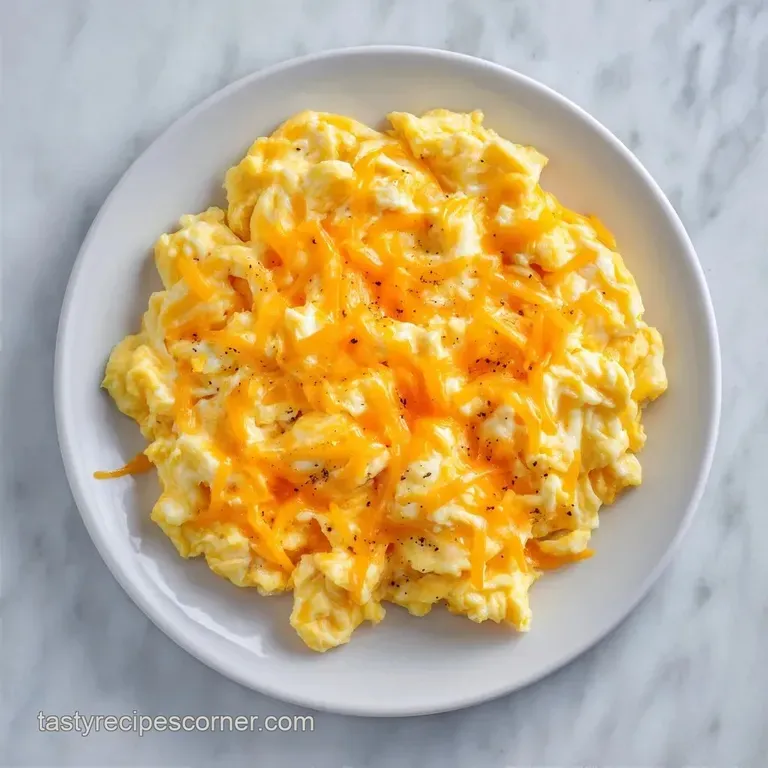
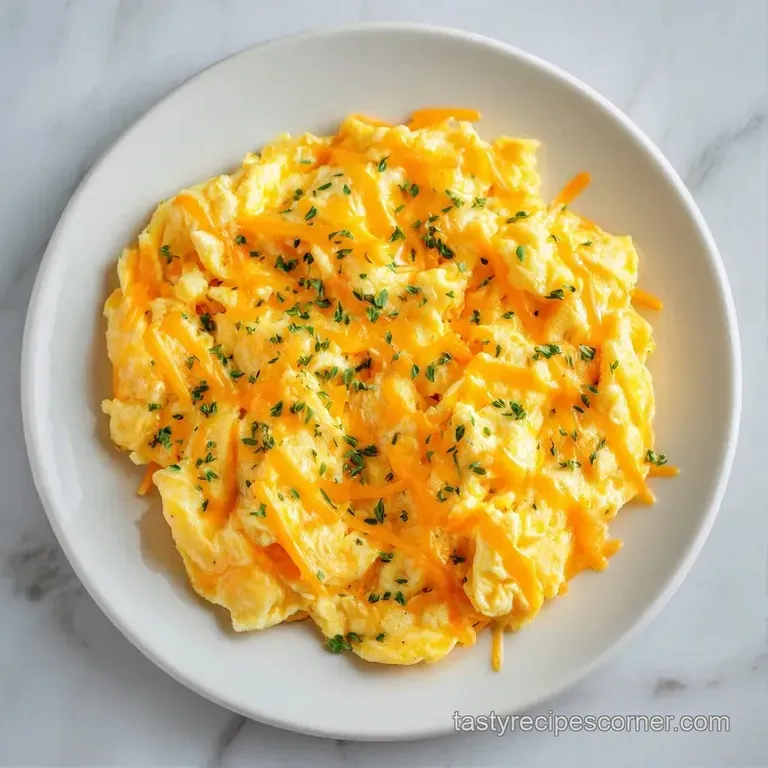
You can expect a plate of Cheesy Scrambled Eggs that are rich, filling, and hold their shape without being tough. It is a straightforward method that works every time, even if you aren't a morning person.
Making Fluffy Cheesy Scrambled Eggs
Low and Slow: Keeping the heat medium low prevents the proteins from tightening too quickly, which stops the eggs from getting tough.
The Milk Addition: A splash of milk dilutes the egg proteins, allowing them to hold more moisture and stay tender.
Late Cheese Entry: Adding cheese at the very end ensures it melts into a gooey bind rather than separating into oil.
According to Serious Eats, seasoning eggs early helps the salt penetrate the proteins, which can actually help them retain more moisture during the cook.
| Cheese Type | Melt Quality | Flavor Profile | Best For |
|---|---|---|---|
| Freshly Grated | Smooth & Fast | Pure, Sharp | High end feel |
| Pre shredded | Slightly Slower | Milder | Maximum speed |
| Sliced | Patchy | Variable | Rustic style |
Why These Ingredients Work
| Ingredient | What It Does | Best Swap |
|---|---|---|
| Unsalted Butter | Adds richness and prevents sticking | Olive oil (less creamy) |
| Whole Milk | Creates a softer curd | Heavy cream (richer) |
| Sharp Cheddar | Provides the salty, punchy flavor | Pepper Jack (spicier) |
| Large Eggs | The structural base | Egg whites (leaner) |
What You'll Need
- 2 large eggs Why this? Standard size for consistent cook times
- 1 tbsp (14g) unsalted butter Why this? Better flavor than oil
- 1/4 tsp (1.5g) salt Why this? Basic flavor enhancer
- 1/8 tsp (0.5g) black pepper Why this? Adds a subtle bite
- 1 tbsp (15ml) whole milk Why this? Keeps the texture soft
- 1/4 cup (28g) shredded sharp cheddar cheese Why this? Strong flavor that cuts through the fat
Substitutions:
- Butter → Coconut oil (works well, adds a hint of sweetness)
- Whole milk → Almond milk (use unsweetened; slightly thinner result)
- Sharp cheddar → Gruyère (more nutty, very fancy)
- Large eggs → 3 small eggs (adjusts the volume)
Tools for Quick Breakfast
You don't need a kitchen full of gadgets for this. A simple 8 inch non stick skillet is your best friend here because it makes cleanup fast. I always use a silicone spatula since it can scrape the edges without scratching the pan.
A small mixing bowl and a whisk (or a fork) are the only other requirements. If you're in a rush, you can whisk right in the bowl you're using to prep. Keep it simple.
Easy Steps for Cheesy Eggs
- Crack the eggs into a bowl. Add the milk, salt, and pepper. Whisk vigorously until the mixture is a uniform color with no visible streaks of egg white.
- Melt the butter in an 8 inch non stick skillet over medium low heat until it foams but doesn't brown.
- Pour in the egg mixture. Let it sit undisturbed for about 30 seconds until the edges just begin to set.
- Using a silicone spatula, gently push the eggs from the edges toward the center to create large, soft folds.
- Continue pushing the eggs slowly until they look slightly underdone and wet.
- Remove the pan from the heat immediately. Note: Carryover heat will finish the cooking.
- Immediately sprinkle the shredded cheese over the eggs.
- Fold one last time until the cheese is melted and gooey.
- Slide the Cheesy Scrambled Eggs onto a warm plate.
Troubleshooting the Curds
| Issue | Solution |
|---|---|
| Why Your Eggs Are Rubbery | This usually happens when the heat is too high. The proteins bond too tightly and squeeze out the moisture. Turn the dial down and be patient with the folds. |
| Why Your Eggs Weep Water | Watery eggs happen when they overcook or when the cheese is added too early and separates. Pull the pan off the heat while the eggs still look a bit wet. |
| Why the Cheese Didn't Melt | If the pan cooled down too much before adding the cheese, it won't melt. Ensure you add the cheese immediately after removing the pan from the stove. |
Variations and Flavor Swaps
If you want to switch things up, try adding a pinch of smoked paprika or some chopped chives at the end. For a heartier meal, I love adding cooked bacon bits. These Cheesy Scrambled Eggs with bacon are basically a meal in one pan.
If you're feeling like something different for breakfast, these pair great with my Cottage Cheese Breakfast Biscuits. For those who want a dairy-free version, use a vegan butter alternative and a nut based cheese. The texture is similar, though the flavor is a bit more mild.
| Goal | Adjustment | Result |
|---|---|---|
| Extra Rich | Swap milk for cream | Silky, heavier texture |
| Spicy | Use Pepper Jack cheese | Zesty morning kick |
| Low Cal | Use 1 whole egg + 2 whites | Lighter, higher protein |
Egg Myths Debunked
Some people think you should salt eggs right before they hit the pan, while others swear by salting at the end. The truth is that salting early actually breaks down the protein structures a bit, which can lead to a more tender curd.
Another myth is that you need to beat eggs for minutes to get them fluffy. You only need to whisk until the whites and yolks are fully combined. Over whisking can actually incorporate too much air, which causes the eggs to puff up and then collapse into a flat pancake.
Storage and Waste Tips
You can keep these eggs in an airtight container in the fridge for up to 2 days. To reheat, use a microwave on medium power in 20 second bursts so they don't turn into rubber. I don't recommend freezing them, as the texture becomes grainy.
To avoid waste, use the eggshells in your garden as a calcium boost for your plants. If you have leftover shredded cheese, freeze it in a small bag. According to USDA FoodData, keeping fats stable is key to flavor, so keep your cheese sealed tight to avoid fridge odors.
Best Ways to Serve These
Cheesy Scrambled Eggs on toast is the classic move. I prefer a thick slice of sourdough that is toasted until it's almost burnt. The crunch of the bread balances the softness of the eggs.
If you're serving this for a brunch crowd, try placing the eggs over a bed of sautéed spinach or avocado slices. For a more filling option, add a side of roasted potatoes. If you find yourself craving something similar for dinner, you might like my Creamy Garlic Chicken for that same rich, comforting vibe.
Honestly, just don't overthink it. These Cheesy Scrambled Eggs are meant to be simple and comforting. Just keep the heat low, add the cheese at the end, and you've got a winning morning.
Recipe FAQs
How to make cheesy scrambled eggs?
Whisk eggs, milk, salt, and pepper vigorously, then cook in melted butter over medium low heat. Gently push the eggs toward the center to create folds and stir in shredded sharp cheddar cheese while still slightly wet.
What kind of cheese melts best in eggs?
Shredded sharp cheddar. Its fat content ensures a gooey texture and bold flavor that blends seamlessly without separating.
Are scrambled eggs good for a keto diet?
Yes. They are naturally high in protein and healthy fats while remaining very low in carbohydrates.
How to make soft scrambled eggs like the restaurants do?
Cook over medium low heat and use a silicone spatula to push eggs from the edges toward the center. Remove the pan from heat while the eggs look slightly underdone and wet to maintain a tender texture.
Why do restaurant scrambled eggs taste better?
They use low heat and constant movement. This prevents proteins from over bonding, creating a creamy texture. If you mastered this temperature precision here, apply it to our breakfast casserole for consistent results.
Why are my scrambled eggs rubbery?
The heat was too high. When eggs overheat, the proteins bond too tightly and squeeze out the moisture, resulting in a tough texture.
Why are my eggs weeping water?
They were overcooked. This happens when the eggs stay on the heat too long or the cheese is added too early, causing the moisture to separate.
Cheesy Scrambled Eggs