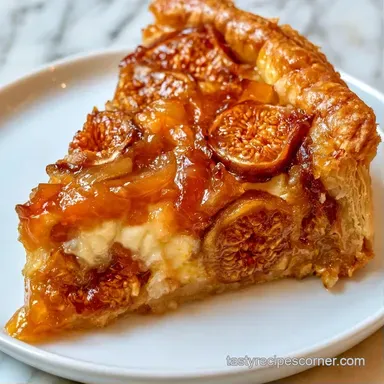
Savory Fig Tart with Goat Cheese
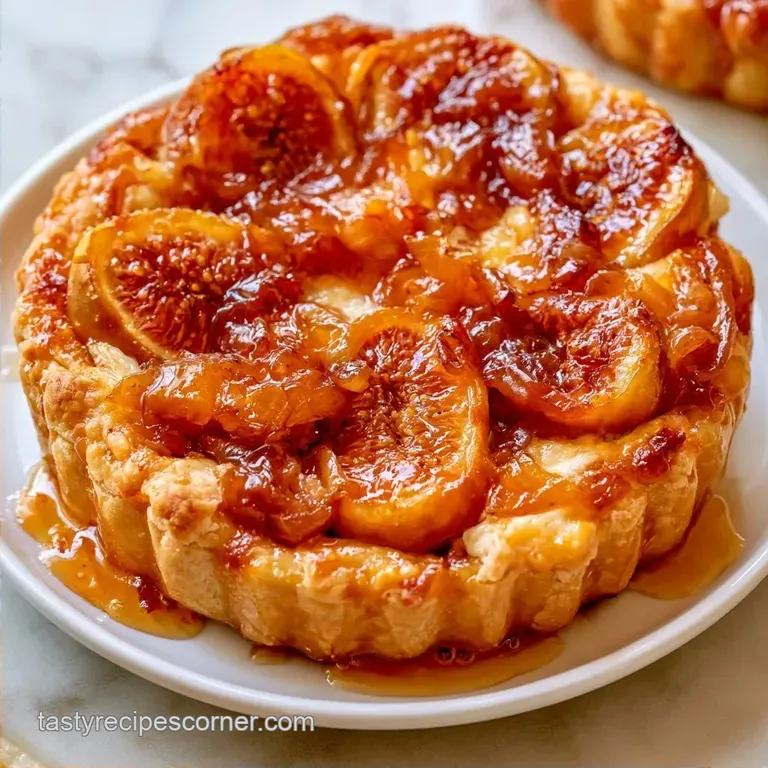
- Time: 20 minutes prep + 25 minutes in the oven
- The Vibe: Flaky, buttery pastry paired with luscious, honey-drizzled figs
- Best for: Festive parties, fall brunches, or intimate date nights
There is something about the aroma of thyme and honey wafting from a warm oven that feels purely autumnal. I first served this to friends on a drizzly Tuesday last October; with a few bottles of wine and some artisan cheeses on the table, I wanted a dish that seemed labor-intensive, despite the fact that I'd spent the previous hour clearing my inbox.
That is exactly what this Savory Fig Tart offers. It arrives at the table in stunning hues of gold and deep purple, offering a balanced blend of sweet, salty, and earthy notes. It's a showstopping appetizer that doesn't demand professional culinary skills to master.
The real magic lies in the juxtaposition of the tender, warm figs against the crunch of the pastry. It's a foolproof choice for anyone seeking a refined presentation without the anxiety of a difficult process.
Recipe Specs
This recipe focuses on a fast track approach using high-quality store-bought pastry. While you can make your own dough, the commercial stuff provides a consistent rise that's hard to beat for a weeknight treat.
| Feature | Fast (Puff Pastry) | Classic (Shortcrust) |
|---|---|---|
| Prep Time | 20 minutes | 60 minutes |
| Texture | Airy and light | Dense and crumbly |
| Effort | Low | Medium |
- - For a crispier base
- Prick the center of the pastry with a fork.
- - For more tang
- Use a lemon zest infused goat cheese.
- - For a sweeter finish
- Increase honey to 2 tbsp.
Gathering Your Essentials
The success of this dish depends on the quality of your figs. Select fruit that yields slightly to a gentle press; if they are too firm, they won't glaze correctly in the oven.
For the Base and Spread
- 1 sheet (490g) puff pastry Role: Provides the necessary lift and a buttery crunch
- 4 oz (113g) goat cheese Role: Adds a tangy, creamy contrast to the figs
- 1 cup (150g) caramelized onions Role: Brings a rich, jammy sweetness
- 1 tbsp (15ml) olive oil Role: Ensures the pastry edges brown evenly
For the Topping
- 1 lb (450g) fresh figs Role: The core ingredient for an earthy, sweet flavor
- 1 tbsp (21g) honey Role: Produces a sweet, glossy glaze
- 1 tsp (1g) fresh thyme leaves Role: Cuts through the richness with a lemony note
- 1/2 tsp (3g) sea salt Role: Enhances the figs' natural sugars
- 1/4 tsp (1g) black pepper Role: Adds a subtle, woody heat
| Original Ingredient | Substitute | Why It Works |
|---|---|---|
| Goat Cheese | Feta | Saltier punch. Note: Much brinier flavor |
| Fresh Figs | Pears | Similar texture. Note: Milder, cleaner taste |
| Honey | Maple Syrup | Same viscosity. Note: Adds woodier notes |
Equipment Needed
Basic kitchen tools and a standard baking tray are all you need. While I prefer a medium offset spatula for spreading the cheese, a simple butter knife works perfectly well.
Grab a sharp knife to score the pastry. Aim for a shallow indentation that doesn't pierce through to the parchment; cutting too deeply could cause the cheese filling to leak out the sides.
Lastly, make sure you have parchment paper on hand. Since puff pastry tends to cling to metal pans, using it ensures a smooth release and keeps your tart from becoming a crumbled mess.
Bringing It Together
Now, let's get this ready for baking. It is important to work efficiently so the puff pastry stays chilled and maintains its volume.
Step 1: Preparing the Foundation
Set your oven to 400°F (200°C) and place parchment paper on a baking tray. Roll out the thawed puff pastry into a rectangular shape. Carefully score a 1-inch border around the perimeter with a knife, being careful not to cut all the way through.
Step 2: Layering the Savory Base
Spread the room temperature goat cheese evenly within the scored border. Spoon the cooled caramelized onions over the cheese in a thin, uniform layer. Note: Using cooled onions prevents the cheese from melting too quickly.
Step 3: Arranging the Figs
Slice your figs into wedges and press them into the onion mixture. Overlap them slightly, like shingles on a roof, to cover the base. Use a brush to apply olive oil to the exposed pastry edges.
Step 4: The Final Bake
Bake for 20-25 minutes until the pastry edges are puffed and golden brown and the figs appear glossy. The tart is finished once the edges reach a deep mahogany color.
Step 5: The Finishing Touch
As soon as you remove the tart from the oven, drizzle the honey over the hot figs. Finish by sprinkling fresh thyme, sea salt, and black pepper across the top.
Chef's Note: Don't omit the salt. A pinch of sea salt on the honey-glazed figs enhances the flavors in a way that sugar alone cannot.
The Texture Logic
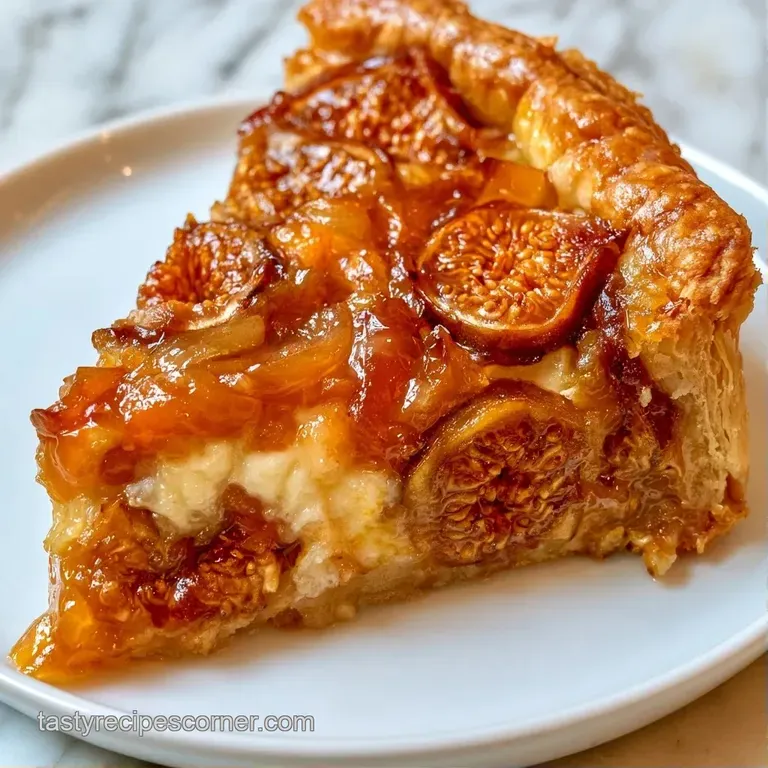
The success of this Savory Fig Tart comes down to how we manage moisture. We're layering ingredients that can get wet, which is the enemy of a crisp crust.
The Scoring Method: Creating that 1 inch border allows the edges to rise freely while the center stays weighted down by the toppings. This gives you that high, airy rim and a flat, stable center.
The Moisture Barrier: The goat cheese acts as a fat based seal between the wet onions and the dough. This prevents the pastry from absorbing liquid, which keeps the bottom from getting gummy.
If you're curious about other crust options, a Keto Fathead Dough style base can work if you're avoiding grains, though you'll lose that specific puff pastry lift.
Avoiding Kitchen Disasters
Even straightforward recipes can have hiccups. I've dealt with "soggy bottoms" before, and it usually comes down to one of these three issues.
Preventing Soggy Bottoms
If your figs are very juicy, use a paper towel to pat the cut sides dry before adding them to the tart. Make sure your caramelized onions have cooled completely; otherwise, they'll release steam directly into the dough, resulting in a soft rather than crisp crust.
Stopping Burnt Edges
Should the edges brown too quickly while the center remains pale, cover the tart loosely with aluminum foil. This shields the top from direct heat, letting the base finish cooking.
While USDA food safety guidelines aren't meant for the pastry, aiming for a fig temperature of 165°F ensures the best texture.
Fixing Runny Toppings
This is often the result of using too many onions or goat cheese that is too warm. Ensure your cheese stays at a cool room temperature before you spread it. If the tart seems too liquidy once baked, let it rest for 5-10 minutes before cutting.
This gives the fats and sugars time to set, ensuring cleaner slices.
Freezing and Reheating Guide
Store this tart in an airtight container in the refrigerator for a maximum of 3 days. Be aware that the pastry may lose its crispness as it absorbs moisture from the cheese and figs.
For a Professional Finish
Skip the microwave to prevent the crust from becoming chewy. Instead, place the slices on a baking sheet and warm them at 350°F (180°C) for 5-8 minutes. This restores the shatter and heats the goat cheese without overcooking the figs.
Freezer Tips
Avoid freezing the Savory Fig Tart once it's fully put together. Thawing figs can release too much liquid, which makes the crust soggy. If you're prepping in advance, freeze the pastry and caramelized onions separately, then assemble them fresh.
To minimize waste, use any extra caramelized onions to top burgers or stir them into a Savory Squash Sauce for a rich, sweet addition to your meal.
Different Flavor Twists
Once you've nailed the basic version, you can start playing with the toppings. The beauty of this dish is how well it handles bold flavors.
For a Bolder Punch
Swap the goat cheese for a crumbled gorgonzola or a strong blue cheese. This makes the Savory Fig Tart much more aggressive and salty, which pairs beautifully with a drizzle of a darker, forest honey.
For an Upside Down Fig Tart
Place the caramelized onions and sliced figs directly on the parchment paper first. Spread the goat cheese over the figs, then lay the puff pastry on top. Bake as usual, then flip the whole thing over after it comes out of the oven for a stunning, caramelized look.
For a Vegan Version
Use a cashew based vegan "cheese" and maple syrup instead of honey. You'll need to ensure the vegan cheese can withstand 400°F without melting into a puddle, so look for a firmer, block style variety.
Plate It Beautifully
Because the colors are so naturally rich, you don't need to do much to make this look like a professional piece of work. I focus on color balance to make the dish stand out on a platter.
First, you have the mahogany gold of the crust. Then, the deep, almost black purple of the roasted figs. Finally, the bright, vivid green of the fresh thyme. Adding the thyme after the bake is the key, as the oven turns the leaves brown and dull.
For a sophisticated platter, serve the Savory Fig Tart on a dark slate or a wooden board. Slice it into small rectangles rather than wedges to make it easier for guests to grab. A side of fresh arugula tossed in a simple lemon vinaigrette provides a peppery contrast that cuts through the richness of the cheese.
One final tip: let the tart rest for at least 5 minutes before cutting. This ensures the honey and cheese have settled, so you get clean, sharp edges on every slice. This Savory Fig Tart is all about those clean lines and bold colors.
Recipe FAQs
What is the best way to prep fresh figs?
Slice the fresh figs into wedges to press them into the filling.
Tip: Rinse and pat them dry to keep the crust crisp.
Which crust works best for this tart?
Puff pastry creates the necessary flaky texture and lift.
Tip: Allow the pastry to thaw completely before rolling.
Does the goat cheese create the savory base?
It provides a tangy foundation that balances the sweetness of the figs.
Tip: Ensure the cheese is at room temperature for easier spreading.
Is it true you should soak figs in baking soda?
That's a myth. Fresh figs should be used raw to maintain their natural flavor.
Tip: Use only cold water for rinsing.
How to achieve a golden-brown pastry?
Bake at 400°F for 20–25 minutes until the edges are puffed.
Tip: Brush the exposed edges with olive oil for a professional gloss.
Why score the pastry edges?
Scoring creates a border that keeps the goat cheese and onions contained.
Tip: If you enjoyed mastering dough handling here, see how the same principle works in Sourdough English Muffins.
Do dried figs work as a substitute?
Surprisingly, no. They lack the fresh moisture needed to blend with the cheese.
Tip: Use the freshest figs available for the best texture.
Savory Fig Tart with Goat Cheese