Herb Prime Rib Roast: Buttery Herb Crust
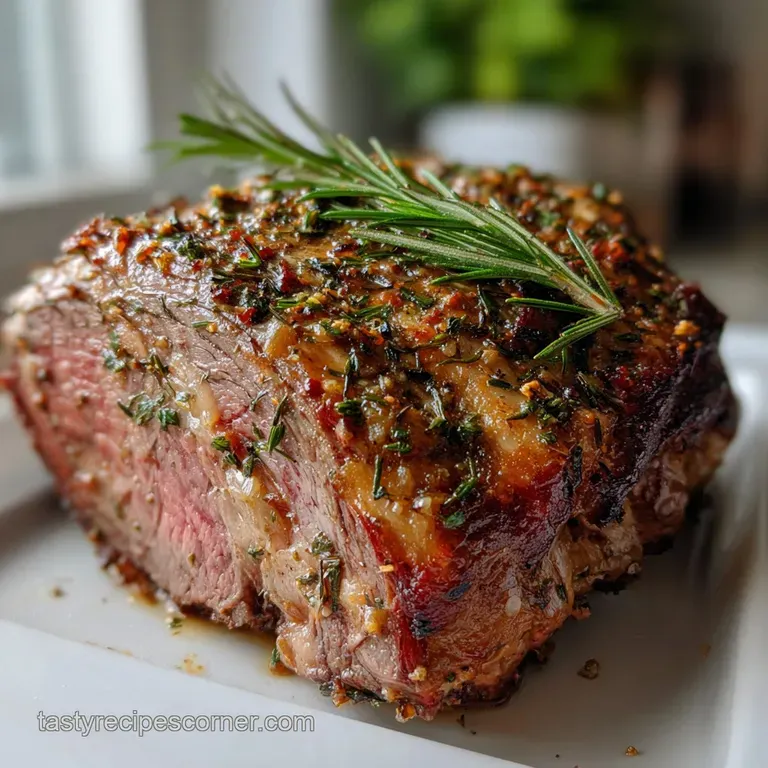
- Time: Active 30 minutes, Passive 2 hours 30 mins, Total 3 hours
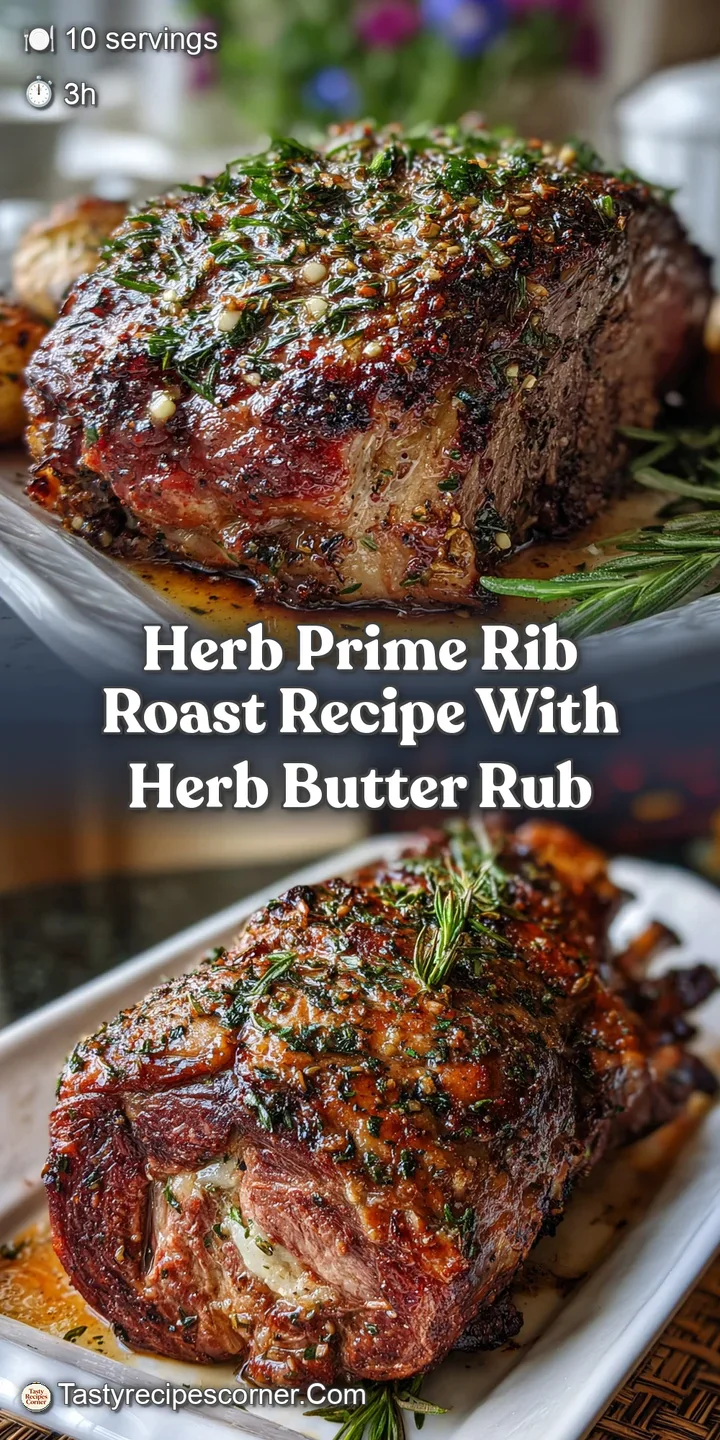
- Flavor/Texture Hook: Velvety, melt in-your mouth beef paired with a crisp, aromatic herb butter bark
- Perfect for: Holiday centerpieces, Sunday family dinners, or celebratory milestones
- Achieving The Contrast Between Crisp Skin And Tender Meat
- Critical Technical Specifications For Your Standing Rib Roast
- The Science Behind Each Herb And Fat Component
- Selecting The Best Tools For A High Heat Sear
- Executing The Low And Slow Roasting Technique
- Identifying And Correcting Common Roasting Errors Quickly
- Creative Substitutions For Dietary Needs And Flavors
- Smart Storage Strategies For Your Holiday Leftovers
- Pairing Your Hearty Roast With Soul Warming Sides
- Critical in Sodium
- Recipe FAQs
- 📝 Recipe Card
Achieving The Contrast Between Crisp Skin And Tender Meat
Muscle Relaxation: Cooking at a low temperature prevents the protein fibers from tightening too quickly, which keeps the interior buttery and prevents the gray ring of overcooked meat.
The Maillard Finish: A final blast of high heat triggers a rapid chemical reaction between amino acids and sugars, creating that dark, savory crust we all crave.
Surface Dehydration: Salt pulls moisture to the surface initially, but over time, it breaks down muscle proteins to allow the meat to reabsorb seasoned brine for deep flavor.
Quick Decision Doneness Guide
| Roast Size | Target Internal Temp | Rest Time | Visual Result |
|---|---|---|---|
| 3 Bone (approx. 6-7 lb) | 120°F (Rare) | 30 minutes | Cool red center |
| 4 Bone (approx. 8-9 lb) | 130°F (Med Rare) | 30 minutes | Warm pink center |
| 4 Bone (approx. 8-9 lb) | 140°F (Medium) | 30 minutes | Light pink throughout |
Chef Tip: Always pull your roast 5-10 degrees before your target temperature because the heat continues to rise while it sits on the counter.
Critical Technical Specifications For Your Standing Rib Roast
If you’re looking for something a bit leaner for a weeknight, my Top Round Roast Recipe uses similar seasoning techniques, but for a celebration, the rib roast is the clear winner. The marbleized fat in this cut acts as an internal basting system. As the heat penetrates the meat, those white flecks of intramuscular fat begin to liquify, saturating the fibers with richness. This is why we don't need a lot of extra liquid in the pan.
This herb profile actually reminds me of my Juicy Chicken Pot recipe, which is great for smaller crowds, but the beef version is far more robust. The contrast here is between the bright, sharp notes of the Dijon and garlic and the deep, savory umami of the beef. It is a flavor map that hits every corner of your palate. We want the outside to be rugged and salty, while the inside remains silky and delicate.
The Science Behind Each Herb And Fat Component
| Component | Science Role | Pro Secret |
|---|---|---|
| Ghee | High smoke point (485°F) | Won't smoke or turn bitter during the over high heat sear phase. |
| Garlic Paste | Sulfuric aromatic release | Grating it into a paste ensures it blends into the butter for even coverage. |
| Dijon Mustard | Protein emulsifier | Acts as a biological "glue" to keep the heavy herbs attached to the fat cap. |
| Kosher Salt | Osmotic seasoning | Large crystals dissolve slowly, creating a more even brine than table salt. |
Selecting The Best Tools For A High Heat Sear
You don't need a professional kitchen, but a few specific items make this much easier. A heavy duty roasting pan with a wire rack is non negotiable. If the meat sits directly on the bottom of the pan, the bottom will steam in its own juices rather than roasting, and you’ll lose that consistent texture we’re after.
I prefer a stainless steel or cast iron rack that allows air to circulate entirely around the 8 lb standing rib roast.
An instant read digital thermometer is your most important ally. We are looking for precision here. I've seen too many people try to "thumb test" a roast of this size, and it just doesn't work. The density is too high.
You need to know exactly what is happening at the very center of the meat, away from the bone, to ensure you don't overcook it.
- Roasting Pan: Large enough to hold the roast with a few inches of clearance.
- Wire Rack: To elevate the meat for airflow.
- Digital Meat Thermometer: For tracking the internal temperature accurately.
- Small Mixing Bowl: For the herb butter rub.
- Kitchen String: If your butcher hasn't already tied the roast between the bones.
Executing The Low And Slow Roasting Technique
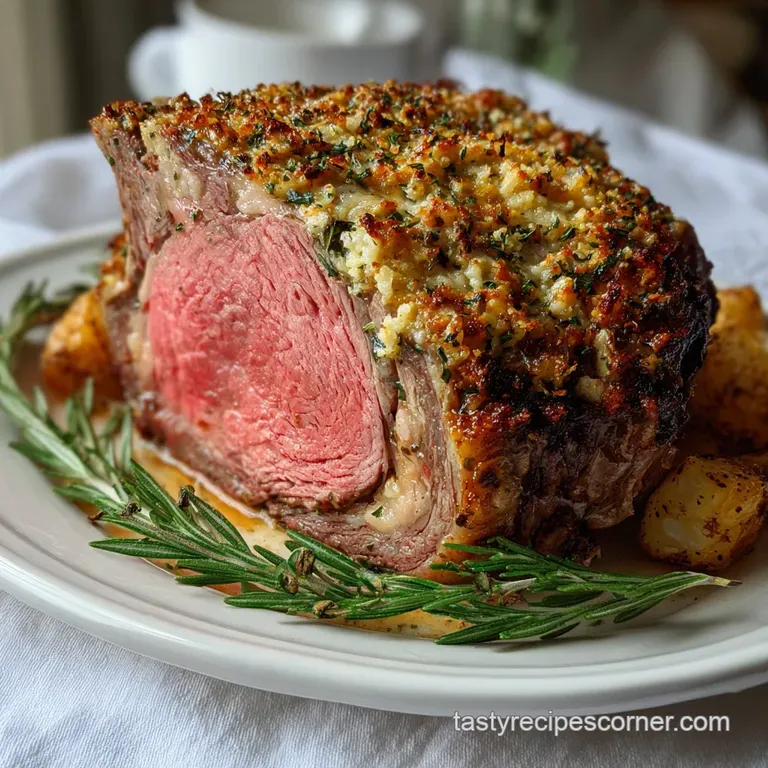
When you start with an 8 lb standing rib roast (3 or 4 bone), you are dealing with a lot of thermal mass. Take the meat out of the fridge at least 2 hours before you plan to cook it. If you put a cold roast in the oven, the outside will be charred before the middle even begins to warm up.
We want a head start.
- Prep the meat. Pat the 8 lb standing rib roast completely dry with paper towels. Note: Moisture is the enemy of a good crust.
- Season heavily. Rub 2 tbsp kosher salt and 1 tbsp coarse black pepper over every square inch.
- Create the rub. Mix 115g ghee or grass fed butter with 10g minced rosemary, 8g thyme, 3g minced sage, 30g garlic paste, and 5g Dijon mustard.
- Apply herbs. Slather the herb butter rub over the top and sides, focusing on the fat cap. Wait until the butter is slightly soft but not melted.
- Initial roast. Place the meat on the rack in a 250°F (120°C) oven. Note: This low temp prevents the "gray ring" effect.
- Monitor temp. Roast for about 2 hours 30 mins until the thermometer reads 115°F for rare or 125°F for medium rare.
- The rest phase. Remove the roast from the oven and tent loosely with foil. Let it rest for at least 30 minutes.
- The blast. Crank the oven to 500°F (260°C).
- The sear. Put the roast back in for 6-10 minutes until the exterior is dark brown and crackling.
- Final slice. Carve away the bones first, then slice the meat into thick slabs.
Identifying And Correcting Common Roasting Errors Quickly
My Herb Rub Is Sliding Off
If the herb butter isn't sticking, it’s usually because the meat surface was too damp or the butter was too cold. The Dijon mustard in this recipe acts as a stabilizer, but it can't overcome a wet surface. If this happens mid roast, don't panic.
Just use a spoon to scoop up the fallen herbs and bast them back onto the meat during the final over high heat phase.
The Meat Is Done Too Early
Sometimes an oven runs hot, or the roast is thinner than expected. If your thermometer hits the target temperature an hour before dinner, take it out! Wrap it tightly in a double layer of foil, then a thick beach towel, and put it in an empty cooler (no ice).
This "faux cambro" method will keep the meat hot and safe for up to 2 hours without overcooking it.
| Problem | Root Cause | Solution |
|---|---|---|
| Gray ring around edges | Oven temp too high | Drop temp to 250°F next time; use the reverse sear. |
| Rub burns/smokes | Using standard butter | Switch to Ghee; it has a much higher smoke point. |
| Bloody juices on board | Not enough resting time | Rest for a full 30-45 mins to let fibers reabsorb liquid. |
Common Mistakes Checklist
- ✓ Never skip the room temperature temper; 2 hours on the counter is essential for even cooking.
- ✓ Don't use table salt; the fine grains will make the crust way too salty.
- ✓ Avoid checking the oven door constantly; every peek drops the temperature by 25 degrees.
- ✓ Ensure the thermometer is not touching the bone; bones conduct heat differently and give false readings.
- ✓ Don't cover the roast tightly during the final sear or you will steam the crust soft.
Creative Substitutions For Dietary Needs And Flavors
| Original Ingredient | Substitute | Why It Works |
|---|---|---|
| Ghee (115g) | Beef Tallow (115g) | Highest smoke point and matches the beefy flavor perfectly. |
| Fresh Rosemary | Dried Rosemary (1 tbsp) | Use less since dried is more potent; crush it to release oils. |
| Dijon Mustard | Spicy Brown Mustard | Similar acidity and binding power. Note: Adds a more rustic, peppery kick. |
Scaling For Smaller Or Larger Crowds
If you are scaling DOWN to a 2 bone roast (about 4-5 lbs), keep the herb rub quantities the same because you still have a large surface area to cover. Reduce the initial roasting time by about 45 minutes, but rely strictly on your thermometer rather than the clock.
If you are scaling UP to a full 7 bone roast (which can weigh 16-18 lbs), you’ll need to work in batches for the final sear if your oven isn't huge. Increase the herbs and salt to 1.5x, but don't double the salt unless you want a very aggressive crust.
Liquids should be kept the same as the meat will provide plenty of its own fat.
Smart Storage Strategies For Your Holiday Leftovers
Prime rib is just as good the next day, provided you don't turn it into rubber in the microwave. Store leftovers in an airtight container in the fridge for up to 4 days. For long term storage, you can freeze individual slices wrapped tightly in plastic wrap and then foil for up to 3 months.
To reheat without losing that pink center, place a slice in a baking dish with a splash of beef broth. Cover it tightly with foil and put it in a 250°F oven for about 10-15 minutes. This gently steams the meat back to temperature. For a zero waste tip, save the bones!
They make the most incredible beef stock or can be simmered with onions and red wine for a rich "bone sauce" to serve with future meals.
Pairing Your Hearty Roast With Soul Warming Sides
- The Classic Contrast: Serve with a sharp horseradish cream sauce. The cold, nasal clearing heat of the horseradish cuts right through the heavy fat of the rib roast.
- The Texture Match: A velvety potato puree or a "loaded" mashed potato casserole. You want something creamy to balance the crunch of the herb crust.
- The Bright Note: A simple arugula salad with a lemon vinaigrette. The bitterness of the greens cleanses the palate between bites of rich beef.
High Heat vs. Low Heat Comparison
| Method | Texture Result | Difficulty | Best For |
|---|---|---|---|
| Low and Slow | Even pink from edge to edge | Easy | Beginners wanting a perfect medium rare |
| High Heat Start | Great crust, but thick gray ring | Moderate | Those who prioritize a very charred exterior |
| Reverse Sear | Best of both worlds | Moderate | The ultimate holiday result |
Decision Shortcut
- If you want a Perfectly Even Medium Rare, do the Reverse Sear method (Low then High).
- If you are Short On Time, do a constant 325°F roast (though you’ll lose some tenderness).
- If you want a Traditional English Style, serve with Yorkshire puddings to soak up the drippings.
The beauty of the Herb Prime Rib Roast is that it makes the house feel like a home. It’s a meal that requires you to slow down, and in our fast paced world, there is something truly special about a dish that cannot be rushed.
Trust your thermometer, let the meat rest, and get ready for the best sandwich of your life the next morning!
Critical in Sodium
1161 mg mg of sodium per serving (50% of daily value)
The American Heart Association recommends limiting sodium intake to about 2,300mg per day.
Tips to Reduce Sodium in Your Rib Roast
-
Reduce Salt-25%
The primary source of sodium is the kosher salt. Reduce the amount of salt by 50%, using only 1 tbsp instead of 2 tbsp. You may not notice a big change as kosher salt's large grains impart more flavor with less weight. Taste and adjust after cooking.
A salt substitute like potassium chloride can be considered but test it first.
-
Unsalted Butter-10%
Replace the ghee or grass fed butter with unsalted versions. This will eliminate the added sodium from the butter itself. Ghee can be made at home using unsalted butter.
-
Mustard Reduction-5%
Reduce the amount of Dijon mustard by half or eliminate entirely. Dijon mustard contains sodium. Substitute with freshly ground mustard seeds if possible for a similar flavor profile with less sodium.
-
Spice It Up!
Enhance the flavor profile with sodium free spices like smoked paprika, garlic powder (if not using fresh), onion powder, or chili powder. Experiment with different combinations to find your favorite taste.
-
Freshly Ground Pepper
Ensure your black pepper is freshly ground. Freshly ground pepper gives a stronger flavor and helps to compensate for reduction in salt.
Recipe FAQs
What is a good seasoning to put on a prime rib?
A simple salt, pepper, and herb crust is best. Use coarse kosher salt generously, as it draws moisture out and creates a better crust; complement this with fresh rosemary, thyme, garlic paste, and Dijon mustard to bind the rub.
What is the most important thing to do before roasting a prime rib roast?
Let the roast rest at room temperature for at least two hours. This tempering step is crucial so the meat cooks evenly; putting a cold roast into a hot oven guarantees an overcooked exterior before the center warms up.
What is the rule of 5 for prime rib?
The "Rule of 5" refers to the five essential components of the herb rub for binding and flavor. These are generally fat (ghee/butter), coarse salt, black pepper, an herb (like rosemary), and an acid/binder (Dijon mustard).
What herbs go well with beef roast?
Rosemary, thyme, and sage are the classic trio for beef. Rosemary offers piney notes, thyme brings earthiness, and sage adds a subtle savory depth to the crust.
Is it true I must sear the prime rib first before low-temperature cooking?
No, the reverse sear method is superior for even cooking. Start the roast low (250°F) until near target temperature, then blast it high (500°F) at the end; this technique minimizes the gray band of overcooked meat just beneath the surface.
How do I ensure my prime rib doesn't dry out?
Pull the roast 5 to 10 degrees before your target temperature. The internal temperature continues to rise significantly during the required 30-minute rest, which allows the muscle fibers to relax and reabsorb the juices for maximum tenderness.
What is the ideal final internal temperature for a medium rare prime rib?
Pull the roast from the oven when your thermometer reads 120°F to 125°F. For a 4-bone roast, this results in a warm pink center after resting, assuming you allow the required 30-minute carryover cooking time.
Herb Prime Rib Roast Recipe
Ingredients:
Instructions:
Nutrition Facts:
| Calories | 1129 kcal |
|---|---|
| Protein | 62 g |
| Fat | 95 g |
| Carbs | 1.5 g |
| Fiber | 0.5 g |
| Sugar | 0.2 g |
| Sodium | 1161 mg |
