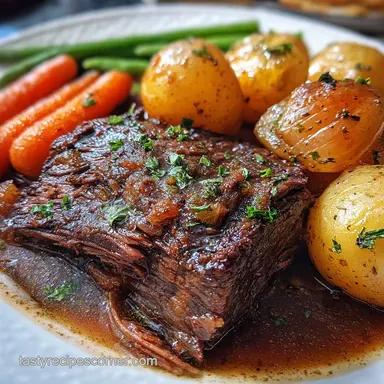
Dutch Oven Pot Roast with Savory Gravy

- Time: 15 min active + 180 min baking + 3 min rest
- Flavor & Texture: Hearty, fall-apart beef with a thick, savory gravy
- Perfect for: Sunday family dinner or meal prep
Easy Dutch Oven Pot Roast Method
Why do some roasts shred like butter while others feel like chewing a shoe? It usually comes down to the cut of meat and how you handle the heat. If you go too fast, the fibers tighten up, but if you go slow, the connective tissue melts.
This dish is all about patience and a heavy pot. You'll get a deep, dark crust on the beef and vegetables that taste like they've been simmering for days.
When you pull this Dutch oven Pot roast from the oven, your whole house will smell like slow-cooked herbs and garlic. It's the kind of meal that feels like a warm hug on a cold day.
Why the Steps Matter
- The Hard Sear: Browning the meat at high heat creates a dark crust. This adds a deep, savory base that you just can't get from simmering alone.
- The Long Simmer: Low heat over several hours melts the collagen in the chuck roast. This turns a tough piece of beef into something that falls apart with a fork.
- Timed Veggies: Adding carrots and potatoes later prevents them from turning into mush. They cook just enough to be tender while keeping their shape.
| Method | Time | Texture | Best For |
|---|---|---|---|
| Oven Braise | 3 hours | Tender, cohesive | Consistent heat, hands-off |
| Stove Top | 3-4 hours | Softer, wetter | Quick access, no oven space |
What You'll Need
Ingredient Deep Dive
| Component | Purpose | Substitute Notes |
|---|---|---|
| Beef Chuck | Main structure | Shoulder roast works, but is leaner |
| Grape Juice | Acidity and sugar | Apple juice: Similar profile, slightly sweeter |
| Yukon Gold | Texture | Russets: More starchy, may break down more |
| Cornstarch | Thickening | Flour: Use 2x amount, cook longer to remove raw taste |
The Grocery List
- 3 lb beef chuck roast Why this? High fat and collagen for tenderness
- 2 tbsp olive oil
- 1 tsp salt
- 1 tsp black pepper
- 1 large yellow onion, diced
- 4 cloves garlic, minced
- 2 cups low-sodium beef broth
- 1/2 cup grape juice Why this? Adds a subtle tang and sweetness
- 1 tbsp Worcestershire sauce
- 2 sprigs fresh rosemary
- 3 sprigs fresh thyme
- 1 lb carrots, cut into 2-inch chunks
- 1½ lbs Yukon Gold potatoes, halved
- 2 tbsp cornstarch
- 3 tbsp cold water
Essential Tools
You'll need a 6-quart cast iron Dutch oven. The heavy walls distribute heat evenly, which is a must for a slow cook roast in Dutch oven. A sturdy wooden spoon is also helpful for scraping the bottom of the pot.
From Prep to Plate
Phase 1: The Searing Process
Set your oven to 325°F (163°C). Pat the beef dry using paper towels, then season it well with 1 tsp salt and 1 tsp black pepper.
Bring 2 tbsp olive oil to a hot sizzle in a cast iron Dutch oven over medium-high heat. Sear the meat for 5-7 minutes per side until a rich, rich brown crust has developed. Remove the beef and set it aside on a plate.
In the remaining fat, sauté the diced yellow onion and minced garlic for 3 minutes until they are softened, clear, and aromatic.

Phase 2: The Slow Braise
Add 1/2 cup grape juice to deglaze the pot, using a wooden spoon to scrape up all the browned bits from the bottom.
Stir in 2 cups low-sodium beef broth and 1 tbsp Worcestershire sauce. Put the seared beef back into the pot and arrange the 2 sprigs of fresh rosemary and 3 sprigs of fresh thyme around the sides.
Cover with a tight-fitting lid and move it to the oven. Bake for 2 hours.
Phase 3: Adding the Root Vegetables
Carefully lift the lid. Arrange 1 lb of carrots and 1½ lbs of halved Yukon Gold potatoes around the meat, ensuring they are nestled in the liquid but not fully submerged.
Cover and return the pot to the oven for another 60 minutes. The beef is ready once until the beef is fork-tender, usually around 200°F (93°C) inside; 145°F (63°C) is only the minimum safe temperature. USDA guidance indicates a safe internal temperature of 145°F for beef roasts.

Phase 4: Finishing the Gravy
Transfer the meat and vegetables to a serving platter, allowing the beef to rest for 3 minutes before slicing.
Return the Dutch oven to the stovetop over medium heat. Whisk together 2 tbsp cornstarch and 3 tbsp cold water. Gradually stir this slurry into the simmering liquid until the sauce thickens into a smooth, velvety gravy. Pour the gravy over the sliced beef and vegetables.

Avoiding Kitchen Disasters
When a roast doesn't shred, it's usually because the collagen hasn't fully melted. Every piece of meat is different, so the clock isn't always the best guide. Trust the fork.
If your gravy looks like water, you might have added too much broth or not enough slurry. You can always thicken it further on the stove, but don't let it boil too hard or it might separate.
Beef feels tough
If the meat resists a fork, put it back in the oven. Another 30 minutes often does the trick.
Gravy is too thin
Whisk a bit more cornstarch and water together and stir it in. Let it simmer for 2 minutes to activate.
Veggies are mushy
This happens if the vegetables are cut too small or cooked too long. Stick to 2-inch chunks for carrots.
| Problem | Root Cause | Solution |
|---|---|---|
| Tough meat | Not enough cook time | Braise for another 30-60 mins |
| Watery sauce | Slurry not activated | Simmer on stovetop for 2-5 mins |
| Burnt bottom | Heat too high during sear | Deglaze immediately with juice |
Easy Swaps and Add-Ins
If you want a different flavor profile, try adding a tablespoon of tomato paste during the sauté step. It deepens the color and adds a savory richness. For a bit more earthiness, you can swap the carrots for parsnips.
If you prefer a different side, you can leave the potatoes out of the pot and serve your Dutch oven pot roast with a side of Savory Squash Pasta Sauce for a unique twist.
Keeping It Fresh
Store the sliced beef and vegetables in a container with the gravy poured over the top. This prevents the meat from drying out in the fridge. It stays good for up to 4 days.
This Dutch oven Pot roast freezes well. Cool it completely, then use a freezer-safe container or vacuum bag. It lasts up to 3 months.
To reheat, avoid the microwave, which can make the beef rubbery. Instead, place portions in a skillet over medium-low heat until the thickest part reaches 165°F (74°C) inside. Add a splash of beef broth and cover with a lid to steam the meat back to tenderness.
When reheating cooked leftovers, check with a food thermometer that the centre reaches 165°F (74°C); the appliance temperature and time alone do not confirm this.
Pairing Ideas

Because this dish is so rich and hearty, a vibrant side is the perfect balance. A fresh garden salad with a lemon vinaigrette helps cut through the richness of the beef.
For a more classic pairing, try serving it with buttery peas or steamed green beans. To turn this into a feast, add some crusty sourdough bread, ideal for soaking up every bit of the gravy.
Recipe FAQs
Can I cook this pot roast on the stove top?
Yes, it's a valid alternative. It typically takes 3-4 hours and results in a softer, wetter texture than the oven method.
Is a cast iron Dutch oven best for this roast?
Yes, it is highly recommended. Cast iron provides consistent heat and a heavy lid, which is essential for a proper slow braise.
How to make this Dutch oven pot roast?
Sear the beef in olive oil, then braise it at 325°F. After two hours, add the potatoes and carrots for another 60 minutes before thickening the juices into a gravy.
Why are potatoes and carrots added later?
To prevent them from overcooking. Adding them for the final 60 minutes ensures they stay tender while maintaining their shape; this hearty meal pairs well with a bright cranberry sauce.
Does the Dutch oven slow cook the roast effectively?
Yes, because of its heat retention. The heavy pot and lid create a steady environment that breaks down tough muscle fibers over several hours.
Slow-Cooked Dutch Oven Pot Roast