Piña Colada: the Velvety Smooth Holiday Cocktail
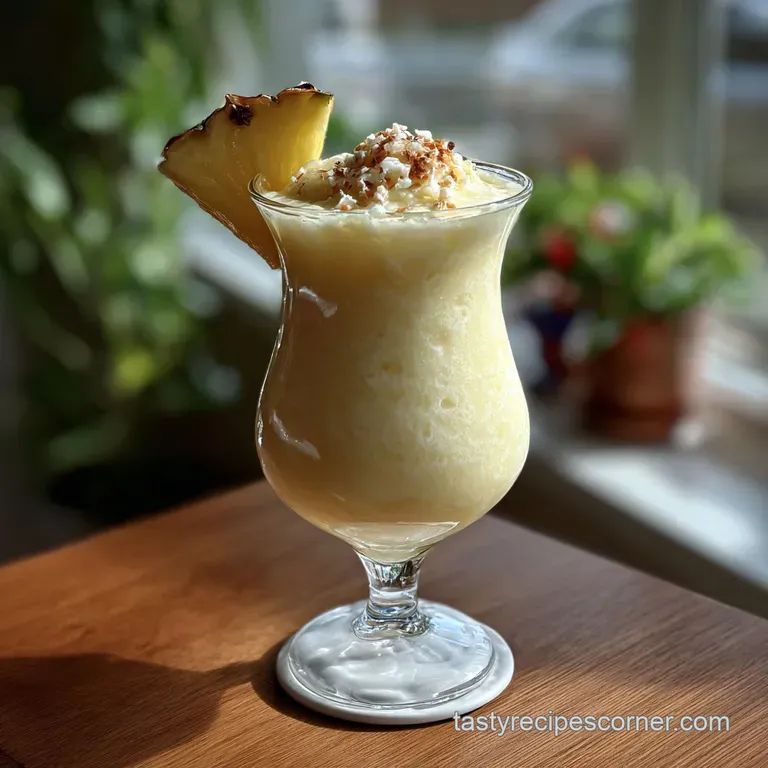
- The Tropical Escape: What Makes This Classic Recipe Essential
- Achieving the Perfect Velvety Texture: The Science of the Colada
- Essential Elements for the Perfect Blend
- Step-by-Step Guide to Crafting the Cocktail
- Mastering the Mix: Expert Tips and Troubleshooting
- Pairing and Preparation Pointers
- Recipe FAQs
- 📝 Recipe Card
The Tropical Escape: What Makes This Classic Recipe Essential
You know that feeling when you take a sip of something and suddenly you're not standing in your kitchen anymore? That’s the magic of a perfect Piña Colada .
It should hit you with the lush, bright smell of ripe pineapple followed immediately by the decadent, velvety richness of coconut cream. Trust me, if your first sip feels like a watery, boozy slushie, you’ve done it wrong.
I spent years making these drinks way too thin, usually because I relied too heavily on ice cubes. But this method is fast, cheap, and guarantees that ridiculously creamy body you find at the best resort bars, making it a true lifesaver for last minute gatherings.
It’s the ultimate liquid sunshine cure for the mundane, transforming a dull Tuesday into a mini vacation.
So, ditch the synthetic pre-mix and forget everything you think you know about this cocktail. We are diving into the core elements the perfect ratio of sweetness to acidity and the crucial role of frozen fruit to craft the definitive, authentic Piña Colada recipe right now.
Let’s make a drink that demands a little paper umbrella.
Achieving the Perfect Velvety Texture: The Science of the Colada
This isn't just about throwing ingredients in a blender; it’s about controlling temperature and dilution. The secret weapon here is the massive ratio of frozen pineapple to ice, which provides the necessary chill without adding excess water.
We rely on the natural thickening power of the cream of coconut, which emulsifies beautifully with the frozen fruit fibers as the blender spins.
The high speed blend incorporates a tiny bit of air, transforming the mixture into a thick, homogenous, nearly dessert like beverage. Achieving this texture is the difference between a decent tropical drink and a spectacular, high ranking Piña Colada .
When you nail the blend, it pours out like thick silk, not runny juice.
The Puerto Rican History of the Original Drink
Before we blend, let’s pay respect where it’s due: this drink belongs to Puerto Rico. The original Piña Colada was perfected there in the mid-1950s, claiming its heritage from the Caribe Hilton in San Juan.
It’s an official beverage of the island, and understanding that heritage means respecting the core ingredients: rum, coconut, and pineapple. I always feel better about my cocktail mixing when I know the history, don't you?
Ingredients Required for a Single Serving (Quick Reference)
For every two servings, you need to measure these key Piña Colada ingredients carefully. Cocktails are chemistry, not cooking precision matters here. Always prioritize quality white rum; you can definitely taste the difference in the final blend.
| Ingredient | Role in the Colada | Substitute If Needed |
|---|---|---|
| White Rum (4 fl oz) | Base spirit, neutral flavor | Gold Rum (deeper flavor) or Vodka (neutral/virgin) |
| Cream of Coconut (3 fl oz) | Sweetener and emulsifier | Canned Coconut Milk (thick top layer) + Simple Syrup |
| Pineapple Juice (2 fl oz) | Acidity balance, liquid | Fresh Orange Juice (slightly different flavor) |
| Frozen Pineapple (1 cup) | Thickening agent, flavor | Frozen Mango or Banana (alters flavor profile) |
| Ice Cubes (1 cup) | Chill factor | Use more frozen fruit, less ice, to avoid a weak drink |
Why Homemade Beats the store-bought Mix
The biggest issue with bottled Piña Colada mix is the artificial flavor and the stabilizers that create a strangely chemical mouthfeel. When you make it at home, you control the level of sugar, guaranteeing a vibrant flavor profile that truly tastes like fresh fruit.
Plus, you get to choose your rum, which makes a monumental difference in complexity and finish.
Maximising Creaminess: The Role of Cream of Coconut vs. Coconut Milk
Listen up, this is my biggest "mistake I once made" anecdote: I grabbed the wrong can. Coconut milk is thin and savory; it will guarantee a watery, separating mess. Cream of Coconut (like Coco López) is saturated with sugar and natural stabilizers, giving the drink its iconic sweetness and rich texture.
This high sugar content is mandatory for proper emulsification and achieving that silky mouthfeel.
The Crucial Difference Between Canned vs. Fresh Pineapple
While fresh, chilled pineapple juice is lovely for the liquid base, you must use frozen pineapple chunks for the solids. Why? Canned chunks often hold too much liquid. The structure of the frozen chunks, combined with the extreme cold, provides bulk and maximum flavor concentration.
When you blend frozen fruit, it breaks down into tiny, thick particles, whereas ice simply melts and dilutes the whole thing.
Ice Volume and Density: Preventing a Watery Blend
We use a moderate amount of ice (1 cup per blend) primarily to kickstart the high powered blender blades. If you use too much ice and not enough frozen fruit, you’ll hear the dreaded sound of the mixture thinning out during the blend.
Tip: Always use standard freezer cubes, not fancy crushed ice, as crushed ice melts instantly and rapidly weakens the flavor of your Piña Colada .
Essential Elements for the Perfect Blend
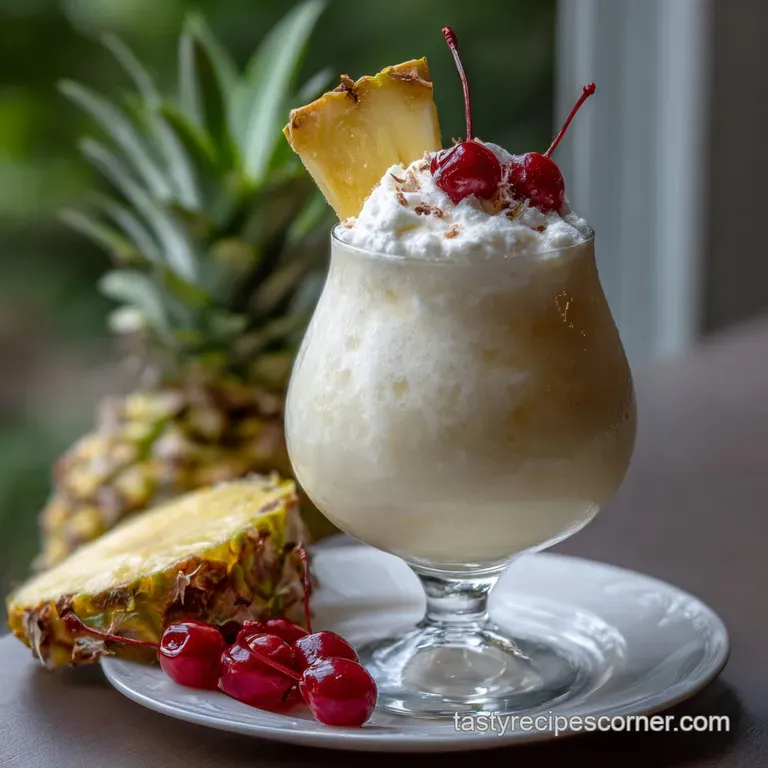
Blending a Piña Colada is like baking a cake; every ingredient needs to be in its right place before the magic happens. We want maximum chill and minimum fuss. This section breaks down the tools and tweaks that elevate this simple cocktail into something truly professional.
Recommended Rums: Light, Aged, and Dark Floats
I usually start with a good quality, standard light rum like Bacardi Superior or Don Q because they let the pineapple and coconut shine. However, if you want more depth, swap out half of the light rum for an aged gold rum; this adds warm notes of vanilla and oak. And that optional dark rum floater?
It’s not just for looks. A drizzle of something rich like Myers's Dark Rum adds an intoxicating caramel aroma right under your nose as you sip the Piña Colada .
Ingredient Swaps: Making the Ultimate Virgin Piña Colada
Making a non-alcoholic version is easy and incredibly satisfying. Simply omit the 4 fl oz of rum and replace it with an equal amount of cold coconut water or extra pineapple juice. The sweetness from the cream of coconut is so dominant that the absence of rum isn't a flavor loss, but rather a textual shift.
It is perfect for designated drivers or daytime sipping!
Prep Notes: Fresh Pineapple Cubes vs. Frozen Chunks
My general advice: if you have the time, buy a fresh pineapple, cube it, and freeze it overnight. The flavor profile will be infinitely brighter than store-bought frozen chunks. But if you’re short on time, those bags of frozen chunks work perfectly well.
Just make sure they haven't been thawed and refrozen, which creates too much moisture.
The Best Ice: Using Block Ice vs. Crushed for Optimal Chill
If you were a pro bartender, you might use large block ice for slow dilution, but we are blending here, so consistency is key. We are using standard, medium sized cubes. Avoid the crushed ice you get from the fridge dispenser entirely!
It introduces too much air and melts too quickly, leading to a thin, foamy, and frankly disappointing Piña Colada .
step-by-step Guide to Crafting the Cocktail
This is where the rubber meets the road. Follow this blending order precisely. It prevents the blades from getting stuck and guarantees a uniform consistency from top to bottom.
Blending Sequence: The Proper Order of Wet and Hard Ingredients
I call this the reverse method, and it’s a non-negotiable step for a truly smooth blend. Always add the liquids first: rum, cream of coconut, and pineapple juice. This ensures that the blender blades are completely submerged from the start, allowing them to suck the solids down efficiently.
The frozen pineapple and ice go in last, sitting on top of the liquid base.
The Two-Stage Blend Technique for Guaranteed Smoothness
Start low. Run the blender on its lowest setting (think "stir") for about 10 seconds. This gently breaks up the ice and frozen fruit and mixes the thick coconut cream with the juice. Then, crank that thing up to high speed. The motor should change pitch as it pulls the mixture into a vortex.
Blend for 30 60 seconds, or until you no longer hear the loud clack clack-clack of ice shards hitting the blades.
Knowing When to Stop Blending (Avoiding Over Aeration)
You want it smooth, but you don't want it airy or warm. Over blending generates heat and whips too much air into the drink, making it separate faster once poured. Stop immediately when the mixture turns uniform and velvety, looking like a thick milkshake.
It should barely cling to the inside walls of the blender jar when you stop. That is the texture we are aiming for in this gorgeous Piña Colada .
Garnishing Techniques: Pineapple Wedges and Cherry Placement
The garnish is mandatory for the visual appeal of any great tropical drink. Cut a nice, plump pineapple wedge and slice a small slit into the bottom to hook it onto the rim of your chilled glass. The classic maraschino cherry goes right down the center.
If you are using that optional dark rum floater, pour it after you’ve garnished, letting it gently pool on top.
Mastering the Mix: Expert Tips and Troubleshooting
A fantastic Piña Colada is within your reach, but there are a few classic pitfalls that even seasoned home cooks fall into. Getting the texture right is 90% of the battle.
Chef’s Note: The single most important element is the temperature of your serving glass. A room temperature glass will instantly start melting your hard earned blend. Always chill your glassware!
Troubleshooting: Why Your Drink is Separating or Too Thin
If your Piña Colada is separating, it means you used too much liquid or not enough thickener (cream of coconut or frozen fruit). To fix it, add 1/2 cup more frozen pineapple chunks and blend again on high. If it’s too thin, you likely over blended and melted the ice.
Just add another 1/4 cup of ice and pulse for 5 seconds to stiffen the mix up again.
Adjusting Sweetness and Acidity Ratios (Flavor Balancing)
Cream of Coconut is sweet, like, really sweet. If you prefer a more balanced, slightly tart Piña Colada , simply add 1/2 teaspoon of fresh lime juice to the blender before the first mix. The acidity cuts through the richness beautifully.
Alternatively, if your pineapple juice is very tart, you might need a tiny drizzle of simple syrup to smooth things out.
Batching the Cocktail for a Crowd
When batching, always make sure your blender can handle the volume without burning out the motor. Calculate your ingredients and prepare them in batches that fit. Do not pre-blend everything and store it.
The frozen element is essential for texture, and if you blend and store it, it will completely separate in the fridge. Blend each batch just before serving.
Pairing and Preparation Pointers
What’s a beautiful cocktail without the perfect food match? This drink pairs best with bold, spicy, or seafood heavy dishes that can stand up to its creamy richness.
Perfect Food Pairings for Your Tropical Drink
I love serving this alongside Jerk Chicken skewers because the spice is instantly soothed by the cold, creamy coconut. Coconut Shrimp is another no-brainer; the flavors complement the richness of the Piña Colada seamlessly.
For something lighter, try Ceviche; the lime and cilantro echo the tropical notes perfectly.
How to Store Leftover Piña Colada Mix
So, you somehow made too much Piña Colada ? Honestly, fresh is best. But if you must store it, pour the remaining mix into an airtight container and freeze it.
When you are ready to serve again, scoop the frozen mixture and blend it with a tablespoon of fresh pineapple juice or a splash of rum to reactivate the blend and return it to that silky texture. It keeps well frozen for about two weeks.
Pre-Freezing Components for Rapid Preparation
If you know you’re going to be entertaining, use a party prep hack: freeze your rum and pineapple juice into cubes separately. This means that when you are ready to blend, you skip the chilling step entirely and just toss the frozen liquids and frozen pineapple into the blender with the cream of coconut.
It guarantees the absolute coldest, fastest, and creamiest Piña Colada possible. Enjoy this slice of tropical heaven!
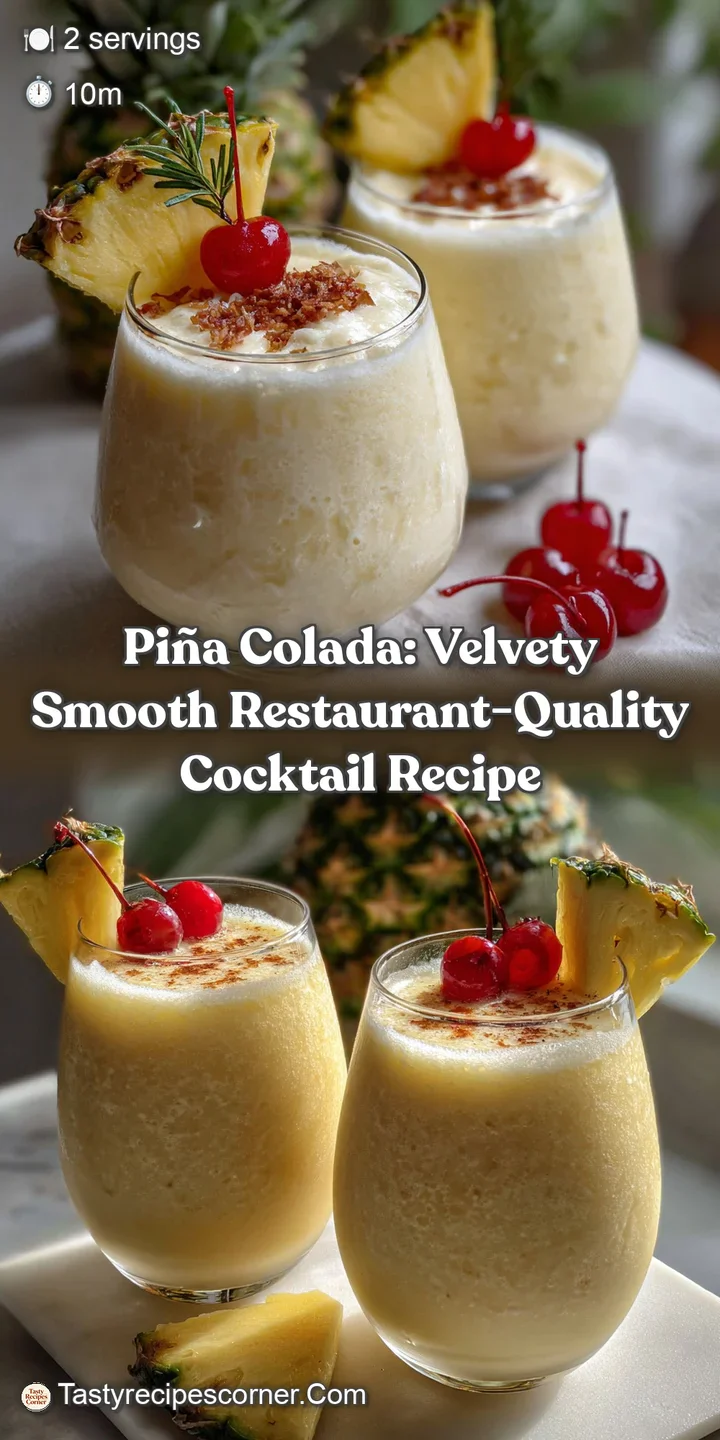
Recipe FAQs
Why is my Piña Colada watery or icy instead of smooth and velvety?
This is typically a result of using too much liquid (juice or rum) in relation to the frozen components, or blending for too short a time. For the ideal velvety consistency, ensure your pineapple is frozen solid, and blend the mixture on high speed for at least 60 seconds until it is completely emulsified and free of small ice chunks.
Is "Cream of Coconut" the same as "Coconut Cream" or regular canned coconut milk?
No, they are fundamentally different ingredients; Cream of Coconut (often sold under brand names like Coco López) is a heavily sweetened, syrupy product essential for the drink’s texture and classic flavour profile.
Coconut Cream is unsweetened and will result in a thin, savoury cocktail that lacks the required sweetness and density.
What is the best type of rum to use in a Piña Colada?
Traditionally, a good quality light (white) rum is preferred, as it provides the necessary alcohol content without overpowering the coconut and pineapple flavours. For those seeking a more complex or deep flavour profile, try using a blend of half white rum and half aged (gold) rum to introduce notes of vanilla and oak.
How can I prepare a non-alcoholic (virgin) version of this recipe?
Simply omit the rum entirely and maintain the liquid volume by increasing the amount of fresh pineapple juice used. To prevent the drink from tasting too flat, consider adding a squeeze of fresh lime juice and perhaps a few drops of pure vanilla extract before blending.
I don't have frozen pineapple. How should I adjust the recipe?
If you must use fresh pineapple, you will need to significantly increase the amount of ice to achieve the thick, slushed consistency. Start by increasing the specified ice amount by about 50%, blend, and then add additional ice incrementally until the mixture holds its shape in the glass.
Can I make a batch of Piña Coladas ahead of time and store it?
Piña Coladas are best enjoyed immediately after blending, as the frozen components quickly melt, causing separation and dilution. However, you can premix the liquid components (rum, juice, and cream of coconut) and chill them, adding the ice and pineapple to the blender just before serving.
What are some unique ways to elevate the flavour profile beyond the classic recipe?
A culinary expert touch often includes introducing contrasting elements to balance the sweetness. Try blending in a small slice of fresh ginger, adding a dash of Angostura bitters, or rimming the glass with a light dusting of cinnamon and sea salt to enhance the tropical notes.
Velvety Pina Colada Recipe
Ingredients:
Instructions:
Nutrition Facts:
| Calories | 134 kcal |
|---|---|
| Protein | 10.7 g |
| Fat | 2.5 g |
| Carbs | 17.5 g |
