Pepper Jelly Recipe: Sparkling Scotch Bonnet Sweet Bell
- The Magic of Homemade Pepper Jelly: Effortless Gourmet Spreading
- The Science Behind the Set: Why This Jelly Recipe Works Every Time
- Sourcing Sweetness and Spice: Essential Ingredients for Jewel-Toned Jelly
- Customizing the Heat: Choosing Your Ideal Chili Blend
- From Chop to Consistency: Step-by-Step Method for Sparkling Pepper Jelly
- Troubleshooting Sweet Heat: Common Kitchen Mistakes and Simple Fixes
- Maximizing Your Preserve: Storage, Shelf Life, and Serving Ideas
- Recipe FAQs
- 📝 Recipe Card
The Magic of Homemade Pepper Jelly: Effortless Gourmet Spreading
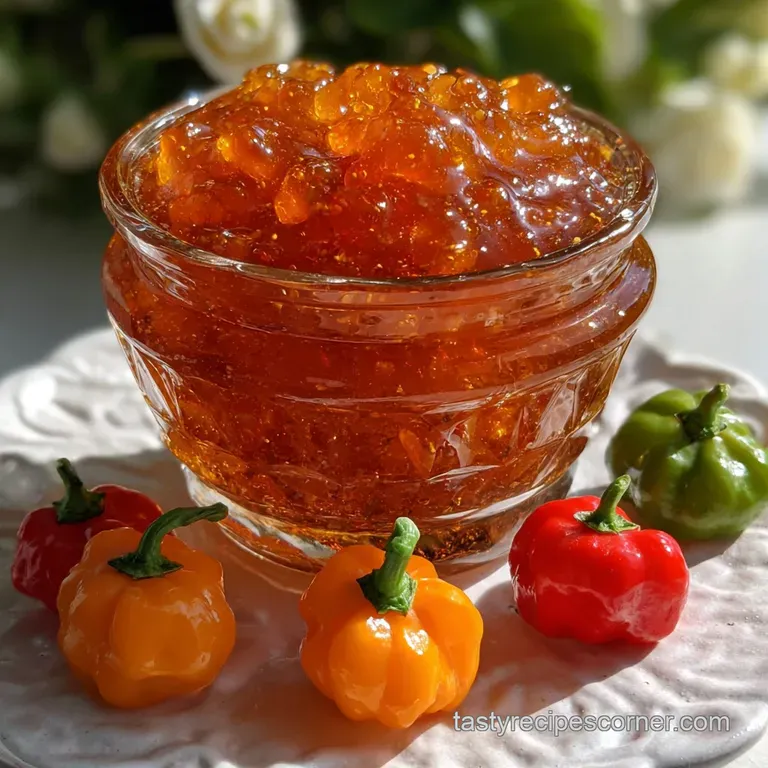
Can we just talk about that moment when you first open a fresh jar of homemade Pepper Jelly ? The light hits it just right, transforming the entire preserve into a sparkling jewel.
It’s got that signature sweet and heat aroma that instantly makes your mouth water, promising a little culinary adventure. Forget the bland stuff from the grocery store; this homemade spread has body, brilliance, and a truly unforgettable kick.
Making your own Pepper Jelly might sound intimidating like something only grandmas in aprons can pull off but trust me, this recipe is a lifesaver.
It’s affordable, surprisingly fast if you’ve prepped your ingredients, and yields a stack of beautiful jars that make the best hostess gifts. Plus, there is nothing quite as satisfying as slathering homemade Pepper Jelly on a cracker with a thick layer of cream cheese.
It’s pure party magic.
So, get your canning pots ready, my friends. We are going to dive into the surprisingly easy process of creating the most vibrant, perfectly set, and wonderfully spicy preserve you’ve ever tasted.
This detailed guide ensures your batch of Pepper Jelly achieves that perfect wobbly texture and bright, balanced flavor every time.
The Science Behind the Set: Why This Jelly Recipe Works Every Time
Beyond the Supermarket Spread: Defining the Perfect Texture and Heat Balance
The goal isn't just spicy; the goal is balance. A commercially produced spread often sacrifices texture or depth of flavour. This specialized Pepper Jelly recipe prioritizes two things: the gorgeous, clear appearance, and that ideal "wobbly" set that holds its shape beautifully but melts sweetly on the tongue.
We aren't making a sauce; we are achieving a true jelly.
A History of Sweet Heat: The Culinary Appeal of Sweet Pepper Preserves
Sweet pepper preserves have a long history, particularly in the Southern United States, where preserving summer produce is an art form. The beauty of Pepper Jelly lies in its versatility. It can stand up to heavy meats and rich fats while still tasting light and bright.
This is why it’s so essential for the jelly to be glossy and flavourful it’s frequently the star on a simple cracker, especially when creating a classic pepper jelly and cream cheese dip.
Achieving the Ideal Wobbly Set: Pectin, Acid, and Sugar Synergy
Jelly isn't jelly without the set, and that comes down to a perfect chemical relationship between pectin, acid, and sugar. Sugar preserves the fruit colour and texture and helps the pectin bond (we use a lot of sugar here for stability).
Acid, provided by the vinegar, helps activate the pectin; without enough acid, you get soup. Liquid pectin, which we add after the intense boil, allows us to achieve a quick set without having to overcook the delicate pepper flavour.
This ratio is what makes the final Pepper Jelly so reliable.
The Flavor Foundation: Maceration Vs. Quick Boiling for Deep Taste
We skip the long, slow maceration process here because we want a sparkling clear jelly, not a murky jam. By finely pulsing the peppers and hitting them with an intense, rapid boil with the vinegar, we extract maximum flavour quickly. The high sugar content then locks that beautiful pepper flavour right in.
This is the secret to a great, vibrant Pepper Jelly .
Sourcing Sweetness and Spice: Essential Ingredients for Jewel Toned Jelly
Making brilliant jelly requires brilliant ingredients, but don't stress most of this is pantry staples! We rely heavily on red bell peppers for their bulk and color, contrasted with potent, finely diced chilies.
| Ingredient | Role | Substitute When Needed |
|---|---|---|
| Red Bell Peppers | Bulk, Color | Green, yellow, or orange bell peppers (result will not be as vibrant red) |
| Chilies (Scotch Bonnet/Red) | Heat, Sparkle | Jalapeños (milder) or Habaneros (hotter) ensure they are red! |
| White Wine Vinegar | Acidity, Set Aid | Apple Cider Vinegar or Distilled White Vinegar (must be 5% acidity) |
| Granulated Sugar | Sweetener, Preservative | Cannot be substituted or reduced, crucial for the set. |
| Liquid Pectin | Gelling Agent | Powdered Pectin (must follow package instructions for use) |
Customizing the Heat: Choosing Your Ideal Chili Blend

The most fun part of making Pepper Jelly is dialing the heat up or down. I love the fire of Scotch Bonnets, but that might melt faces in some households, so customization is key!
It’s what transforms a generic spread into your ultimate Pepper Jelly and Cream Cheese Dip .
The Role of Red Bell Peppers in Balancing the Palette
The red bell peppers are the soothing baseline in this operation. They provide the sweet, fruity flavour and the bulk needed to carry the heat. We pulse them finely so their flavour releases immediately into the sugary syrup, resulting in a vibrant colour and rich body for our Pepper Jelly .
Selecting the Right Pectin: Powdered vs. Liquid Considerations
This particular recipe for Pepper Jelly is developed specifically for liquid pectin. Liquid pectin is added at the end , after the aggressive boil with the sugar is complete.
This means the fruit or in our case, the peppers don’t have to boil as long, preserving their fresh flavour. If you choose powdered pectin, you must follow the package insert, as it's typically mixed with the cold fruit/liquid base and boiled with the sugar.
Scotch Bonnet vs. Jalapeño: Adjusting the Scoville Level
My first time making this, I used too many Scotch Bonnets and nearly combusted my kitchen, so learn from my mistakes! For a lovely, manageable heat, stick to finely diced red jalapeños.
If you want true fire, a couple of deseeded, finely minced Scotch Bonnets are your jam (or your Pepper Jelly ). Always wear gloves when handling hot peppers. Seriously.
Vinegar's Critical Contribution: Acid for Flavor and Preservation
The vinegar is non-negotiable. It provides the crucial acidity needed to facilitate the pectin set and it acts as the primary preservative alongside the sugar. Without enough acid, this preserve won't be shelf stable, and your final Pepper Jelly will not set properly.
White wine vinegar offers a crisp, clean lift that doesn't muddy the brilliant colour.
From Chop to Consistency: step-by-step Method for Sparkling Pepper Jelly
Preparation is 90% of the battle because once that sugar hits the heat, things move fast. Having your jars sterilised and your peppers diced and measured out is essential for success.
Chef's Note: Remember to keep your sterilised jars hot! This prevents jar shock and cracking when you pour in the scalding hot jelly.
Preparation Breakdown: Chopping Peppers and Protected Safety Measures
Finely dice or pulse your peppers until they look like coarse salsa. They must be small enough to release their flavour but not so pureed that they cloud the final Pepper Jelly . Combine the vinegar, water, salt, and peppers in your large pot.
Bring this mixture to a rolling boil you’ll start smelling that potent vinegar and pepper aroma.
The Rapid Boil Method: Achieving Gelation Point Quickly
Once the initial mix is boiling, dump in all 5 cups of sugar and the optional red food colouring. Stir furiously until every single grain of sugar is dissolved; the liquid should look clear and glossy. Now, bring it to a heavy, rolling boil that you cannot stir away.
Set your timer for exactly 5 minutes . That five minutes is crucial for evaporating enough moisture and concentrating the sugar/acid levels for the best Pepper Jelly .
The Cold Plate Test: Recognizing the Exact Setting Temperature
When the 5 minutes are up, immediately remove the pot from the heat. Don’t delay! Now, stir in the liquid pectin quickly and evenly for up to two minutes. This rapid stir activates the pectin.
Before jarring, confirm the set using the chilled plate test: spoon a small amount onto a plate you had chilling in the freezer, and let it sit for two minutes. Push the edge with your finger. If it wrinkles and doesn’t immediately run back together, your Pepper Jelly is set perfectly.
Skimming and Jarring: Sealing the Heat and Flavor
If your jelly passed the set test (yay!), use a spoon to quickly skim off any grayish white foam that formed on the surface; this keeps the jelly clear and beautiful. Immediately ladle the hot Pepper Jelly into your waiting, hot, sterilised jars.
Leave a half inch of headspace, wipe the rims clean, and seal them with the lids before taking them to the water bath. This is the classic pepper jelly recipe for canning .
Troubleshooting Sweet Heat: Common Kitchen Mistakes and Simple Fixes
We all make mistakes, especially when the timing is tight. Pectin can be finicky, but usually, a failed set is an easy fix! This section is vital for securing that perfect batch of sparkling Pepper Jelly .
My Jelly Didn't Set: Tips for Fixing a Watery Batch
A failure to set, resulting in a runny sauce, is usually caused by either mismeasuring the sugar, inaccurate timing during the hard boil, or not getting the pectin incorporated fast enough. If your cooled jars are liquid after 24 hours, don't panic!
Pour the entire batch back into the pot with an extra 1/4 cup of sugar and half a fresh pouch of liquid pectin. Heat it up, bring it to a hard boil for 1 minute, add the pectin, and proceed again with the jarring steps. Patience pays off when making this glorious Pepper Jelly .
Avoiding Crystallization: Controlling the Cooling Process
Sometimes, the sugar in jelly can crystallize if it cools too slowly or if the mixture wasn't stirred enough initially. The key here is to stir until the sugar is dissolved during the initial stage and then place the sealed jars on a wooden board or thick towel away from drafts to cool gradually.
Don’t rush the cooling process; the slow, steady temperature drop helps everything bond correctly in your finished Pepper Jelly .
Beyond the Cracker: Creative Uses for Your Homemade Spread
The famous pairing is, of course, pepper jelly and cream cheese . It truly makes the best, easiest pepper jelly dip for any party. But consider using your vibrant Pepper Jelly as a glaze for roast pork tenderloin, or brushing it over grilled halloumi cheese.
I even mix a spoonful into my vinaigrette sometimes for a sweet, spicy salad dressing. It's incredibly versatile!
Preserving Brilliance: Safe Water Bath Canning Instructions
If you want a shelf stable Pepper Jelly that will last a year or more, water bath canning is essential. After filling the jars and wiping the rims, lower them carefully into boiling water, ensuring the water covers the lids by at least one inch. Process (keep boiling) for 10 full minutes.
Then, remove them without tilting and listen for that tell tale "PING" which confirms the perfect, long term seal on your beautiful Pepper Jelly preserves.
Maximizing Your Preserve: Storage, Shelf Life, and Serving Ideas
Once you nail this Pepper Jelly recipe , you'll want to stockpile it. Proper storage ensures your hard work doesn't go to waste.
If properly water bath canned and sealed, your jars of Pepper Jelly will last safely in a cool, dark place for 12 to 18 months. Once opened, store the jar in the refrigerator and plan to consume it within about a month.
Beyond the Cracker: Creative Uses for Your Homemade Spread
The beauty of a perfectly balanced sweet and spicy condiment is that it works almost everywhere. Next time you make that classic pepper jelly cheese dip , try shaping the softened cream cheese block into tiny balls, rolling them in finely chopped pecans, and topping each with a dollop of your homemade Pepper Jelly and cream cheese bites .
They are a guaranteed quick sell out at any gathering! You should absolutely keep a jar of homemade Pepper Jelly ready in the fridge at all times, just in case.
Recipe FAQs
Why didn’t my Pepper Jelly set properly, and what can I do now?
The most common reasons for failure to set are insufficient pectin or not achieving a rolling boil for the full specified time. If the jam is too runny, you can try reprocessing it by adding a small amount of extra pectin mixed with sugar, boiling vigorously, and then re-jarring.
Can I use dried chili flakes or powder instead of fresh peppers?
It is strongly recommended to use fresh peppers, as they contribute essential moisture, texture, and natural pectin that dried varieties lack. While you could add dried flakes purely for extra heat, they should not replace the bulk of the fresh bell peppers and chilies required by the recipe.
How can I adjust the heat level of the Blazing Brilliance Pepper Jelly?
To reduce the heat, ensure you remove all visible seeds and white membranes from the Scotch Bonnets, as this is where most of the capsaicin resides. Conversely, to increase the heat, you can substitute a portion of the bell peppers for hotter varieties or leave some of the seeds in the Bonnets.
Why is my jelly cloudy instead of sparkling and jewel toned?
Cloudiness often results from over handling or overly vigorous stirring during the boiling process, which introduces air bubbles. It can also happen if you squeeze the pepper mixture through the jelly bag instead of letting it drip naturally; always allow the liquid to drain passively for the clearest result.
Do I need to water bath can the jelly, or can I just refrigerate it?
To ensure shelf stability and safety at room temperature, water bath canning is essential for creating a proper vacuum seal. If you choose not to seal the jars, the jelly must be stored in the refrigerator and consumed within three weeks, treating it like any fresh preserve.
Can I use stevia or another low-sugar sweetener instead of granulated sugar?
Sugar is crucial not only for sweetness but also for the preservation process and achieving the proper set in jelly making. If you use a sugar substitute, you must use a specific low-sugar or no-sugar pectin designed to set without the high volumes of sugar required in traditional recipes.
Spicy Sweet Scotch Bonnet Pepper Jelly
Ingredients:
Instructions:
Nutrition Facts:
| Calories | 1180 kcal |
|---|---|
| Protein | 0.9 g |
| Fat | 0.4 g |
| Carbs | 293.3 g |
