Southern Black Eyed Peas Recipe: Velvety Texture Assured
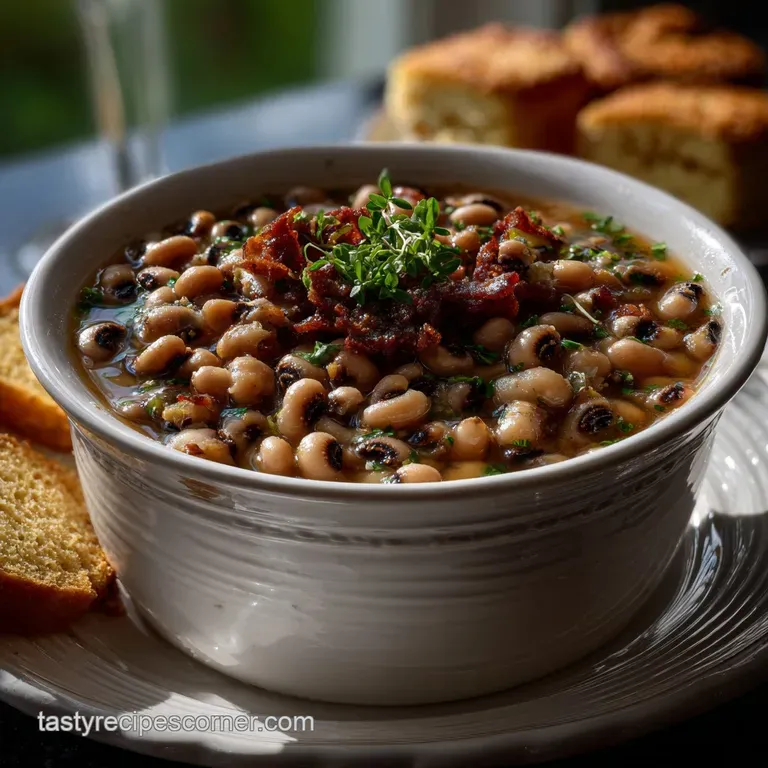
- Effort/Time: Low-effort prep, 2 hour 15 mins total.
- Flavor Hook: Rich umami backbone with a subtle cayenne-pepper-induced heat.
- Perfect for: Traditional New Year’s Day gatherings or high-protein, make-ahead weeknight dinners.
- Master the Technical Art of This Southern Black Eyed Peas Recipe
- The Molecular Science and Thermal Mechanics of Legume Softening
- The Technical Specs and Nutritional Architecture of the Dish
- The Precision Elements Required for a Southern Black Eyed Peas Recipe
- Essential Culinary Tools for Thermal Mass and Heat Distribution
- Key Steps to Executing the Perfect Southern Black Eyed Peas Recipe
- Common Mistakes & Troubleshooting the Legume Simmer
- Flavor Variations and Modern Adaptations for This Recipe
- Optimal Storage and Reheating Protocols for Best Texture
- Serving Suggestions for a Traditional Southern Feast
- ⚗️ The Scaling Lab: Physics of Quantity
- Recipe FAQs
- 📝 Recipe Card
Master the Technical Art of This Southern Black Eyed Peas Recipe
There is nothing more frustrating than investing two hours into a pot of beans only to bite down on a chalky, undercooked center that refuses to soften. I’ve seen home cooks dump an entire $15 smoked ham hock into a pot of hard water, only to end up with a dish that is simultaneously too salty and structurally compromised.
When the texture fails, the entire sensory experience of this Southern Black Eyed Peas Recipe collapses into a gritty, disappointing mess that no amount of hot sauce can rescue.
I spent years following "dump and simmer" instructions before realizing I was systematically destroying my aromatics by adding them too late or rushing the hydration phase. One specific New Year’s Eve, I tried to skip the "pick over" step, resulting in a literal tooth cracking stone hidden in the bowl of a very unhappy guest.
That humility taught me that the physics of the bean specifically how the seed coat interacts with minerals in your water is the difference between a mediocre side dish and a culinary triumph.
The secret to a truly velvety outcome isn't just luck; it’s the controlled hydrolysis of collagen from your smoked meats combined with the softening of the pea’s pectin rich cell walls.
By sautéing our "Holy Trinity" in bacon drippings or high-quality extra virgin olive oil, we create a fat-soluble flavor base that permeates the peas during their long simmer.
This Southern Black Eyed Peas Recipe relies on the science of osmotic pressure to ensure seasoning reaches the very center of the legume without causing the skin to burst prematurely.
The Molecular Science and Thermal Mechanics of Legume Softening
- Pectin Breakdown: Sustained heat at 200°F (93°C) weakens the calcium pectin bonds in the cell walls, transforming rigid seeds into a buttery consistency.
- Collagen Hydrolysis: Simmering the 1 lb smoked ham hocks converts tough connective tissue into liquid gelatin, providing a rich, lip-coating mouthfeel to the broth.
- Aromatic Solubilization: Sautéing the diced yellow onion and green bell pepper in fat releases volatile flavor compounds that are insoluble in water but thrive in the bacon drippings.
- Osmotic Balance: Adding Diamond Crystal Kosher Salt near the end of the initial simmer prevents the skins from toughening, a common physical reaction to premature sodium exposure in hard water environments.
The Science of Collagen and Smoked Proteins
When you introduce 1 lb smoked ham hocks or smoked turkey wings to the pot, you aren't just adding flavor; you are initiating a biochemical transformation. These cuts are packed with Type I collagen, which, over a 2 hour cook time, denatures and turns into gelatin.
This gelatin acts as a natural emulsifier, binding the 6 cups low sodium chicken stock and 2 cups water into a cohesive, thickened "pot liquor" that clings to the peas.
Osmosis and the Salt Soak Method
The seed coat of the black eyed pea acts as a semi permeable membrane. If the cooking liquid is too heavily mineralized (hard water), the magnesium and calcium ions reinforce the pectin in the skins, making them nearly impossible to soften.
Using a filtered water source or a high-quality low-sodium stock allows the moisture to penetrate the cotyledon (the inner part of the pea) evenly, ensuring a uniform, creamy texture from the skin to the core.
The Technical Specs and Nutritional Architecture of the Dish
To achieve the best results with this Southern Black Eyed Peas Recipe, you must understand the logistical framework of the ingredients. We are aiming for a specific ratio of liquid to solids to ensure the peas remain submerged, preventing oxidation and uneven cooking.
- Prep Time: 15 minutes
- Cook Time: 2 hours
- Total Time: 2 hours 15 mins
- Yield: 8 servings
| Ingredient | Chemical/Physical Role (Science) | The Pro Secret (Why This Matters) |
|---|---|---|
| 1 lb Dried Black Eyed Peas | Starch gelatinization and protein structure | Provides the bulk; requires precise hydration for creamy texture |
| 1 lb Smoked Ham Hocks | Collagen-to-gelatin conversion via heat | Creates the "pot liquor" body and provides the smoky umami base |
| 1 large Yellow Onion | Maillard reaction and sulfur compounds | Sugars caramelize to add depth that offsets the earthy pea flavor |
| 6 cups Chicken Stock | Protein rich aqueous base | Far superior to water for building a layered, savory flavor profile |
The Precision Elements Required for a Southern Black Eyed Peas Recipe
Every ingredient in this Southern Black Eyed Peas Recipe serves a structural or chemical purpose. Substituting a high fat bacon dripping for olive oil, for instance, changes the smoke point and the final flavor density of the aromatics.
- 2 tbsp extra virgin olive oil or bacon drippings: Why this? Fat carries the capsaicin from the cayenne pepper across the palate evenly.
- Substitute: Duck fat or lard for an even richer, traditional mouthfeel.
- 1 lb dried black eyed peas (450g): Why this? Dried legumes have more intact starches than canned, resulting in better texture.
- Substitute: 3 cans (15oz) black eyed peas (Note: Reduce cook time to 20 mins; texture will be softer/mushier).
- 1 lb smoked ham hocks or smoked turkey wing: Why this? Essential for the phenols (smokiness) and gelatinous body.
- Substitute: 1/2 lb thick cut smoked bacon or 1 tsp Liquid Smoke (if vegetarian).
- 1 large yellow onion (150g): Finely diced.
- Substitute: White onion or 2 large shallots for a sharper, more refined bite.
- 1 medium green bell pepper (120g): Diced.
- Substitute: Poblano pepper for a subtle, earthy heat variation.
- 2 stalks celery (100g): Diced.
- Substitute: 1/2 tsp celery seed if fresh stalks are unavailable.
- 4 cloves garlic: Minced.
- Substitute: 1 tsp garlic powder added during the final 30 mins of simmering.
- 6 cups Swanson Low Sodium Chicken Stock: Providing the foundational savory notes.
- 2 cups water: To balance the sodium levels and ensure full submersion.
- 1 tsp smoked paprika: For color and wood fired aromatic depth.
- 1/2 tsp dried thyme: Adds a floral, earthy counterpoint to the heavy smoke.
- 1/4 tsp cayenne pepper: Provides a back-of-the-throat warmth without being "spicy."
- 2 dried bay leaves: Releases eugenol, which adds a complex, herbal top note.
- 1 tsp Diamond Crystal Kosher Salt: Adjust only at the end to prevent toughening.
- 1/2 tsp freshly cracked black pepper: For sharp, pungent heat.
Essential Culinary Tools for Thermal Mass and Heat Distribution
The vessel you choose for this Southern Black Eyed Peas Recipe directly impacts the evaporation rate and the evenness of the simmer. A thin walled pot will create "hot spots" that burn the peas at the bottom while the top remains raw.
- Lodge 6 Quart Enameled Cast Iron Dutch Oven: The heavy walls provide superior thermal mass, maintaining a steady simmer even when you add ingredients.
- Fine Mesh Strainer: Essential for rinsing the peas and removing debris or "floaters" (unviable peas).
- Wooden Spoon or Heat Resistant Spatula: Best for scraping the "fond" (browned bits) after sautéing the Holy Trinity.
- Chef’s Knife (8 inch): For precise dicing of the onion, pepper, and celery to ensure even cooking.
Key Steps to Executing the Perfect Southern Black Eyed Peas Recipe
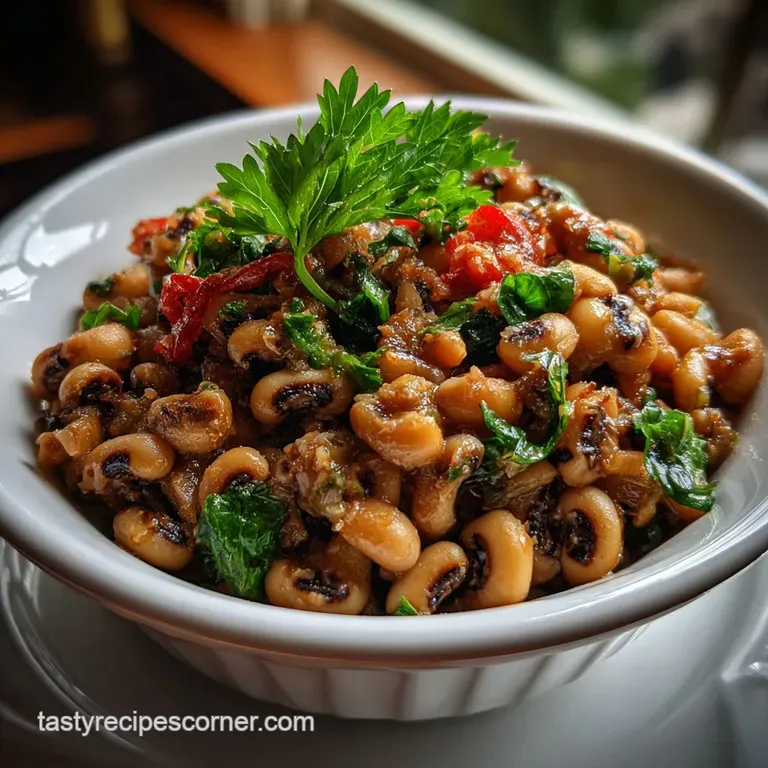
Follow these atomic steps to ensure the physical integrity of the peas while maximizing flavor extraction from the aromatics and smoked meat. This process builds layers of flavor through temperature control.
- Inspect 1 lb dried black eyed peas until all stones and shriveled debris are removed.
- Rinse the peas in a strainer until the water runs clear and foam subsides.
- Heat 2 tbsp bacon drippings in a Lodge Dutch Oven until shimmering and a faint wisp of smoke appears.
- Sauté diced onion, bell pepper, and celery 8 min until edges turn translucent and the aroma shifts from pungent to sweet.
- Stir in 4 cloves minced garlic 1 min until fragrant but not browned or bitter.
- Add 1 lb smoked ham hocks, 1 tsp smoked paprika, 1/2 tsp thyme, and 1/4 tsp cayenne until the spices coat the vegetables and smell toasted.
- Pour in 6 cups chicken stock and 2 cups water until the liquid reaches a rolling boil.
- Incorporate the rinsed peas and 2 bay leaves until the mixture returns to a simmer.
- Reduce heat to low and cover 1 hour 45 mins until peas are tender and the ham hock meat begins to pull away from the bone.
- Season with 1 tsp kosher salt and 1/2 tsp black pepper until the flavors pop and the broth tastes balanced.
Chef's Note: If you want a creamier "pot liquor," take a ladle of the cooked peas, mash them into a paste in a small bowl, and stir them back into the pot. This releases starches that naturally thicken the broth without needing flour or cornstarch.
Common Mistakes & Troubleshooting the Legume Simmer
Why Your Southern Black Eyed Peas Recipe Has "Hard" Peas
If your peas remain tough after two hours, you likely have "hard water" or the peas are several years old. Old legumes lose their ability to absorb moisture as the proteins in the cell walls cross link and become hydrophobic.
| Problem | Root Cause | The Fix | Pro Protocol |
|---|---|---|---|
| Crunchy centers | Old peas or hard water | Add 1/4 tsp baking soda | Soda raises pH, weakening pectin bonds instantly |
| Excessive Saltiness | Smoked meat variance | Add a peeled potato | The potato absorbs excess brine; remove before serving |
| Watery Broth | Low starch release | Mash 1/2 cup of peas | Re-incorporating mashed peas emulsifies the liquid |
Excessively Salty Broth
Smoked ham hocks vary wildly in sodium content. If your broth tastes like seawater, the osmotic pressure has pulled too much salt from the meat into the liquid. This is why we wait until the final 15 minutes of this Southern Black Eyed Peas Recipe to add the 1 tsp of kosher salt. If it's already too salty, dilute with 1 cup of water and simmer for another 10 minutes to redistribute the flavors. This technique is similar to how you would balance the savory notes in a Beef Breakfast Sausage recipe.
Flavor Variations and Modern Adaptations for This Recipe
Modern Appliance Adaptations
- Crock Pot/Slow Cooker: Combine all ingredients (using only 5 cups of stock) and cook on Low for 7 8 hours or High for 4 hours. The enclosed environment prevents evaporation, so less liquid is required.
- Instant Pot/Pressure Cooker: Use 4 cups of liquid total. Cook on High Pressure for 20 minutes with a natural release for 15 minutes. This mimics the results of the long simmer in a fraction of the time.
Dietary Swaps
- Vegetarian/Vegan: Replace chicken stock with vegetable broth and swap the ham hock for 2 tsp of smoked paprika and 1 tbsp of soy sauce (for umami). Add 1/2 tsp of Liquid Smoke at the end to mimic the wood fired depth.
- Smoked Turkey: For a leaner profile, the 1 lb smoked turkey wing provides excellent flavor with significantly less saturated fat than the ham hock.
Optimal Storage and Reheating Protocols for Best Texture
Like most braised dishes, this Southern Black Eyed Peas Recipe tastes significantly better the next day as the flavors undergo "flavor marrying" a process where aromatic molecules dissolve into the fat and redistribute throughout the legumes.
- Fridge: Store in an airtight container for up to 5 days. The broth will likely thicken into a jelly like consistency due to the gelatin from the ham hocks; this is normal and a sign of a successful cook.
- Freeze: These peas freeze beautifully. Place in freezer safe bags with at least 1 inch of headspace. They will stay fresh for up to 6 months.
- Reheating: Heat on the stovetop over medium low. You may need to add a splash of water or stock to loosen the gelatinized broth. Avoid the microwave if possible, as it can cause the peas to explode or become rubbery.
💡 ZERO WASTE PHILOSOPHY
Don't discard the ham hock bones! Transform: Simmer the leftover bones with onion scraps and water for another 2 hours to create a "secondary stock" (remouillage). Science: Even after the main cook, the bones contain residual marrow and collagen that can fortify future soups or a Beef Sausage Recipe.
Serving Suggestions for a Traditional Southern Feast
To serve this Southern Black Eyed Peas Recipe authentically, you need a balance of acid and crunch to cut through the rich, smoky "pot liquor."
- The Traditional Platter: Serve over a bed of fluffy white rice (Hoppin' John style) with a side of buttery cornbread. The cornmeal provides a textural contrast to the velvety peas.
- The Acid Kick: A dash of apple cider vinegar or a scoop of "chow chow" (pickled vegetable relish) is essential. The acetic acid brightens the dish and resets the palate between bites of heavy, smoky protein.
- Greens Pairing: This recipe pairs perfectly with braised collard or mustard greens. The bitterness of the greens complements the earthy sweetness of the 150g yellow onion. It’s a classic combo, much like how you’d serve a Shrimp Cream Pasta Recipe with a crisp side salad.
⚗️ The Scaling Lab: Physics of Quantity
When doubling this Southern Black Eyed Peas Recipe to 16 servings, you cannot simply double every element.
- The Evaporation Paradox: If you use the same wide pot, your surface area hasn't changed much, but your volume has. Reduce total liquid by 15% (use approx 10 cups of stock/water instead of 16) or the peas will be swimming in a thin, watery broth.
- Flavor Saturation: Spices like cayenne and thyme should be scaled to 1.5x, not 2x. Their potency increases exponentially in larger volumes.
- Thermal Mass: Doubling the 1 lb dried peas to 2 lbs will significantly drop the temperature of your stock. It will take ~20% longer to return to a simmer, which can affect the final texture of the vegetables.
- Carry over Heat: A larger pot retains heat much longer. Pull the pot off the heat when the peas are "al dente," as they will continue to soften for 15 20 minutes in the hot liquid.
Myth: You must soak black eyed peas overnight. Truth: Unlike kidney or pinto beans, black eyed peas have a relatively thin skin and do not require a long soak. A 2 hour simmer is more than enough to achieve perfect hydration and tenderness.
Myth: Adding salt at the beginning makes beans tough. Truth: This is partially true in hard water, but in a controlled environment, a small amount of salt can actually help the skins remain intact.
However, for this specific Southern Black Eyed Peas Recipe, waiting until the end is the safest way to ensure the 450g of peas soften predictably.

Recipe FAQs
how to make southern black eyed peas?
Sauté aromatics, simmer smoked meat in stock/water 1 hour, add peas, simmer 1 hour more, season at end. This method ensures controlled hydrolysis of collagen, leading to a creamy pot liquor. If you enjoyed mastering this layering technique, see how we apply similar principles to build flavor complexity in our Hoisin Sauce: Authentic Homemade Recipe, Rich Umami, Ready in Minutes.
how to make southern black eyed peas in crock pot?
Use 5 cups liquid total; cook on Low for 7 8 hours or High for 4 hours. The enclosed slow cooker environment prevents necessary evaporation, so reduce the initial water/stock ratio slightly. This technique leverages long, low heat for tender legumes.
how to make southern black eyed peas and rice?
Cook peas separately until done, then serve the rich pot liquor over steamed long grain white rice. The rice absorbs the flavorful broth, creating the traditional Hoppin' John texture. This pairs perfectly with the side dish from our Hawaiian Mac Salad Recipe: The Real Deal Ultra Creamy Plate Lunch Essential.
how to cook southern black eyed peas?
Simmer whole, rinsed peas at 200°F for approximately 2 hours, seasoning only in the final 30 minutes. Sustained heat softens the pectin bonds within the cell walls, achieving a buttery consistency without bursting the skins. The low temperature prevents premature protein coagulation.
how to cook southern black eyed peas in crock pot?
Combine ingredients with only 5 cups liquid and cook on low setting for 7 hours minimum. The consistent low heat excels at breaking down connective tissue in smoked meats for broth body. This steady temperature control shares principles with baking doughs, much like in our Empanada Dough: The Flakiest All-Purpose Recipe for Baking or Frying.
Do I need to soak black eyed peas overnight?
No. A thorough rinse is sufficient for most modern dried legumes. Black eyed peas have thin skins and will fully hydrate during the 2-hour simmer required for the smoked meat collagen to break down fully.
Why are my black eyed peas tough after cooking?
Hard water minerals reinforce the pectin in the pea skins, preventing hydration. Calcium and magnesium ions bind to the pectin polymers, creating a rigid structure that resists breakdown even at sustained temperatures.
- Rinse peas with distilled water
- Add 1/4 tsp baking soda near the end
- Ensure legumes simmer below boiling point (212°F)
Southern Black Eyed Peas Recipe
Ingredients:
Instructions:
Nutrition Facts:
| Calories | 285 kcal |
|---|---|
| Protein | 18g |
| Fat | 7g |
| Carbs | 38g |
| Fiber | 6g |
| Sugar | 3g |
| Sodium | 580mg |
