Rice Porridge: the Silky Ginger Congee Base
- Understanding the Anatomy of Authentic Rice Porridge
- The Science of Silk: Achieving the Perfect Congee Texture
- Essential Ingredients and Mastering the Rice-to-Liquid Ratio
- Step-by-Step: Crafting the Silky Ginger Congee Base (Stovetop Method)
- Advanced Cooking Methods: Instant Pot vs. Slow Simmering
- Troubleshooting and Mastering the Porridge Consistency
- Extending Freshness: Storing and Reheating Congee
- Serving the Base: Customizable Toppings and Pairings
- Recipe FAQs
- 📝 Recipe Card
Understanding the Anatomy of Authentic Rice Porridge
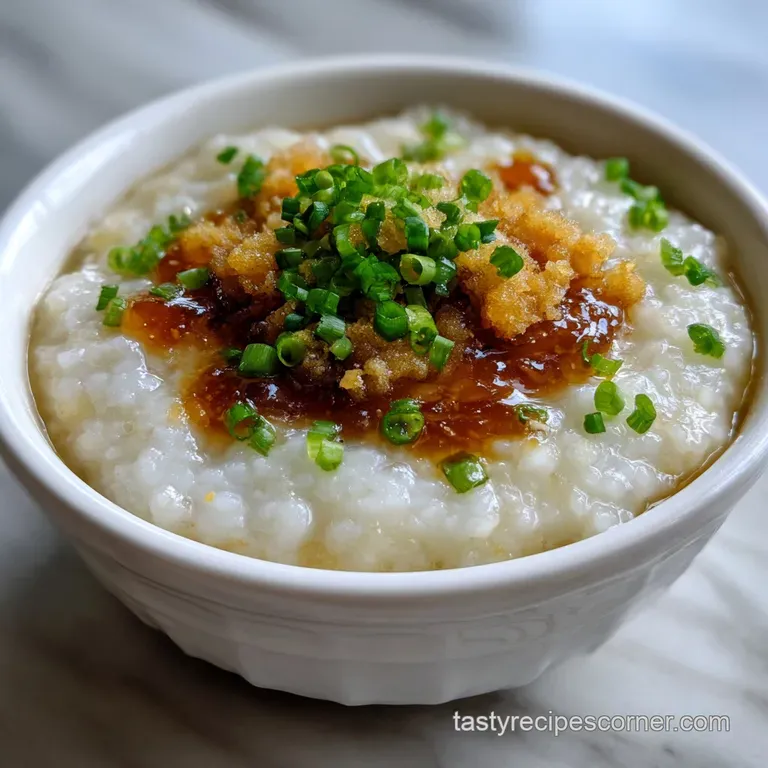
There is nothing quite like the soothing, gentle aroma of a pot of Rice Porridge simmering away on the stove. It is the ultimate culinary hug, smelling faintly of clean ginger and rich stock, promising a bowl of pure, velvety comfort.
The texture should be wonderfully thick and creamy, something you just can’t get from quick cooking grains. We’re aiming for silk here, not glue.
This dish is the definition of flexible nourishment incredibly cheap to make, requiring minimal active effort, and capable of taking on virtually any flavour profile you throw at it.
Whether you call it congee, jook, or simply Rice Porridge , it’s a lifesaver when you feel under the weather or just need a simple, satisfying meal that truly warms you from the inside out.
Today, we are diving deep into the secrets of creating the perfect base . This isn't just about throwing rice and water into a pot; this is about achieving that perfect silky texture that sets truly authentic Rice Porridge apart from the rest. Let’s get that pot boiling!
The Science of Silk: Achieving the Perfect Congee Texture
The journey from dry rice to luxurious Rice Porridge is a fascinating lesson in starch breakdown. It requires patience, yes, but once you understand the simple science, you can master any bowl of creamy rice porridge .
Defining Congee vs. Risgrynsgröt: A Cultural Perspective
While many cultures enjoy a variant of Rice Porridge , the approach often varies dramatically. European Risgrynsgröt , for instance, is traditionally made with milk, short grain rice, and copious amounts of sugar, resulting in a sweet, sticky dessert or breakfast treat.
Our savoury asian rice porridge (congee or jook) relies on broth, water, and slow cooking to totally dissolve the rice grains. This process creates a thin, almost medicinal base that’s perfect for savory toppings.
The Chef’s Base: The Unique Role of Fresh Ginger in Savoury Porridge
In this specific congee recipe, fresh ginger isn't just a garnish; it's a foundational flavour. By lightly bruising the thick slices and adding them at the start, they infuse the chicken stock and water with a clean, gentle heat that carries throughout the entire cooking process.
This subtle warmth prevents the Rice Porridge from tasting flat and primes your palate for the robust toppings you’ll add later.
Why the Long Simmer is Crucial for Maximum Comfort
I know, 90 minutes feels like forever when you’re hungry, but trust me, that long, slow simmer is non-negotiable for a truly sublime Rice Porridge .
When rice simmers gently over a prolonged period, the starch molecules swell and eventually burst, dispersing into the liquid. This is what creates that signature, homogeneous, creamy mouthfeel we crave in a good congee recipe .
The Starch Breakdown: Why White Rice Excels in Viscosity
We rely on white rice (specifically Jasmine or medium grain) because it’s high in amylopectin a type of starch that becomes very sticky and creamy when cooked. Brown rice, while healthier, holds its shape and refuses to break down sufficiently to create that desired silky smooth texture.
Stick to the white stuff for the best Rice Porridge .
Achieving a Naturally Vegan Creaminess
You don't need cream or butter to make a creamy Rice Porridge . The creaminess is achieved purely through the dissolution of the rice starch itself, making it naturally vegan, provided you swap the chicken stock for a quality vegetable or mushroom broth.
This allows everyone to enjoy this simple comfort food.
Controlling Viscosity: Why Continuous Stirring Matters
If you forget to stir your Rice Porridge , two terrible things happen: one, the rice sinks and burns on the bottom (nightmare!). Two, the starch pools unevenly.
Stirring every 15– 20 minutes ensures the broken down starch is evenly distributed throughout the liquid, guaranteeing a consistent, luscious viscosity from top to bottom.
Essential Ingredients and Mastering the Rice-to-Liquid Ratio
Making great Rice Porridge is all about the ratios. You need vastly more liquid than you would for standard rice, typically a 1:8 or 1:10 ratio of rice to liquid (stock + water).
Selecting the Right Grain: Short vs. Medium Rice for Jook
While the recipe calls for Long grain Jasmine rice, which yields a lovely fragrant and soft result, you can happily use medium grain rice (like Arborio or sushi rice). Short grain varieties tend to release starch even faster and result in an even thicker jook recipe .
Whatever you choose, rinsing is the sacred first step to remove surface starch and prevent the final product from becoming overly sticky or gluey.
Detailed Notes on Broth and Aromatic Selection (Ginger and Salt)
Since the liquid makes up the vast majority of your Rice Porridge , please, please, use the best quality, low-sodium chicken stock you can find. It is the backbone of flavour. And remember to bruise your ginger slices!
A quick smash with the flat of your knife releases its essential oils far better than simply slicing it.
Adjusting the Ratio for Thin, Brothy, or Thick Porridge Consistency
The 1 cup rice to 8 cups liquid ratio detailed below yields a wonderfully thick, spoonable Rice Porridge . If you prefer yours thinner more traditional street style congee aim for a 1:10 ratio and add the extra liquid during the last 30 minutes of cooking.
If it ever gets too thick, just splash in hot water until you hit the mark.
Ingredient Substitutions for Allergy or Preference
| Ingredient | Substitute | Notes on Usage |
|---|---|---|
| Long grain Jasmine Rice | Arborio or Sushi Rice | Use slightly less liquid (about 7.5 cups) as these grains thicken faster. |
| Chicken Stock | high-quality Mushroom Broth | Essential for a robust vegan base. Add a splash of tamari for umami depth. |
| Fresh Ginger | Ground Ginger | Use 1 tsp, but add only during the last 30 minutes, as the flavour is more intense. |
| Kosher Salt | Fish Sauce or Soy Sauce | Use 1 tbsp of either for a salty, umami kick, but taste and adjust seasoning last. |
step-by-step: Crafting the Silky Ginger Congee Base (Stovetop Method)
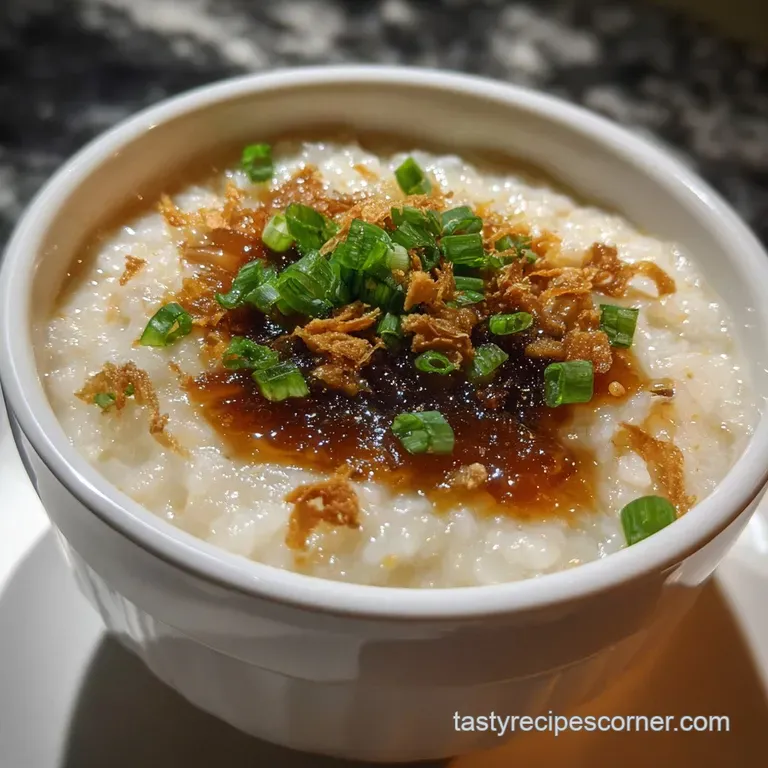
This is my tried and true method for perfect, smooth Rice Porridge every single time. Get your biggest, heaviest pot ready!
I. Preparation and Initial Simmer
- Rinse the Rice Religiously: Place 1 cup of rice into a fine mesh sieve and rinse under cold running water. Keep rinsing until that water runs crystal clear. This removes that powdery excess starch which can make your final Rice Porridge sticky instead of silken.
- Start Cold: In your heavy bottomed pot, combine the rinsed rice, the 1 tsp of neutral oil (helps coat the grains and prevent sticking early on), the 6 cups of stock, 2 cups of water, bruised ginger slices, and a pinch of salt. Starting with cold liquid is essential for even starch release.
- The Roaring Boil: Bring the mixture up to a strong, rolling boil over medium high heat. You must stir this entire time to prevent the rice grains from welding themselves to the bottom of the pot. Skim off any grayish foam that rises to the surface; that’s just excess impurity.
II. The Long Simmer (The Key Technique)
- Low and Slow: Immediately reduce the heat to the absolute lowest setting possible. We want the liquid barely bubbling a lazy simmer. Cover the pot, tilting the lid slightly open to release steam and prevent messy boil overs.
- The Ninety Minute Window: Simmer for 90 minutes. This is your time to relax, but don't forget your duty! Stir the porridge every 15 to 20 minutes. Always scrape the bottom thoroughly to ensure no rice is settling.
Chef’s Note: If the bubbles are too vigorous, you are losing too much liquid too fast and risking a burn. Turn the heat down further, or use a heat diffuser under the pot. Preventing scorching is paramount to good Rice Porridge .
- Check Consistency: After 90 minutes, the rice should be fully bloomed and dissolved. The mixture should look like a thick, elegant cream soup. If it’s too thick, add a splash of hot stock. If you need inspiration for using rice in other formats, check out my recipe for [Black Beans and Rice: The Flavourful Cuban Congrí Recipe] a total flavor shift!
III. Finishing and Serving
- The Final Seasoning: Fish out and discard those beautiful ginger slices. Now is the moment to taste and adjust the remaining salt and white pepper. Remember that the saltiness of the final Rice Porridge should complement your anticipated toppings.
- Serve Hot: Ladle the hot congee into bowls. A quick drizzle of sesame oil and a scattering of fresh spring onions transforms this simple base into something magnificent.
Advanced Cooking Methods: Instant Pot vs. Slow Simmering
While the stovetop method is traditional, modern appliances are brilliant for achieving creamy Rice Porridge with less stirring.
Pressure Cooker Technique for Rapid Jook
Making rice porridge instant pot style is a serious time saver. Use the same 1:8 ratio of rice to liquid. Combine all ingredients (except the oil) in the Instant Pot.
Cook on High Pressure for 20 minutes, then allow a Natural Pressure Release (NPR) for 15 minutes before venting the remaining pressure.
The sheer force of the pressure ensures a rapid breakdown, giving you silky Rice Porridge in under an hour total.
Set-It and Forget-It: Slow Cooker Porridge Method
The slow cooker is perfect if you want to wake up to creamy Rice Porridge . Combine all ingredients in the slow cooker and cook on Low for 6 to 8 hours, or on High for 3 to 4 hours.
Minimal stirring is needed, making this a great method for overnight cooking.
Troubleshooting and Mastering the Porridge Consistency
Even the most careful cook makes mistakes. Here’s how to fix them when making your perfect bowl of Rice Porridge .
Preventing Scorching at the Pot’s Base
If you neglect to stir regularly, the rice settles and burns, giving the whole pot a nasty, acrid flavour. Fix: Immediately transfer the unburnt portion of the Rice Porridge into a clean pot, leaving the bottom layer behind.
Increase the liquid slightly to make up for the scorched loss and proceed with the simmer.
Salvaging Overly Thick or Watery Porridge
If the porridge is too thick, simply stir in additional hot stock or water, 1/4 cup at a time, until the desired viscosity is reached. If it’s too watery, remove the lid entirely, increase the heat slightly, and simmer gently for another 10– 15 minutes until enough liquid has evaporated and the starch has thickened the base.
The Salt Factor: Timing Your Final Seasoning
Never season fully at the beginning! Salt concentrates as water evaporates. Wait until the very end, after you’ve adjusted the liquid to your final desired thickness, to add the majority of the salt. This guarantees your final bowl of Rice Porridge isn't shockingly salty.
Extending Freshness: Storing and Reheating Congee
Why Rice Porridge Thickens When Chilled
Starch molecules continue to bind together as they cool, leading to a much thicker, almost solid block of Rice Porridge in the fridge. Don't panic! This is completely normal and expected.
Best Practices for Refrigeration and Freezing
Store leftover Rice Porridge in an airtight container in the refrigerator for up to 4 days. While you can freeze it (it keeps well for 3 months), the texture can be slightly grainy upon thawing.
If you plan to freeze, ensure it’s slightly thinner than you’d normally eat it before storing.
Reviving Leftovers: Tips for Perfect Reheating
To reheat, always add water or stock. For every cup of chilled Rice Porridge , start with at least 1/4 cup of liquid. Heat gently on the stove, stirring continuously until the solids loosen and it returns to its creamy, original consistency.
This is essential for enjoying leftover creamy rice porridge.
Serving the Base: Customizable Toppings and Pairings
The versatility of this Ginger Congee base is truly its superpower.
Customizable Toppings
Once you master this basic Rice Porridge recipe , the toppings are limitless. For maximum textural contrast, I highly recommend adding crispy elements. You could go simple with peanuts and toasted sesame seeds, or try preparing some golden, crunchy elements.
For a truly professional touch, you could even try making restaurant style [Crispy Rice: Get Golden, Restaurant Quality Squares at Home] and crumble them on top!
Perfect Pairings
A classic soft boiled egg is non-negotiable the yolk adds an incredible richness to the rice. For extra flavour, consider serving shredded pork or marinated firm tofu on the side. This base is also fantastic alongside a vibrant, quick kimchi or a simple drizzle of chili oil.
This easy Rice Porridge will keep you happy and warm, no matter the weather. Enjoy!
Recipe FAQs
Why is my rice porridge not creamy, but rather watery with rice grains at the bottom?
Creaminess (the silky texture) is achieved by allowing the rice grains to completely break down and release their starch into the liquid. If your porridge is watery, you likely did not cook it long enough or used too low of a liquid ratio; aim for at least an hour of gentle simmering for the best results.
Additionally, ensure you are stirring occasionally, especially toward the end, to prevent scorching and encourage uniform starch release.
Can I use brown rice or long grain varieties like Basmati for this recipe?
While possible, short grain rice (like Arborio or sushi rice) is highly recommended because its high starch content is essential for achieving the desired velvety texture. Using long grain or brown rice will require significantly more liquid and much longer cooking times, often yielding a chewier porridge that lacks the traditional smooth silkiness of classic congee.
My congee tastes flat how should I properly season it without oversalting?
The base porridge should only be lightly seasoned with salt during cooking to help the rice absorb flavor, but the main depth should come from using quality broth or stock. Most intense seasoning, such as soy sauce, fish sauce, or preserved vegetables, should be added with the toppings right before serving.
This layering technique allows each diner to customize the final salt level and complexity.
How can I make this base recipe suitable for vegans or vegetarians?
The savoury base is easily converted by swapping chicken stock for a robust, high-quality vegetable or mushroom broth. For deep umami flavor, soak dried shiitake mushrooms and simmer them whole in the porridge, removing them once the rice is cooked.
A drizzle of toasted sesame oil or a knob of vegan butter can also add necessary richness.
How should I store leftover rice porridge and successfully reheat it?
Store cooled congee in an airtight container in the refrigerator for up to three days, noting that it will thicken dramatically upon cooling. When reheating, you must add extra liquid either water or broth and gently whisk the mixture over low heat until the desired smooth, creamy consistency is restored.
Never microwave leftovers without adding liquid first, as it will become stiff and gummy.
Can I use a pressure cooker or Instant Pot to significantly speed up the cooking time?
Yes, a pressure cooker is an excellent tool for making congee quickly, reducing the required time from over an hour to about 20 25 minutes. Maintain the same high liquid ratio (1 part rice to 10 12 parts liquid) and cook on high pressure.
Be sure to allow for natural pressure release for at least 10 minutes to let the grains fully swell and achieve the best texture.
When is the best time to add proteins and delicate garnishes to the porridge?
Proteins, such as shredded chicken or fish, should be fully cooked beforehand and stirred in during the last 5 minutes of simmering or added directly to the serving bowl. Delicate fresh garnishes like scallions, cilantro, and ginger slivers should always be added right before serving.
The intense residual heat of the congee is enough to gently wilt these items without overcooking them or compromising their fresh flavor.
Silky Ginger Rice Porridge Base
Ingredients:
Instructions:
Nutrition Facts:
| Calories | 69 kcal |
|---|---|
| Protein | 2.7 g |
| Fat | 1.0 g |
| Carbs | 11.1 g |
