Chicken Meatballs: Light, Lean, and Juicier Than Any Store-Bought Brand
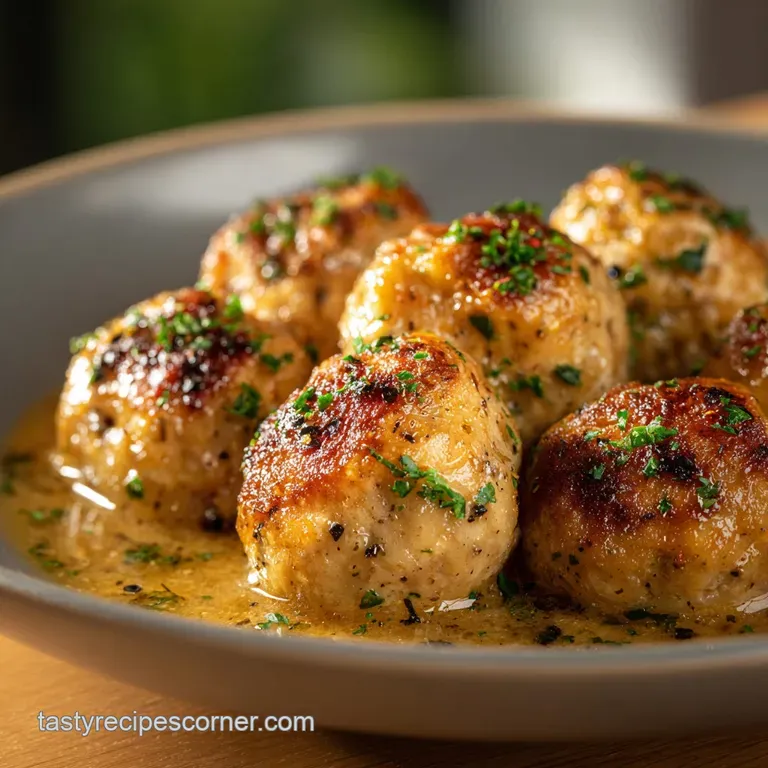
- The Golden Standard: Light & Lean Chicken Meatballs with Lemon and Herbs
- The Science of Moisture: Why These Chicken Meatballs Stay Tender
- Essential Pantry List: Ingredients for Perfect Chicken Meatballs
- Master the Technique: Step-by-Step Preparation Guide
- Troubleshooting and Expert Tips for Optimal Results
- Preparation and Preservation: Make-Ahead Chicken Meatballs
- Versatile Pairings: Creative Ways to Serve These Meatballs
- Recipe FAQs
- 📝 Recipe Card
The Golden Standard: Light & Lean Chicken Meatballs with Lemon and Herbs
You know that incredible smell when garlic and fresh herbs hit a sizzling hot pan? That’s exactly what we are aiming for right now. These chicken meatballs are seriously light, impossibly tender, and have this amazing bright, citrusy zing that keeps them from feeling heavy.
Forget everything you thought about lean meatballs being dry; these melt in your mouth.
This specific recipe is my weeknight lifesaver, hands down. It’s cheap, incredibly fast to mix up, and it freezes like an absolute dream for those manic Tuesdays. We are ditching the heavy breading and focusing on simple, reliable techniques that maximize moisture, avoiding that dense, sad, gummy texture we all hate.
I’ve made all the mistakes, trust me from rubbery, over mixed batches to crumbly disasters that dissolved the second they hit the sauce. I fixed them all, and now I’m handing you the golden standard.
Let’s dive in and make the perfect chicken meatballs recipe that you’ll be making again and again.
The Science of Moisture: Why These Chicken Meatballs Stay Tender
Why Lean Meatballs Get a Bad Reputation (And How We Fix It)
Ground chicken, especially if you use only breast meat, is notoriously low in fat. Fat equals flavor and moisture, so the common result is dry, bland meatballs. The genius fix here is creating a panade —a milk soaked bread binder which traps moisture inside the meat fibers as they cook, essentially self basting the mixture.
The Essential Role of Lemon and Fresh Herbs
This recipe doesn't rely on heavy seasonings; instead, we use fresh, bright flavors. The lemon zest cuts through the richness and balances the savory flavor beautifully. On top of that,, the acid in the zest and the freshness of the parsley help keep the final texture light.
Don't even think about using dried parsley here.
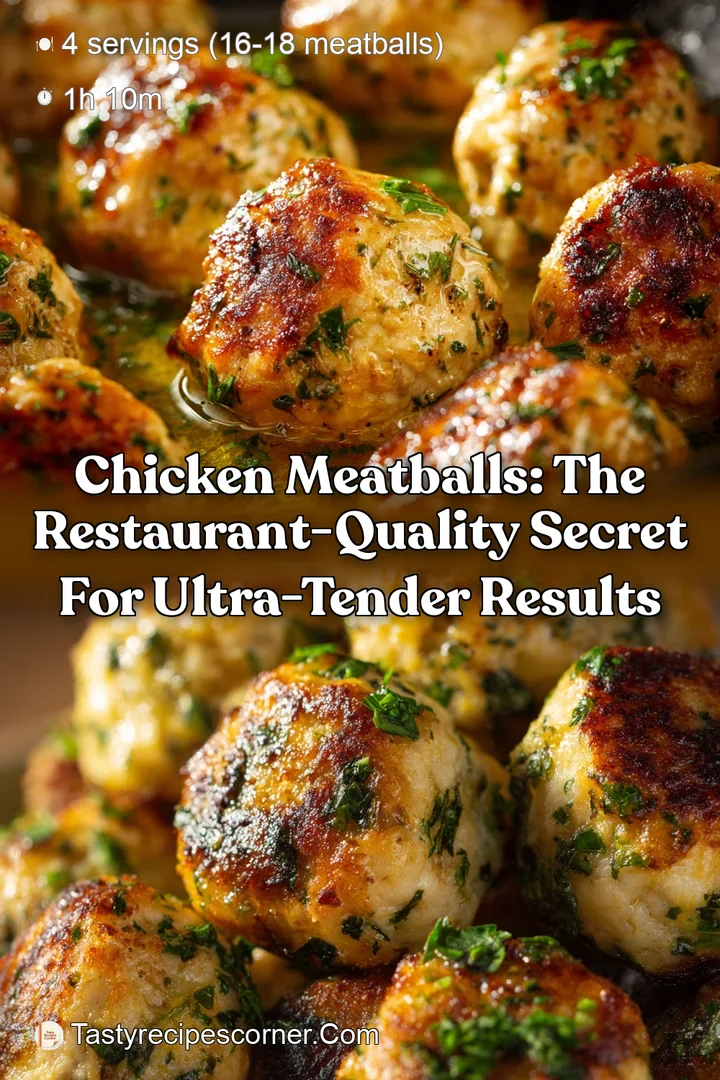
Quick Glance: Recipe Yield and Total Time
| Stage | Time Required |
|---|---|
| Prep Time | 15 minutes active, 30 minutes chilling. |
| Cook Time | 25 minutes |
| Total Time | 1 hour 10 minutes |
The Secret Binder: Soaking Panko for Optimal Texture
Most people just toss dry breadcrumbs into their meat mixture, which is a major mistake. Dry breadcrumbs suck up all the precious natural moisture from the ground chicken when they cook.
We fully saturate the panko (or soft bread) with milk beforehand, turning it into a moist binder that actually adds tenderness rather than absorbing it.
Don't Overmix: Protecting the Protein Structure
This is the single biggest error I see people make. When you work the meat mixture too much, you activate the muscle proteins, which results in a dense, springy, and rubbery meatball. Mix until just combined, and then immediately stop; your hands are your best tools for this light touch.
Choosing the Right Baking or Pan-Frying Temperature
Whether you cook your chicken meatballs in oven or pan-fry them, temperature control is essential. We start with a high heat sear to develop that beautiful crust (the Maillard reaction!).
Then, we finish them in a lower temperature oven or simmering sauce, allowing them to cook through gently without seizing up or drying out the exterior.
Essential Pantry List: Ingredients for Perfect Chicken Meatballs
We keep the ingredient list simple, but the quality of a few key items really matters here. Skip the pre-shredded Parmesan, please; it contains anti caking agents that can dry out the mixture.
Meat Selection: Ground Chicken Ratio Recommendations
I highly recommend using ground chicken that is a mix of breast and thigh meat, ideally around 85 90% lean. Using 100% lean breast meat often guarantees a dry result, so find that balance.
If you can only find lean breast, slightly increase the Parmesan or add 1 tablespoon of olive oil to the mix for necessary fat.
Maximizing Flavor: Choosing Your Fresh Herbs (Parsley vs. Oregano)
For this bright, classic flavor, fresh parsley is mandatory. It offers a clean, herbaceous note that doesn't overwhelm the lemon and garlic. If you want a slightly more rustic Italian feel, you can use half parsley and half fresh oregano.
Flavor Swaps: dairy-free Binders and Gluten Alternatives
| Ingredient | My Recommendation | Viable Substitute |
|---|---|---|
| Whole Milk | Crucial for the panade. | Unsweetened nut milk (almond or oat) works fine, or chicken stock. |
| Panko/Stale Bread | Gives the best texture. | gluten-free panko, or 1/4 cup of smooth ricotta cheese. |
| Parmesan Cheese | Adds salt and umami richness. | Nutritional yeast (for a cheesy, dairy-free flavor) or finely chopped pine nuts. |
| Ground Chicken | Use a thigh/breast mix. | Ground turkey works perfectly well, but might need a touch more liquid. |
Chef’s Note: Don’t forget the chill time! Chilling the shaped chicken meatballs for 30 minutes is the binding secret that prevents them from crumbling when you sear them. This step is not optional!
Master the Technique: step-by-step Preparation Guide
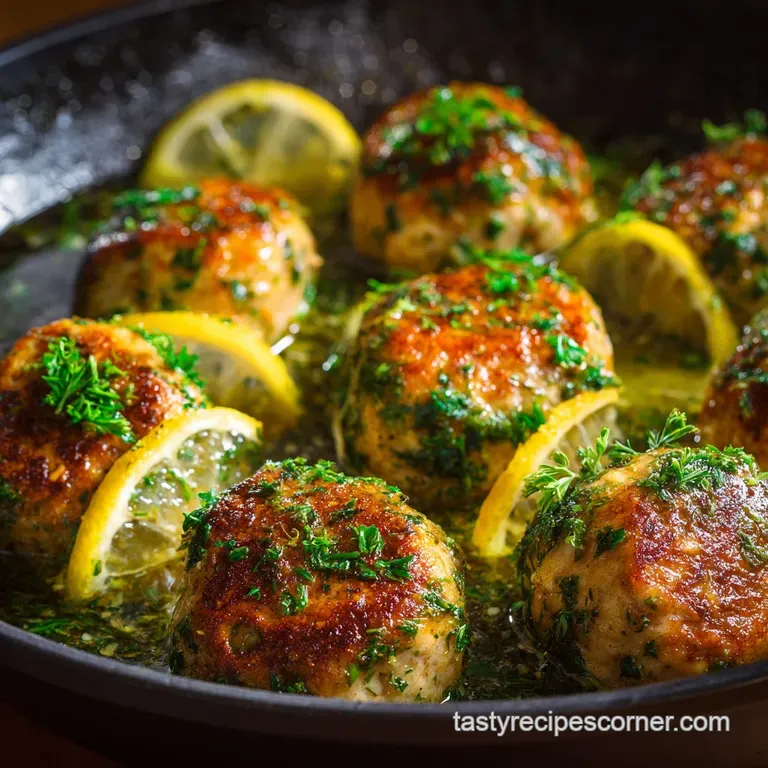
Prep Work: Creating the Aromatic Base
Start by preparing your panade: combine the panko and milk in a small bowl, pressing slightly until all liquid is absorbed. Next, mince your garlic and zest your lemon, combining them with the finely chopped parsley and lightly beaten egg.
This ensures all your flavor components are ready to be seamlessly incorporated into the meat.
Forming Uniform Meatballs (The Ice Cream Scoop Trick)
Place your chilled ground chicken into a large bowl and sprinkle the salt and onion powder over it. Add the wet panade mixture. Now, gently mix everything using a light, scooping motion with your hands or a rubber spatula.
Stop mixing the second you no longer see pockets of dry panko or unmixed seasoning.
The trick: Use a standard 1.5 inch cookie or ice cream scoop to portion the mix. This ensures every meatball is exactly the same size, which means they all cook at the exact same rate.
Roll them quickly between wet palms just to smooth them out, then immediately place them on a parchment lined tray to chill.
Achieving the Sear: Pan-Frying vs. Baking
If you are making chicken meatballs with sauce , you must sear them first. Heat your skillet with olive oil over medium high heat until it shimmers (a nutty aroma is what you want). Place the cold meatballs in the hot oil you should hear a satisfying sizzle.
Sear them for 2– 3 minutes per side until they have a beautiful golden crust, but remember they are not cooked through yet.
If you prefer the chicken meatballs air fryer or oven method (less mess), skip the sear. Bake at 400°F (200°C) for 15- 18 minutes, or air fry at 380°F (195°C) for 10- 12 minutes, shaking halfway.
Final Finish: Deglazing the Pan for Sauce Base
If you chose to sear, this is where the magic happens. Remove the seared meatballs temporarily. Pour a splash of liquid wine, broth, or water into the hot pan, scraping up all those delicious brown bits stuck to the bottom. Those are flavor gold! Now, pour in your tomato sauce, nestle the meatballs back in, and simmer them gently for 15– 20 minutes to finish cooking (internal temperature 165°F / 74°C). This is how we achieve a rich, restaurant quality sauce, perfect for serving alongside a creamy pasta like my Chicken Carbonara: Authentic Recipe for a Speedy Weeknight Supper .
Troubleshooting and Expert Tips for Optimal Results
Why Are My Meatballs Falling Apart? (Binding Issues)
This usually boils down to two things: lack of chilling or not enough binder. If your meatballs hit the oil when they are still warm and loose, they will crumble immediately. Fix: Ensure you chill them for the full 30 minutes, or if your mixture still feels too wet, add another tablespoon of soaked panko or a small sprinkle of Parmesan.
Preventing a Rubbery Texture
The primary culprit here is overmixing . If you mix the ground chicken until it looks like a homogenous paste (like dough), the gluten and protein threads seize up. The resulting meatballs will be firm, dense, and bouncy not tender. Be gentle!
Temperature Checks: Ensuring Meatballs Are Cooked Through
Visually checking meat doneness is a recipe for disaster. The only way to truly know your chicken meatballs are safe and juicy is by using an instant read thermometer. They must reach an internal temperature of 165°F (74° C) in the center.
Pull them out right at 165°F; they will continue cooking slightly as they rest.
Preparation and Preservation: make-ahead Chicken Meatballs
Shelf Life: How Long Do They Last in the Fridge?
Cooked chicken meatballs will last beautifully in an airtight container in the fridge for up to 4 days. If they are sitting in sauce, they tend to stay even moister.
Freezing Raw Meatballs (Flash Freeze Method)
If you love meal prepping, you can freeze these raw. Shape the balls and place them on a parchment lined tray, making sure they aren't touching. Flash freeze them uncovered for 1– 2 hours until rock hard.
Transfer the frozen meatballs to a freezer bag or container, label, and they will keep for up to 3 months. Cook them directly from frozen, adding about 5– 10 minutes to the cook time.
Reheating Cooked Meatballs Without Drying Them Out
Never reheat chicken meatballs in the microwave alone, as this is the fastest route to rubbery sadness. The best way is to place them back into a simmering sauce on the stovetop over low heat until they are warmed through, about 15 minutes.
Alternatively, reheat them gently in a 300°F (150°C) oven until warmed, misting lightly with water or oil before baking.
Versatile Pairings: Creative Ways to Serve These Meatballs
These little flavor bombs are truly versatile. I often make a huge batch and use them across three different meals in one week.
- Mediterranean Grain Bowls: Serve sliced meatballs over quinoa or farro, dressed with a simple lemon tahini dressing and topped with cucumbers and tomatoes.
- Appetizer Style: Serve them hot with toothpicks, alongside a dipping sauce made from sour cream, dill, and a squeeze of fresh lemon juice.
- Hearty Comfort: Instead of a traditional sauce, serve them with mashed potatoes and a simple pan gravy similar to the flavors in my Chicken and Gravy: The Crispy Skinned Pan-Seared Recipe , but in ball form!
Recipe FAQs
Why did my chicken meatballs turn out tough or rubbery?
This is almost always a result of overmixing the meatball mixture. When you overwork ground meat, the proteins bind too tightly, leading to a dense, rubbery texture instead of a light, tender one. Combine the ingredients gently until just incorporated, then stop immediately.
How can I ensure my chicken meatballs don’t come out dry?
Moisture retention is key for lean meats like chicken. Ensure you utilize the "panade" (the milk soaked bread/breadcrumb mixture) as it locks in moisture during cooking. Also, be careful not to overcook them; pull the meatballs once they reach an internal temperature of 165°F (74°C).
Can I bake or air-fry these instead of pan-frying?
Absolutely. For baking, preheat your oven to 400°F (200°C) and bake for 18 22 minutes, turning halfway through. To air-fry, cook at 375°F (190°C) for 10 14 minutes. For both methods, brush the meatballs with a little oil before cooking to promote a nice golden brown exterior.
I don't have milk for the panade. What is a good substitute?
The role of the panade is to add moisture and act as a tenderizing binder. If dairy is an issue, you can use water, unsweetened non-dairy milk, or chicken stock to soak the breadcrumbs. Alternatively, ricotta cheese or grated zucchini (squeezed dry) are excellent moisture boosters that bind well.
What is the best way to freeze the meatballs?
You can freeze them cooked or uncooked. For uncooked meatballs, place them on a parchment lined baking sheet and freeze until solid (about 2 hours). Once hardened, transfer them to a freezer safe bag or container; this prevents them from sticking together.
How do I know when the chicken meatballs are fully cooked and safe to eat?
The safest way to verify doneness is by using a meat thermometer inserted into the center of a meatball; the internal temperature must register 165°F (74°C). Visually, when you cut one open, there should be no pink remaining and the juices should run clear, not opaque.
How can I modify this recipe to give the meatballs a global flavour twist?
To go Mediterranean, swap the fresh herbs for dried oregano, sun-dried tomatoes, and a small amount of crumbled feta cheese. For an Asian inspired flavour, use fresh ginger, garlic, cilantro, and a tablespoon of soy sauce instead of the lemon zest.
Perfect Moist Chicken Meatballs Recipe
Ingredients:
Instructions:
Nutrition Facts:
| Calories | 250 kcal |
|---|---|
| Protein | 23.0 g |
| Fat | 13.0 g |
| Carbs | 11.0 g |
