Filet Mignon: Pan-Seared and Butter Basted for Restaurant Tenderness
- The Ultimate Guide to Pan-Seared Filet Mignon
- The Science of Tenderness: Why This Filet Mignon Method Is Flawless
- Sourcing and Preparing Your Ingredients for Filet Mignon
- Mastering the Sear and Baste: Step-by-Step Cooking Guide
- Expert Tips: Ensuring a Perfect Temperature and Crust
- Refined Pairings: What to Serve with Classic Filet Mignon
- Maximizing Leftovers: Filet Mignon Storage and Reheating Guide
- Recipe FAQs
- 📝 Recipe Card
The Ultimate Guide to Pan-Seared Filet Mignon
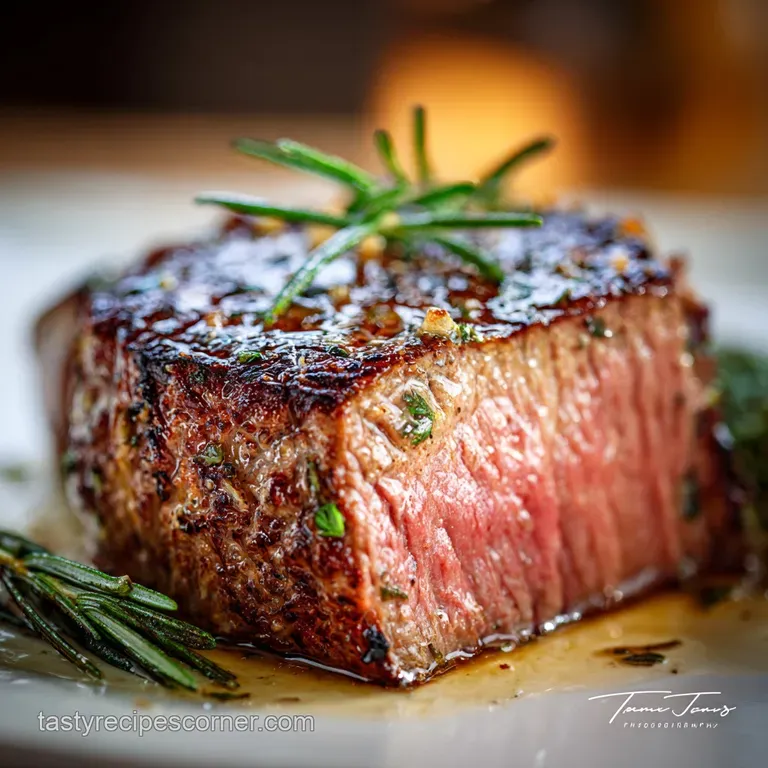
That smell of sizzling butter, thyme, and garlic is instantly addictive. I mean, seriously, could anything smell more luxurious? The perfect Filet Mignon has a crust that is dark and crunchy, hiding a centre so impossibly tender it truly cuts like butter. This isn't just steak night; this is a true culinary victory.
Most people think this cut is reserved for fancy restaurants or massive budgets. Wrong! Filet Mignon is actually one of the quickest "wow" meals you can make at home, assuming you follow a few simple, non-negotiable rules.
You get that true restaurant quality without the exorbitant price tag, which is the kind of magic I live for.
We are using the definitive method here: a over high heat pan-sear Filet Mignon , followed by a glorious butter basted steak finish and a rich red wine reduction built from the pan drippings.
Get ready to impress yourself, because this is the absolute ultimate way to handle the king of tenderness. Let's crack on.
The Science of Tenderness: Why This Filet Mignon Method Is Flawless
The secret to perfectly cooking this lean and delicate cut isn't just speed; it’s temperature control. We are relying on over high heat physics followed by a gentle aromatic finish. If you don't nail the first three minutes, your crust will be a total failure, trust me, I learned that the hard way.
The Unmatched Quality of the Tenderloin Cut
Filet Mignon is famous because it comes from the Psoas major muscle, which does almost zero work, hence its incredible tenderness. Because it’s so lean, it lacks the marbling that gives ribeye its flavour, so we have to introduce flavour aggressively on the outside.
This recipe is designed to add maximum flavour in minimum time, respecting the delicate nature of the cut.
Flavor Profile Breakdown: The Pan-Sear & Reduction
The over high heat sear locks in the essential meaty flavour while creating the foundational crust. When you deglaze the pan drippings those beautifully browned bits we call fonds —with wine and stock, you create an exponentially deeper flavour profile than if you just served it plain.
It transforms simple pan juices into a silky, sophisticated sauce that complements the meat perfectly.
Total Time Commitment and Prep Requirements
You need about an hour total for this entire process, but the actual hands-on cooking is less than 15 minutes. The longest and most crucial part is tempering the Filet Mignon and then letting it rest after cooking. Do not cheat the rest time.
Achieving the Maillard Crust
The Maillard Reaction is just a fancy name for browning, but it's where all the flavour lives. To achieve this, your pan must be screaming hot, and your Filet Mignon steak must be absolutely bone dry when it hits the oil.
If you skip patting it dry, you boil the surface instead of searing it, and you end up with a grey steak. We don't want grey steaks here, ever.
The Role of Thyme and Garlic Butter Basting
When the butter, thyme, and garlic hit the heat, they infuse into the foaming fat, creating an aromatic baste. Spooning this over the steak constantly not only finishes the cooking gently but also instantly transfers incredible flavour compounds right onto the crust.
This is how you achieve that incredible, nutty finish on a butter basted steak .
Building the Quick Red Wine Reduction
We build this entire sauce in the same pan, capitalizing on every ounce of flavour left behind. Shallots soften in the fat, red wine scrapes up the sticky brown bits, and the stock concentrates the flavour as it reduces.
Whisking in that final cold cube of butter ("mounting the sauce") gives it a restaurant quality glossy sheen that is visually and texturally perfect.
Sourcing and Preparing Your Ingredients for Filet Mignon
Choosing the right cut and thickness makes all the difference when cooking a premium cut like this. Quality ingredients matter, but sometimes you need a quick fix, so here are my go-to substitutions.
Choosing the Right Thickness and Grade
Aim for center cut Filet Mignon steaks that are 1.5 to 2 inches thick. Thinner steaks cook too fast, making it nearly impossible to get a good crust without overcooking the centre. I recommend USDA Prime or Choice grade, but the most important thing is finding a cut that is uniform in shape.
Essential Aromatics (Thyme, Garlic, Shallot)
Fresh herbs are non-negotiable for the baste; dried thyme or garlic powder just won't cut it here. The aromatic punch from fresh thyme and smashed garlic cloves is key to the final flavour. The shallot adds a subtle sweetness to the reduction without being harsh like a raw onion.
Substituting for the Red Wine Reduction
What if you don't have wine or prefer not to use it? That's totally fine, though you'll miss a bit of acidity.
| Ingredient | My Preferred Substitution | Why It Works |
|---|---|---|
| Grapeseed Oil | Avocado or Canola Oil | High smoke point prevents burning at high heat. |
| Shallot | 1 tbsp Finely Minced Yellow Onion | Provides aromatic base, though slightly sharper. |
| Dry Red Wine | Equal part Dry Sherry or White Grape Juice + 1 tsp Balsamic Vinegar | Adds necessary acidity to balance the richness. |
| Beef Stock | Water + 1/4 tsp Bovril or concentrated meat glace | Provides deep, savory umami when stock isn't available. |
Mastering the Sear and Baste: step-by-step Cooking Guide
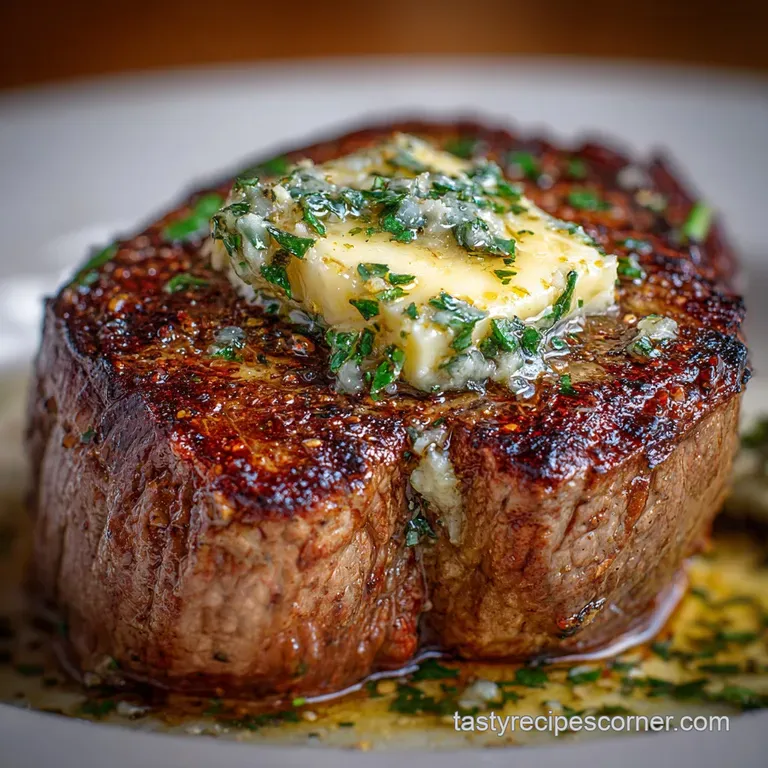
This is where the magic happens, but you must move quickly and confidently. Have all your butter, herbs, and aromatics pre-measured and ready before you turn on the heat.
Pre-Searing Prep and over High heat Setup
- Pat Dry & Season: Take your Filet Mignon out of the fridge, pat it aggressively dry with paper towels, and season generously with salt and pepper.
- Temper: Let the seasoned steaks sit out for a full 30 minutes. This tempering ensures the centre starts cooking before the outside burns.
- Heat the Pan: Place your heavy bottomed skillet (cast iron is best) over high heat. Add the grapeseed oil and wait until it is shimmering and just beginning to smoke.
Detailed Instructions for the Butter Baste
- The Sear: Place the steaks into the screaming hot pan. Do not touch them for 3 full minutes. We are developing the deep, dark Maillard crust .
- Flip and Reduce: Flip the steaks and sear for 2 more minutes. Reduce the heat immediately to medium low.
- Add Baste Elements: Throw in the cubed butter, smashed garlic, and fresh thyme sprigs. The butter should melt rapidly and froth excitedly.
- Baste: Tilt the pan toward you, allowing the butter to pool. Use a large spoon to scoop the foaming, aromatic butter over the steaks continuously for 1 to 2 minutes.
Chef’s Note: Pull the steak from the pan when it reads 5°F below your desired temperature. This carryover cooking step is critical. For medium rare (130°F), pull it at 125°F (52°C).
- Resting: Transfer the Filet Mignon to a wire rack or cutting board. Tent loosely with foil and let it rest for 8 to 10 minutes. Seriously, just walk away and let it rest.
Crafting the Rich Pan Sauce
- Sauté Shallots: Pour off most of the rendered fat from the pan, leaving the browned bits behind. Return the pan to medium heat and sauté the minced shallots until translucent (about 1 minute).
- Deglaze: Pour in the red wine and immediately scrape the bottom of the pan vigorously with a wooden spoon, dissolving all those flavourful sticky bits. Reduce the wine until it's thick and syrupy, cut by about half.
- Simmer and Reduce: Add the beef stock and simmer until the sauce has reduced to a coating consistency (it should cling to the back of a spoon).
- Finish: Remove the pan from the heat. Whisk in the cold cubed butter, one piece at a time, to give the sauce a rich, velvety finish. Taste and adjust the seasoning.
The All-Important Resting Phase
Resting allows the muscle fibers, which tightened under the heat, to relax and reabsorb the internal juices. If you skip this step, all that glorious moisture will just run out onto your cutting board, leaving you with dry meat. You deserve better than dry meat.
Expert Tips: Ensuring a Perfect Temperature and Crust
I’ve ruined more expensive cuts than I care to admit by rushing or guessing the internal temperature. Don't be like Past-Me; get an instant read thermometer and rely on these simple rules.
Internal Temperature Guide for Ideal Doneness
This is your most important tool for achieving the perfect Filet Mignon temp . Remember, pull the steak at the "Remove At" temperature, and the final temperature will be reached after resting.
| Doneness | Remove At (Internal Temp) | Final Temp (After Rest) | Texture Notes |
|---|---|---|---|
| Rare | 120°F (49°C) | 125°F (52°C) | Cool, red center. |
| Medium Rare | 125°F (52° C) | 130°F (54° C) | Warm, rosy red center (Recommended for Filet). |
| Medium | 135°F (57°C) | 140°F (60°C) | Hot, pink center. |
| Medium Well | 145°F (63°C) | 150°F (66°C) | Slightly pink center (Risk of drying out). |
Troubleshooting the Uneven Sear
If your skillet is warped or too small, the heat distribution will be uneven, resulting in patches of crust and patches of grey. Use only a heavy, flat bottomed pan like cast iron.
If you find one side isn't searing well, feel free to prop the steak briefly onto its side using tongs to sear the edges, too. This technique is often overlooked!
Why Resting the Filet Mignon is Non-Negotiable
As discussed, this is where the magic of tenderness is retained. When you cut too early, the concentrated juices spill out, resulting in a tougher, drier steak. Think of the resting time as allowing the meat to gently "rehydrate" itself.
Refined Pairings: What to Serve with Classic Filet Mignon
The richness of the classic Filet Mignon and the intensity of the reduction sauce demand strong, yet simple, side dishes. We need things that are creamy or bright.
Classic Vegetable and Potato Side Dishes
- Creamy Potato Dauphinoise: The thinly sliced potatoes layered in cream and cheese are a fantastic pairing, soaking up the red wine reduction beautifully.
- Buttery Mashed Potatoes: Simple, fluffy mash is always a winner.
- Asparagus: Quickly blanched and tossed with lemon zest and a pinch of salt, providing a necessary freshness and snap.
Wine Pairings for a Rich Pan Sauce
You need a wine that can stand up to the tannin and acidity in the red wine reduction. Choose something with structure. A classic Cabernet Sauvignon or a high-quality Bordeaux will harmonize perfectly with the pan sauce, complementing the Filet Mignon without overpowering it.
Complementary Dessert Choices
After such a rich main course, opt for something light and slightly tart. A simple Panna Cotta topped with fresh raspberries or a lemon tart cuts through the richness beautifully, leaving you satisfied but not stuffed.
Maximizing Leftovers: Filet Mignon Storage and Reheating Guide
But does this premium cut actually freeze well? You bet, provided you slice it first and handle it carefully. Filet Mignon is too expensive to waste!
Filet Mignon Storage and Reheating Guide
- Refrigeration: Leftover steak slices should be tightly wrapped or placed in an airtight container immediately after cooling completely. They are safe in the refrigerator for 3 to 4 days.
- Freezing: Slice the remaining steak against the grain. Place slices in a single layer in a freezer safe bag, ensuring all air is removed. It will last in the deep freeze for up to 3 months.
- Reheating (The Key): Never, ever microwave this steak unless you hate yourself. To reheat, preheat your oven to a low 250°F (120°C). Place the slices on a rack over a baking sheet and heat for 10– 15 minutes until just warmed through (around 100°F internal temp). This low and slow method warms it gently without continuing to cook the meat. Serve the reheated slices with fresh, warm sauce.

Recipe FAQs
How do I know when my filet mignon is perfectly done?
The best method is using an instant read thermometer inserted horizontally into the center of the steak. Aim for 130 135°F (54 57°C) for medium rare, remembering the temperature will rise 5 10 degrees during the mandatory resting period.
Never rely solely on cooking time, as steak thickness varies widely.
My sear isn’t developing a dark, crispy crust. What went wrong?
Ensure your steak is completely dry before seasoning and placing it in the pan; moisture creates steam and prevents the Maillard reaction. Additionally, the cooking fat must be smoking hot, and the pan should not be overcrowded, as this rapidly drops the necessary searing temperature.
Why is resting the filet mignon so crucial after cooking?
Resting allows the compressed muscle fibers to relax after the intense heat, enabling the internal juices to redistribute evenly throughout the steak. If you skip this mandatory 10-minute step and slice immediately, all the precious moisture will bleed out onto the cutting board, resulting in a dry final product.
Can I substitute the red wine reduction, perhaps for a non-alcoholic sauce?
Absolutely; the reduction provides acidity and richness, but you can achieve similar results using concentrated beef stock mixed with a teaspoon of balsamic vinegar. Alternatively, prepare a classic creamy peppercorn sauce, which pairs wonderfully with the mild tenderness of the filet mignon.
What is the best type of oil to use for the initial high heat sear?
Use an oil with a very high smoke point, such as grapeseed, avocado, or refined canola oil, for the initial sear. Olive oil or butter are generally too low-heat and will burn quickly, adding a bitter or scorched flavor to the crust before the steak is cooked properly.
How long can I store leftover filet mignon, and what is the best way to reheat it?
Leftovers should be stored in an airtight container in the refrigerator and consumed within 3 days. Reheating should be done gently in a low oven (around 250°F / 120°C) until just warm, which prevents the exterior from drying out.
Often, slicing the steak cold and adding it to a salad or sandwich is preferable to reheating a whole portion.
I don’t have access to fresh thyme and garlic for basting. What can I use?
While fresh aromatics are key to maximum flavor, you can use a small pinch of dried rosemary or oregano, added carefully during the last minute of butter basting. If you skip the herbs entirely, ensure you use very high-quality unsalted butter for the baste, as it is essential for moistness and flavor penetration.
Pan Sear Filet Mignon With Red Wine Sauce
Ingredients:
Instructions:
Nutrition Facts:
| Calories | 650 kcal |
|---|---|
| Fat | 50 g |
| Fiber | 1 g |
