Black Cod Miso Recipe: Silky, Buttery Miso-Glazed Fillets
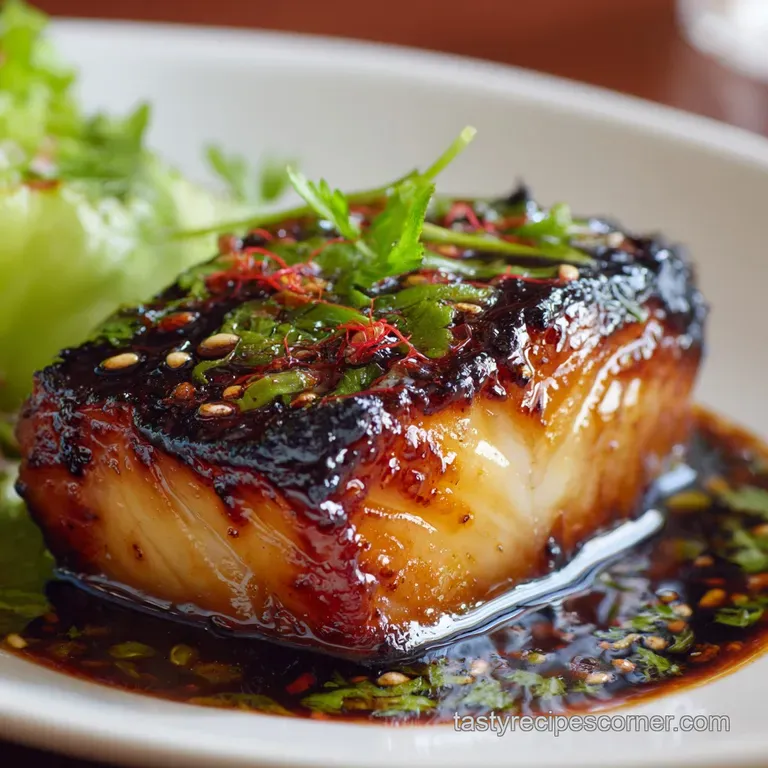
- Silky Miso-Glazed Black Cod: The Ultimate Home Recipe
- Why This Miso-Glaze Method Works (Flavour Science)
- Essential Ingredients for the Perfect Miso-Glazed Dish
- Step-by-Step: Mastering Miso-Glazed Black Cod
- Chef's Tips, Troubleshooting, and Common Black Cod Mistakes
- Storing Leftovers and Freezing Cooked Sablefish
- Elegant Serving Suggestions and Wine Pairings
- Recipe FAQs: Silky Miso-Glazed Black Cod
- 📝 Recipe Card
Silky Miso Glazed Black Cod: The Ultimate Home Recipe
You guys, when that first whiff of toasted, caramelized miso hits the air, you know dinner is going to be epic. This isn't just fish; this is pure, decadent butter that melts the second it touches your tongue.
Black Cod (or Sablefish, if we're getting technical) is famous for its incredible fat content, giving it a luxurious silkiness that few white fish can match.
And the best part? The active prep is embarrassingly simple. Seriously. You spend about 15 minutes making the glaze, the fridge does the rest of the heavy lifting, and then you have 10 frantic, thrilling minutes under the broiler.
This black cod recipe delivers restaurant level flavor complexity without needing a Michelin star budget or skill level, which is exactly why I love it.
I’ve burned more than my fair share of Sablefish trying to nail that perfect mahogany crust, trust me. I’ve refined this process down to a science, focusing on two key steps: creating a balanced marinade and knowing exactly when to scrape it off.
Let’s crack on and make some truly legendary black cod miso.
Why This Miso Glaze Method Works (Flavour Science)
The Difference Between Black Cod and Sablefish
Let’s clear up the confusion right away: Black Cod and Sablefish are the same fish. Sometimes it's also called "Butterfish" because of its luscious texture and high oil content, which is key for keeping it moist under high heat.
Choosing thicker cuts of black cod fish is essential because they can handle the intense broiling required to caramelize the miso without drying out.
Why Miso is the Perfect Pairing
Miso, especially the sweeter white (Shiro) miso, brings an intense punch of umami that perfectly complements the natural richness of the Sablefish. The combination of salt, savory depth, and sugar provides a powerful tenderizing agent, drawing the flavors deep into the fish fibers.
This is why black cod miso has become such a globally recognized preparation.
A Note on Prep Time vs. Marinating Time
While the active prep is fast, you absolutely cannot skip the marinating time. This is crucial. Think of the marinade as an elegant brine it needs time to penetrate the thick fillets, not just sit on the surface.
We aim for a minimum of 8 hours, but 24 hours delivers that famous, melt-in-your mouth result.
The Magic of Maillard Reaction Under the Broiler
We are using a broiler (or grill) because we need extremely high, direct heat to trigger the Maillard reaction. This is the scientific process that turns the sugars and amino acids in our glaze into a deep, complex, nutty caramel color and flavor.
Without high heat, you just steam the fish, and we want gorgeous caramelization.
Umami: How Miso Balances Sweetness
The combination of Shiro miso (salty/savory) with mirin and sugar (sweet) creates a profoundly balanced profile. The richness of the Black Cod acts as a perfect canvas. When everything works together, you get a beautiful blend of sweet, salty, and savory that keeps you coming back for another bite.
The Role of Sake in Tenderizing the Fish
Sake, which is Japanese rice wine, isn't just for flavor; the small amount of alcohol helps to gently break down the proteins on the surface of the fish. This subtle tenderizing action allows the other components of the marinade to be fully absorbed.
If you don't have sake, don't fret, but know that it truly adds an authentic layer of flavour depth.
Essential Ingredients for the Perfect Miso Glazed Dish
Selecting the Freshest Black Cod Fillets
Always look for thick fillets of black cod, ideally 1 to 1.5 inches thick. If possible, buy skin-on. The skin acts as a barrier, protecting the delicate flesh from the intense heat of the broiler. The fish should smell clean, like the ocean, and the flesh should be firm and shiny.
Detailed Notes on White Miso Paste (Shiro Miso)
Use white miso, also known as Shiro Miso. It's the sweetest and mildest variety, fermented for a shorter time than darker miso pastes. Darker miso (like red or barley miso) is usually too robust and salty for this recipe and tends to overpower the buttery flavor of the black cod fish.
Ingredient Substitutions and Swaps (e.g., Sherry vs. Sake)
It’s always helpful to have backups when you can't find specific Japanese pantry staples. Here is what I keep in my kitchen for substitutions:
| Ingredient | Role | Viable Substitution | Why it works/doesn't |
|---|---|---|---|
| Sake | Tenderizer & Depth | Dry sherry or dry white wine | Sherry works well due to its mild sweetness and alcohol content. |
| Mirin | Sweetener & Shine | Equal parts water and sugar, reduced | You need the high sugar content for the glaze; water helps the texture. |
| Black Cod | Main Protein | Chilean Sea Bass or King Salmon | Chilean Sea Bass has a similar high fat content but is pricier. |
| Shiro Miso | Umami Base | Light Miso Paste | Avoid dark, fermented pastes, as they will be far too strong. |
Tools and Equipment Checklist
You don’t need anything fancy, just a few key items. A medium saucepan for cooking the glaze is important, as is a shallow, non-reactive glass dish or a sturdy Ziploc bag for marinating. Crucially, make sure you line your sheet pan with parchment paper or a silicone mat.
The glaze will drip, and cleanup will be awful otherwise.
step-by-step: Mastering Miso Glazed Black Cod
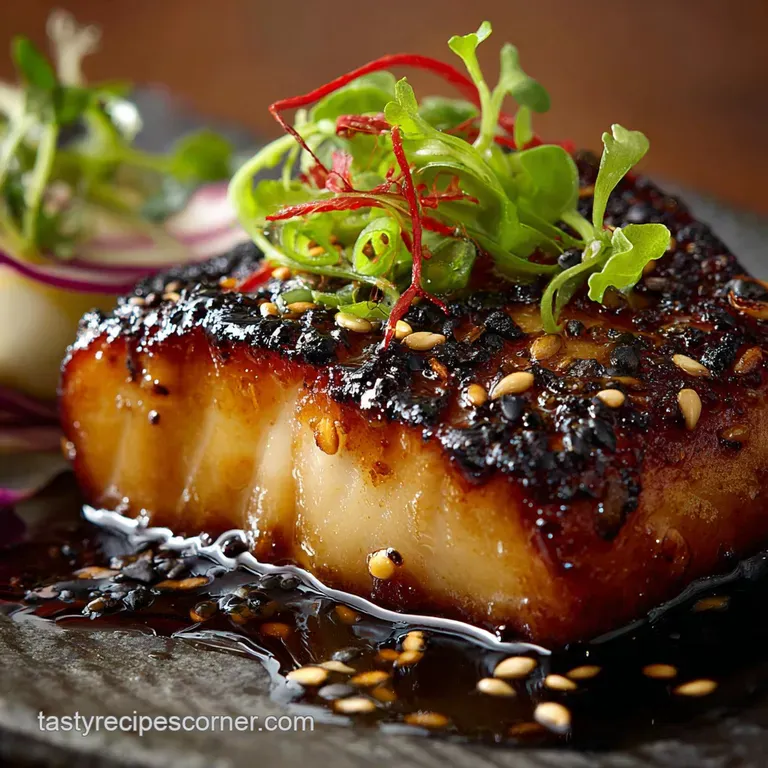
Preparing the Signature Miso Marinade
First, gently combine the miso, sake, mirin, and sugar in a small saucepan over medium heat. Whisk everything constantly until the sugar completely dissolves and the mixture barely simmers. This quick cook down step mellows the harsh alcohol notes from the sake and creates a smooth paste.
Do not let it boil vigorously. Remove it from the heat immediately and let it cool completely to room temperature before using it. I once put slightly warm marinade on delicate fish and it started to cure the edges, ruining the texture!
Optimal Marinating Time for Sablefish
Once the marinade is cool, nestle the Sablefish fillets into a non-reactive dish, covering them entirely with the mixture. Refrigerate for a minimum of 8 hours, though 12 to 24 hours is truly ideal for the best black cod miso flavour penetration.
If you leave it for 48 hours or longer, the fish can become too salty, so be mindful of the clock.
Broiling Technique for a Caramelized Crust
Set your oven rack 6 to 8 inches from the broiler element and preheat the broiler on high. Before placing the fish on the sheet pan, you must scrape off the excess marinade. Seriously, scrape it well.
Place the scraped fillets (skin side down if applicable) onto a lightly oiled, lined baking sheet. Broil for 5 to 7 minutes, and watch carefully as the edges start to caramelize.
Checking the Internal Temperature for Doneness
After the initial 5- 7 minutes, the fish should be nearly done. Continue broiling for another 3 to 5 minutes until the top is deeply burnished mahogany, but not burnt black.
If you have a digital thermometer, aim for an internal temperature of 145°F (63° C). Once the black cod recipe fish hits that sweet spot, the flesh will flake easily with a fork, looking opaque throughout.
Chef's Tips, Troubleshooting, and Common Black Cod Mistakes
Preventing the Glaze from Burning
This is the most common failure point for black cod miso. The high sugar content means the glaze burns quickly, resulting in a bitter crust. The fix? Scrape off all excess marinade! A light, thin coating is all you need for caramelization.
If you notice it turning black too fast, move the rack lower or shield the top with a small piece of foil.
How to Achieve Flaky, Not Dry, Black Cod
The key is starting with thick fillets and using high heat for a short time. Overcooking is your enemy. If your fillets are thinner than an inch, reduce your broiling time by 2- 3 minutes.
Always err on the side of slightly underdone, as the carryover cooking will finish the job once you pull it from the oven.
Adjusting Marinade Thickness and Consistency
If your miso paste seems exceptionally thick, add a tiny splash more sake or mirin to loosen it up before cooking it down. The final cooled glaze should be thick, but pourable, allowing it to coat the Sablefish evenly without being gloppy.
Chef's Note: The magic is in the rest. Always let the hot fish rest for 2- 3 minutes before serving. This redistributes the juices and prevents the butter soft black cod from falling apart prematurely.
Storing Leftovers and Freezing Cooked Sablefish
Reheating Miso Glazed Fish Safely
Cooked black cod is best eaten fresh, but leftovers are still fantastic. Store cooled, cooked sablefish in an airtight container in the fridge for up to 3 days. To reheat, the microwave is generally too harsh.
Instead, wrap the fillet loosely in foil and reheat it in a 300°F (150°C) oven for about 8 to 10 minutes until warmed through.
Marinating Ahead: How Long is Too Long?
As mentioned, 48 hours is pushing it. Miso contains high levels of salt, and leaving the fish in the marinade too long essentially cures it too much, resulting in a slightly tougher, excessively salty texture. Plan for 12 to 24 hours for the perfect balance.
Best Practices for Freezing Cooked Black Cod
Yes, you can freeze cooked black cod, though the texture won't be quite as silky when thawed. Wrap the cooled fillet tightly in plastic wrap, then place it in a freezer bag, squeezing out all the air. It will last safely for up to 3 months.
Thaw overnight in the fridge and reheat gently in a low oven as described above.
Elegant Serving Suggestions and Wine Pairings
Miso glazed black cod is rich, so you need sides that offer a bright, fresh contrast.
- Simple Rice: Serve this fish over plain steamed rice or, for a more intense flavor experience, try our recipe for Black Beans and Rice: The Flavourful Cuban Congrí Recipe to contrast the sweetness with savory depth.
- Acidic Greens: A side of lightly blanched asparagus or tender stem broccoli tossed with a sprinkle of toasted sesame seeds and lemon zest works beautifully.
- Crisp Salad: Quick pickled cucumbers and red onion in a light rice wine vinaigrette cut through the richness of the Sablefish perfectly.
- Wine Pairing: A dry, aromatic wine is essential. Think crisp, chilled Sauvignon Blanc, or a slightly oaked Chardonnay to mirror the buttery nature of the fish.
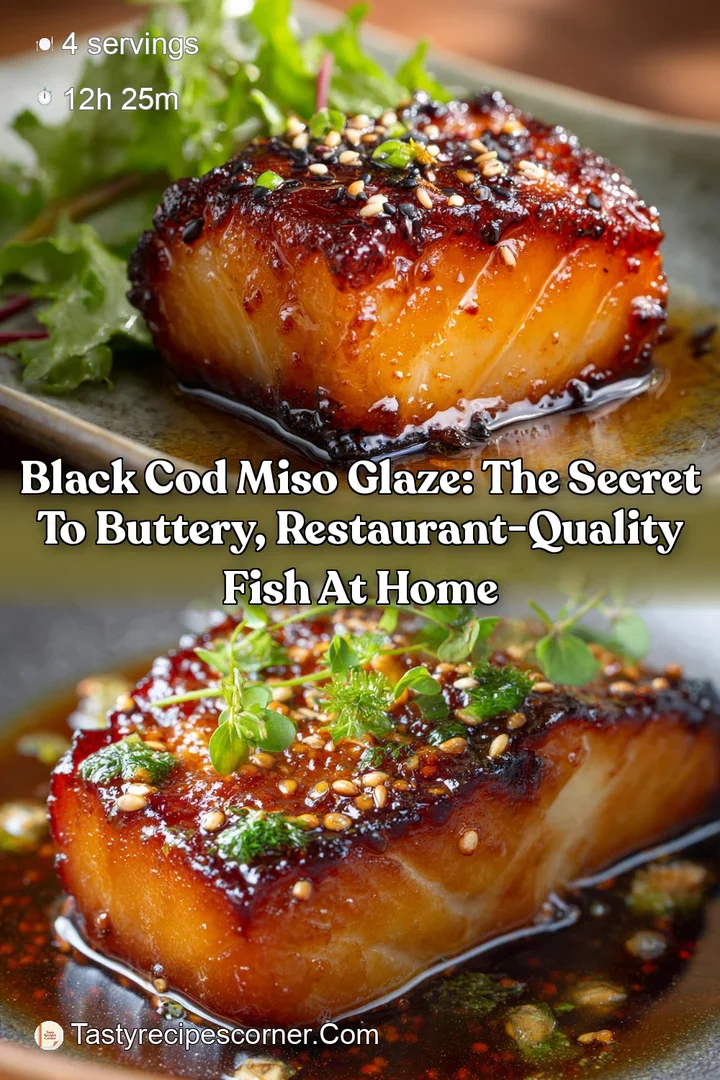
Recipe FAQs: Silky Miso Glazed Black Cod
What is Black Cod, and is it related to traditional Cod species?
Black Cod is not a true cod; its scientific name is Anoplopoma fimbria, commonly known as Sablefish or Butterfish. It is often confused with Pacific or Atlantic Cod, or even Lingcod and Patagonian Toothfish (Chilean Sea Bass), but its significantly higher oil content sets it apart from these leaner white fish.
Why is Black Cod (Sablefish) so expensive compared to regular Pacific Cod?
Black Cod commands a premium price primarily due to its signature buttery texture, which results from its exceptionally high fat content (up to 50%). It is also typically subject to stricter fishing quotas and complex handling requirements to maintain quality, reflecting its status as a highly desirable luxury fish.
How does Black Cod compare to regular Cod or Halibut in terms of flavor and texture?
Black Cod has a noticeably richer, almost decadent flavor and a significantly softer, more buttery texture than regular flaky Pacific or Atlantic Cod. Its high oil content ensures it stays remarkably moist and silken during cooking, unlike lean Halibut, which can dry out quickly if overcooked.
Can I purchase good quality Black Cod from large retailers like Costco?
Yes, many large retailers, including Costco, frequently offer high-quality, wild caught Black Cod, often sold frozen in vacuum sealed packages. When sourcing, look for "Alaskan Sablefish" or "Black Cod" harvested from sustainable sources, ensuring the fillets appear glossy and well preserved.
My miso glaze burned before the fish was cooked through. What did I do wrong?
Miso glaze contains sugar, which causes it to caramelize and burn very rapidly under direct, high heat. Ensure you are cooking the fish on a lower oven rack, or use the broiler only for the last 2 to 3 minutes, monitoring it constantly.
If necessary, you can lightly tent the fish with foil during the initial baking phase to protect the glaze.
Can I freeze the Black Cod after marinating it in the miso glaze?
Yes, Black Cod freezes exceptionally well due to its protective fat content. You can freeze the fish directly in the miso marinade for up to three months; ensure you thaw it slowly overnight in the refrigerator before cooking to maintain both the texture and the integrity of the glaze.
How do I know when the Miso Black Cod is perfectly cooked?
The fish is finished when the internal temperature reaches 145°F (63°C). The Black Cod should flake easily when tested with a fork, but it should still retain a beautifully moist, translucent, and silky appearance at the center.
Because of its richness, it is forgiving, but aim to pull it just as it finishes cooking.
Miso Glazed Black Cod Recipe
Ingredients:
Instructions:
Nutrition Facts:
| Calories | 415 kcal |
|---|---|
| Protein | 15.1 g |
| Fat | 15.7 g |
| Carbs | 36.0 g |
