The Ultimate Chicken and Dressing Casserole

- Effort/Time: 1 hour 30 mins total (Active: 30 mins)
- Flavor Hook: Herb-heavy, buttery aromatics paired with tender shredded chicken.
- Perfect for: Sunday dinner, holiday sides, or a "Make-Ahead" freezer meal.
- The Ultimate Southern Chicken and Dressing Casserole
- Why This Southern Chicken and Dressing Recipe Works
- Essential Ingredients and Smart Substitutions
- Step-by-Step Guide to the Perfect Chicken and Dressing Bake
- Expert Tips and Common Mistakes to Avoid
- Common Myths
- Storage and Freezing Instructions
- Creative Serving Suggestions and Side Dishes
- Recipe FAQs
- 📝 Recipe Card
The Ultimate Southern Chicken and Dressing Casserole
Nothing kills a Sunday dinner faster than a chicken and dressing that eats like a dry sponge. We’ve all been there: you take a bite, and it’s just a crumbly mess of unidentifiable bread and bland meat. My first attempt was so dry I had to drown it in a gallon of gravy just to swallow it.
I’ve spent years refining this chicken and dressing recipe to ensure every forkful is velvety and rich. The secret isn't just "more liquid"; it's the specific interaction between the cornmeal’s crumb and the proteins in the eggs and soup.
We are building a savory custard that happens to be loaded with bread and chicken.
Get ready for the aroma of sage and sautéed celery to fill your kitchen. By the time we’re done, you’ll have a chicken and dressing bake that holds its shape but melts on the tongue. Let's crack on with the science and the steps to get this right.
Why This Southern Chicken and Dressing Recipe Works
- Retrogradation Control: Using day-old bread ensures the starches have crystallized, allowing them to absorb 3.5 cups of broth without turning into a mushy paste.
- Protein Denaturation: Simmering the chicken whole at a gentle bubble prevents the muscle fibers from tightening, resulting in tender, succulent shreds rather than rubbery chunks.
- Emulsification: The inclusion of Campbell's Condensed Cream of Chicken Soup and three large eggs creates a stable emulsion that binds the fat from the butter and chicken into the liquid stock.
- Maillard Reaction: Sautéing the diced onions and celery in Land O'Lakes Unsalted Butter before mixing creates deep, caramelized flavor notes that raw aromatics can't achieve.
A Quintessential Comfort Food Staple
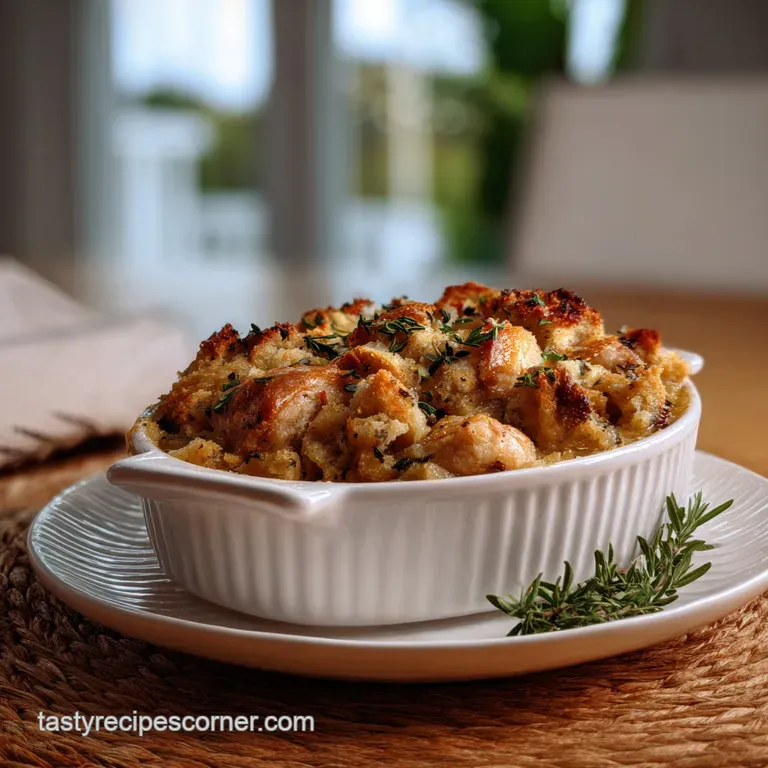
This homemade chicken and dressing isn't just a side dish; it’s the centerpiece of Southern culinary identity. Unlike a standard stuffing, which is often cooked inside the bird, this "dressing" is baked in a Lodge Enameled Cast Iron Casserole Dish, allowing for maximum surface area for that coveted golden crust.
It’s a dish born of resourcefulness, turning day-old bread and a whole bird into a feast for nine people.
Dressing vs. Stuffing: Understanding the Difference
The distinction lies in the cooking vessel and the texture. Stuffing is pushed into the cavity of the poultry, absorbing juices from the inside out, often resulting in a wetter, denser product. This chicken and dressing casserole is an independent entity.
By baking it separately, we control the moisture levels precisely. This ensures the bread retains its identity while being suspended in a savory, herb infused matrix.
The Science of the Moist Cornbread Base
Cornbread is the backbone of this chicken and dressing recipe. Because cornmeal lacks the gluten network found in wheat, it provides a unique "short" crumb that breaks down easily. We balance this by adding 2 cups of torn white bread.
The wheat gluten in the white bread acts as a structural scaffold, preventing the cornbread from disintegrating entirely when the 3.5 cups of broth hit the bowl.
Balancing Savory Herbs and Rich Poultry Stock
Flavor in a chicken and dressing bake comes from the stock. We don't just use water; we create a fortified broth using 2 bay leaves, garlic, and whole aromatics. This liquid gold is then seasoned with 2 tsp of dried sage and 1 tsp of poultry seasoning.
The sage provides a camphoraceous note that cuts through the richness of the 25.2g of fat per serving, providing a balanced, herbaceous finish.
Essential Ingredients and Smart Substitutions
| Original Ingredient | Substitute | Why It Works |
|---|---|---|
| 1 whole chicken (3 lbs) | Rotisserie Chicken | Saves 45 mins. Use 4 cups shredded meat and high-quality boxed stock. |
| 6 cups Cornbread | store-bought Cornbread | Ensure it is "Southern style" (unsweetened) to maintain the savory profile. |
| 2 cups White Bread | Sourdough or French Bread | Provides a sturdier crumb; sourdough adds a pleasant lactic acidity. |
| 10.5 oz Cream of Chicken | Cream of Mushroom | Similar viscosity and fat content; adds an earthy, umami undertone. |
Choosing the Right Poultry: Poached vs. Rotisserie
While a store-bought rotisserie chicken is a great "grab and-go" hack, poaching a whole 3 lb chicken provides the essential 8 cups of water/stock needed for the foundation. Poaching at 180°F (82°C) ensures the meat remains juicy.
If you choose the rotisserie route, ensure you buy a low-sodium chicken to avoid an oversalted chicken and dressing casserole recipe.
Fresh Aromatics and Dried Herb Blends
We use 1 cup diced onion and 1 cup diced celery for the dressing. These should be translucent before they ever touch the bread. For the herbs, dried sage and thyme are preferred over fresh here.
Dried herbs have a more concentrated volatile oil profile that can withstand the 45 minute bake time without losing their punch.
Selecting the Best Breads for Texture
For this homemade chicken and dressing, the cornbread must be unsweetened. Sugar in the cornbread will caramelize too quickly and clash with the poultry seasoning. Use a Pyrex glass mixing bowl to combine the 6 cups of crumbled cornbread and 2 cups of white bread.
The white bread should be "day-old" leave it on the counter for 12 hours to lose excess moisture.
Dairy and Broth: Creating the Perfect Binder
The combination of 3 large eggs and 10.5 oz of Campbell's Cream of Chicken Soup acts as the glue. The eggs provide structure through coagulation during the bake, while the soup provides a creamy mouthfeel. This pairing ensures your chicken and dressing in slow cooker or oven never turns into a pile of loose crumbs. It pairs perfectly with my Broccoli Rabe: How to Blanch and Sauté Rapini to Perfection.
step-by-step Guide to the Perfect Chicken and Dressing Bake
- Simmer the whole chicken. Place 3 lb chicken, whole onion, whole celery, garlic, bay leaves, salt, and pepper in 8 cups of water. Note: Simmering extracts collagen, creating a gelatin rich stock that improves the dressing's mouthfeel.
- Shred the cooked meat. Remove chicken after 45 60 minutes, cool slightly, and discard skin/bones. Note: Hand shredding creates irregular surfaces that hold onto the dressing better than clean knife cuts.
- Sauté the aromatics. Melt 4 tbsp Land O'Lakes butter in a skillet and cook 1 cup diced onion and 1 cup diced celery until soft. Note: This step initiates the Maillard reaction, developing a savory base flavor.
- Combine the dry base. Mix 6 cups crumbled cornbread and 2 cups torn white bread in a large bowl. Note: Crumb size should vary from pea-sized to nickel sized for textural contrast.
- Whisk the wet binders. In a separate bowl, beat 3 eggs, then whisk in the 10.5 oz soup, 2 tsp sage, poultry seasoning, and thyme. Note: Pre-mixing the spices ensures even distribution throughout the chicken and dressing casserole.
- Hydrate the mixture. Pour 3.5 cups of the reserved warm chicken stock over the bread, then fold in the egg mixture and shredded chicken. Note: The bread should be very moist, almost like a thick porridge, before it goes into the oven.
- Bake until set. Transfer to a greased 9x13 Pyrex dish and bake at 350°F (175°C) for 45 minutes. Note: The internal temperature should reach 160°F (71°C) to ensure the eggs have fully set the structure.
Expert Tips and Common Mistakes to Avoid
- Freeze the butter: For the cornbread, grate frozen butter into the cornmeal to create small steam pockets during the initial bread bake.
- The "Jiggle" Test: When the chicken and dressing bake is done, it should have a slight jiggle in the center but feel firm to a light touch similar to a cheesecake.
- Resting Period: Let the dish sit for 10 minutes after pulling it from the oven. This allows the starches to firm up, making for cleaner slices.
| Problem | Why It Happens | The Fix | Pro Protocol |
|---|---|---|---|
| Dry/Crumbly | Insufficient stock or over baked. | Add 1/2 cup extra stock before baking. | Use a digital probe thermometer to hit exactly 160°F. |
| Mushy/Soggy | Bread was too fresh/soft. | Use toasted or day-old bread only. | Toast bread cubes at 300°F for 10 mins before mixing. |
| Bland Flavor | Undersalted stock. | Taste stock before adding to bread. | Season the stock until it tastes slightly "too salty" the bread will soak it up. |
Common Myths
Myth: You must use fresh sage for the best flavor. Truth: Fresh sage can become bitter and soapy during a 45 minute bake. Dried sage is more stable and provides the nostalgic "Thanksgiving" aroma we associate with homemade chicken and dressing.
Myth: The chicken must be chopped into perfect cubes. Truth: Shredded chicken provides a superior "interlocking" texture within the bread matrix. Cubes tend to fall out of the slice, whereas shreds help hold the chicken and dressing casserole recipe together.
Preparing the Cornbread and Shredded Meat
Don't use a food processor for the cornbread. You want distinct crumbles. If the crumbs are too fine, the dressing will become a dense block. For the chicken, ensure you remove all cartilage; nothing ruins a chicken and dressing recipe like a stray "crunch." If you want another variation, check out my Cornbread Dressing With Chicken: Ultra Moist & Savory Recipe.
Mixing the Aromatics and Liquid Gold
When adding the 3.5 cups of broth, do it in stages. Depending on the humidity and how dry your bread is, you might need a splash more or less. The goal is a "soupy" consistency that isn't standing in liquid. The bread should look fully saturated.
Baking to Golden Brown Perfection
If the top isn't browning as desired, increase the heat to 400°F for the final 5 minutes or brush the top with a little melted butter. This creates a "shatter crisp" top layer that contrasts beautifully with the velvety interior.
Preventing a Dry or Soggy Consistency
It’s a fine line. To avoid sogginess, don't over mix once the liquid is added. Over mixing develops gluten in the white bread, which leads to a gummy texture. To avoid dryness, cover the dish with foil for the first 20 minutes, then uncover to brown.
Mastering the Seasoning Balance
The 1 tsp of poultry seasoning is a baseline. Since different brands vary in salt and pepper content, always do a "test" by microwaving a tablespoon of the raw mixture for 20 seconds to taste for salt before you commit the whole batch to the oven.
Storage and Freezing Instructions
Refrigeration: Store in an airtight container for up to 4 days. The flavor actually improves on day two as the herbs continue to infuse the bread.
Freezing: This is an excellent make-ahead meal. 1. Assemble the dressing but do not bake. 2. Wrap the dish tightly in two layers of plastic wrap and one layer of heavy duty aluminum foil. 3. Freeze for up to 3 months. 4.
To bake from frozen: Thaw in the fridge for 24 hours, then bake as directed, adding 10 15 minutes to the cook time.
Creative Serving Suggestions and Side Dishes
Proper Refrigeration and make-ahead Tips
If you're prepping for a big event, you can poach the chicken and make the cornbread two days in advance. Store the shredded meat in a bit of its own broth to keep it from drying out in the fridge.
Reheating Methods to Maintain Moisture
Avoid the microwave if possible, as it can make the bread rubbery. Instead, place a portion in a small oven safe dish, add a tablespoon of broth or water, cover with foil, and heat at 350°F until steaming.
Traditional Southern Sides to Pair
This chicken and dressing is very rich, so it needs acidity or bitterness to balance the palate. Cranberry sauce (the tartness cuts the fat). Collard greens or my Broccoli Rabe: How to Blanch and Sauté Rapini to Perfection. A crisp vinegar based coleslaw.
Garnishing for a Holiday Ready Table
Sprinkle fresh parsley or a few cracklings of fried chicken skin over the top before serving. It adds a pop of color and a secondary texture that makes the chicken and dressing bake look as good as it tastes.
This chicken and dressing is a labor of love, but the result a savory, herb scented masterpiece is worth every minute of prep. Whether it's a holiday or just a Tuesday, this chicken and dressing recipe brings everyone to the table.
Trust me, once you master the "liquid-to-bread" ratio, you'll never go back to box mixes again. Enjoy every bite of this homemade chicken and dressing!

Recipe FAQs
Is dried bread better than fresh for the binder?
Dried bread yields superior absorption. Stale bread has less residual moisture, allowing it to fully soak up the custard base without compacting. This ensures a fluffier, less dense interior texture.
Can I use store-bought broth instead of homemade poultry stock?
Yes, but adjust seasoning carefully. Commercial stocks often vary wildly in sodium content, impacting the final savoriness of the casserole. You should taste before adding extra salt, similar to how you might test seasoning before finishing a complex sauce like the one in the Shredded Chicken Recipes: Smoky Chipotle Chicken for Tacos.
What causes the dressing to become gummy or overly wet?
Excess liquid ratio results in gumminess. Too much liquid (stock/egg) relative to the dry binder volume prevents starch gelatinization from firming properly, leading to structural collapse.
- Measure liquid precisely
- Ensure bread is fully dry before mixing
- Do not over stir the final batter
Should I cook the chicken before mixing it into the dressing?
Yes, fully pre-cooked chicken is required. The casserole bake time is optimized for setting the custard, not fully cooking raw poultry internally. Undercooked chicken poses safety risks, as detailed by health standards for meals like Peruvian Chicken Recipe: Authentic Pollo a la Brasa Dinner.
Is canned cream of chicken soup an acceptable substitute for the homemade custard base?
Myth: Cream of chicken soup provides authentic richness. Reality: Canned soup introduces unwanted thickeners and high sodium, masking the fresh herbaceous notes expected in this classic preparation.
Does adding celery and onion raw affect the final texture?
Sautéing aromatics is non-negotiable for flavor. Raw vegetables release significant water during baking, thinning the custard and promoting steam pockets. Cooking them first concentrates their flavor compounds.
Is baking the dressing covered or uncovered the best method?
Start covered, finish uncovered for ideal crust. Covering traps steam, ensuring the interior cooks evenly and custardy without drying out the top layer prematurely. Uncovering in the last 15 minutes creates the necessary golden, textured crust.
Master Chicken And Dressing Bake

Ingredients:
Instructions:
Nutrition Facts:
| Calories | 486 kcal |
|---|---|
| Protein | 22.8 g |
| Fat | 25.2 g |
| Carbs | 41.5 g |
| Fiber | 3.2 g |
| Sugar | 5.1 g |
| Sodium | 1180 mg |
