New Year's Day Lucky Black Eyed Peas
- Time: Active 15 minutes, Passive 1 hour 45 mins, Total 2 hours
- Flavor/Texture Hook: Velvety, smoky, and fork-tender
- Perfect for: New Year's traditions and cozy family gatherings
- New Year s Day Lucky Food with Black Eyed Peas
- Science of the Smoky Simmer
- Essential Batch Specifications
- Selecting Quality Components
- Necessary Kitchen Tools
- Building the Comforting Base
- Fixing Common Pea Problems
- Proportional Adjustments
- Southern Kitchen Wisdom
- Preserving Your Southern Feast
- Classic Southern Serving Suggestions
- Common Questions
- 📝 Recipe Card
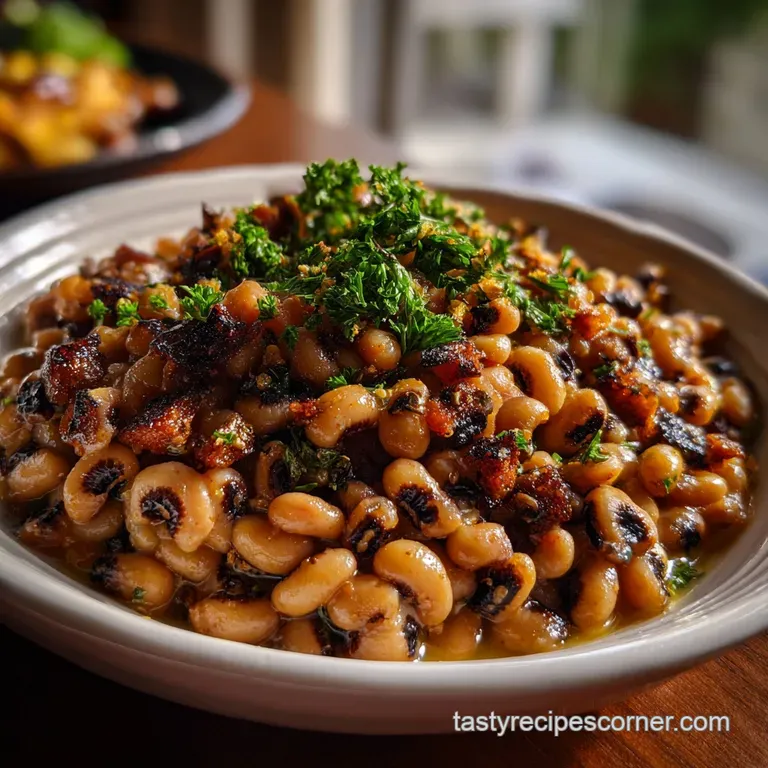
Can you hear that? The steady, rhythmic bubble of a heavy pot on the stove is the sound of a Southern kitchen waking up on January first. This recipe offers a delicious take on classic New Year s Day Lucky Food with Black Eyed Peas.
My grandmother always said that every pea you eat represents a penny earned in the coming year, so we always made sure the pot was big enough to feed the whole neighborhood.
I remember my first time trying to make this without her guidance. I rushed the process, used too much water, and ended up with something more like a sad soup than the soul warming meal I craved. But once you understand how to layer the aromatics and give the smoked meat time to work its magic, everything changes.
The aroma of sautéing celery and onion hitting hot bacon grease is enough to cure any holiday fatigue.
We aren't just boiling beans here. We are building a foundation of flavor that starts with the "Holy Trinity" of Southern cooking and ends with a broth so rich it coats the back of a spoon. It's about patience and using the right tools to let the ingredients speak for themselves.
Let's crack on and get this pot simmering.
New Year s Day Lucky Food with Black Eyed Peas
The Science of Why it Works: This dish relies on collagen hydrolysis, where the connective tissues in the smoked ham hock break down into gelatin, creating a velvety mouthfeel.
Simultaneously, starch gelatinization occurs as the peas absorb the seasoned stock, thickening the liquid naturally without any added flour.
- over Low heat Softening: A gentle simmer prevents the seed coats from bursting, ensuring the peas stay intact rather than turning into mush.
- Aromatic Infusion: Fat from the bacon grease or oil traps the fat-soluble compounds in thyme and cayenne, distributing flavor evenly throughout the pot.
- Osmotic Balance: Adding salt only toward the end of the process (if needed) prevents the skins from toughening, which can happen if the mineral concentration is too high too early.
Chef's Tip: Grate a tiny bit of fresh garlic into the pot 5 minutes before serving. It adds a sharp, bright top note that cuts through the heavy, smoky fat of the ham hock.
Science of the Smoky Simmer
| Ingredient | Chemical/Physical Role (Science) | The Pro Secret (Why This Matters) |
|---|---|---|
| Smoked Ham Hock | Collagen hydrolysis and fat rendering | Provides a silky texture and foundational umami that water alone cannot achieve |
| Yellow Onion | Maillard reaction during sautéing | Caramelized sugars create a deep, savory sweetness that balances the salt |
| Dried Black Eyed Peas | Starch gelatinization and protein structure | Controlled hydration ensures a creamy interior with a distinct, firm exterior |
| Chicken Stock | Emulsification and mineral depth | Low-sodium stock allows you to control the final seasoning without over salting during reduction |
Essential Batch Specifications
To get the most out of this New Year s Day Lucky Food with Black Eyed Peas, you need to respect the ratios. Unlike a quick sauté, this is a game of evaporation and absorption.
The goal of any successful New Year s Day Lucky Food with Black Eyed Peas recipe is achieving this perfect balance.
- Liquid Ratio: Use exactly 1.4 liters (6 cups) of stock for 450g (1 lb) of dried peas. This ensures the peas are fully submerged but leaves enough room for the liquid to reduce into a rich "pot likker."
- Temperature: Maintain a surface temperature of approximately 90°C (195°F). If you see aggressive bubbles, you're boiling away the delicate flavors.
- Pea Preparation: Always pick over your dried peas on a white rimmed baking sheet. You’d be surprised how often a small pebble tries to sneak into the New Year's Day Lucky Food with Black Eyed Peas.
Selecting Quality Components
Using high-quality ingredients transforms this from a basic side dish into the star of the table. This foundational quality is what elevates simple New Year s Day Lucky Food with Black Eyed Peas into a holiday centerpiece.
- Vegetable Oil or Bacon Grease: (1 tbsp) Why this? Fat acts as the primary heat transfer medium for the aromatics.
- Yellow Onion: (1 large, finely diced) Why this? Higher sugar content than white onions leads to better browning.
- Celery: (2 stalks, chopped)
- Green Bell Pepper: (1 diced)
- Garlic: (3 cloves, minced)
- Dried Black Eyed Peas: (1 lb, picked and rinsed) Why this? Dried peas offer a superior texture to canned versions.
- Smoked Ham Hock: (1 large) Why this? Bone-in smoked meat provides essential gelatin and deep smoke.
- Chicken Stock: (6 cups, low sodium)
- Dried Bay Leaves: (2 leaves)
- Dried Thyme: (1 tsp)
- Cayenne Pepper: (1/2 tsp)
| Original Ingredient | Substitute | Why It Works |
|---|---|---|
| Bacon Grease | Butter | Adds a rich, dairy forward fat profile but lacks the smoky edge. |
| Smoked Ham Hock | Smoked Turkey Wing | Provides similar smokiness with significantly less fat. |
| Chicken Stock | Vegetable Broth | Lighter flavor profile; may require extra thyme for depth. |
Necessary Kitchen Tools
- Lodge 6 Quart Enameled Cast Iron Dutch Oven: The heavy walls retain heat perfectly, ensuring a consistent simmer without hot spots that scorch the peas.
- Wooden Spoon: Ideal for scraping the "fond" (browned bits) off the bottom of the pot after sautéing the vegetables.
- Fine Mesh Strainer: Essential for rinsing the dried peas and ensuring no dust or debris enters your clean broth.
Building the Comforting Base
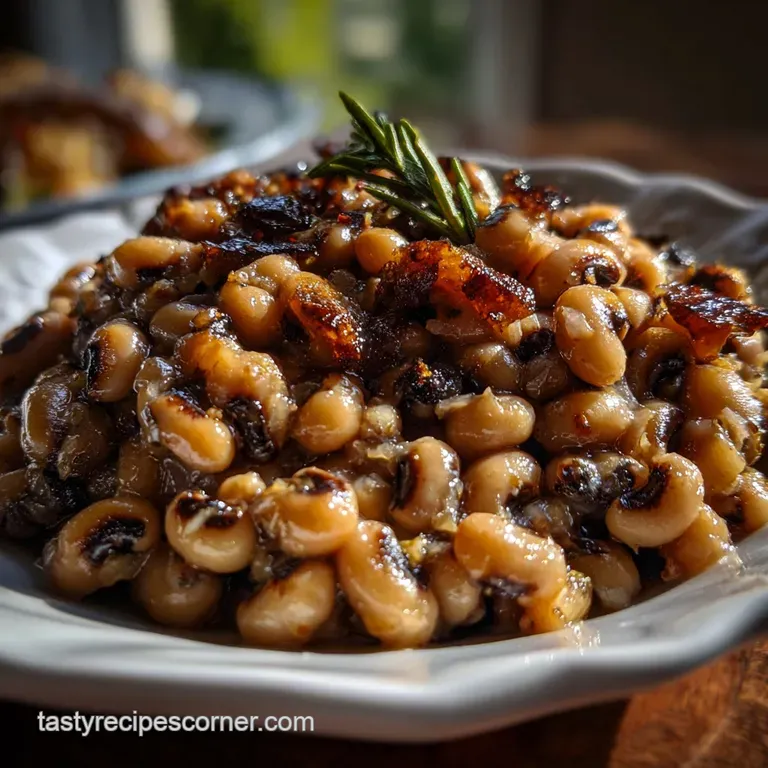
step-by-step Execution
- Heat the Lodge Dutch Oven over medium heat and add the 1 tbsp Vegetable Oil or Bacon Grease. Note: Creating a shimmering surface ensures the vegetables don't stick.
- Sauté the 1 large Yellow Onion, 2 stalks Celery, and 1 Green Bell Pepper for 6 minutes until the onions turn translucent and the edges begin to brown.
- Stir in the 3 cloves minced Garlic for 1 minute until a pungent, nutty aroma fills the kitchen.
- Deglaze the pot by pouring in 1 cup of the Chicken Stock, scraping the bottom to release the browned vegetable bits. Note: This step captures the Maillard reaction products for the broth.
- Add the 1 lb Dried Black Eyed Peas and toss them with the vegetables for 2 minutes until the peas look glossy.
- Place the 1 large Smoked Ham Hock directly into the center of the pea mixture.
- Pour in the remaining 5 cups of Chicken Stockuntil the liquid covers the peas by at least 2 inches.
- Toss in the 2 Dried Bay Leaves, 1 tsp Dried Thyme, and 1/2 tsp Cayenne Pepper.
- Bring the liquid to a boil for 2 minutes until large bubbles break the surface, then reduce heat to low.
- Simmer the pot, partially covered, for 1 hour 30 mins until the peas are tender and the ham meat begins to pull away from the bone.
- Remove the Ham Hock and Bay Leaves; shred any meat from the bone and return it to the pot.
- Adjust the heat to medium low and cook for another 15 minutes until the broth thickens into a silky consistency.
Fixing Common Pea Problems
Solving The Crunchy Core
If your peas are still hard after the allotted time, it’s usually an issue with the age of the beans or the chemistry of your water. Old beans lose their ability to absorb moisture efficiently. Similarly, "hard" water containing high levels of calcium can prevent the pectin in the pea cell walls from dissolving.
| Problem | Root Cause | The Fix | Pro Protocol |
|---|---|---|---|
| Crunchy Peas | Aged beans or hard water | Add 1/4 tsp baking soda | The soda raises the pH, softening the skins. |
| Thin Broth | Insufficient reduction | Mash 1/2 cup of peas | Releasing starches acts as a natural thickener. |
| Excess Salt | Stock reduction | Add a peeled potato | The potato absorbs salt; remove it before serving. |
Proportional Adjustments
Scaling Down (Half Batch)
If you're only cooking for two, reduce the ingredients by half. Use a 3 quart saucepan instead of a large Dutch oven. Reduce the simmering time by about 20 minutes, as smaller volumes reach temperature faster and lose less moisture to evaporation.
Scaling Up (Double Batch)
When feeding a crowd for New Year's, double the peas and stock but only use 1.5 times the spices and salt. The "evaporation paradox" means you will lose less liquid proportionally in a larger pot, so you don't want the flavors to become overwhelming.
Work in two pots if your largest vessel doesn't leave at least 3 inches of "headspace" to prevent boilovers.
Southern Kitchen Wisdom
Myth: You must soak black eyed peas overnight.Truth: Unlike kidney beans, black eyed peas are small and thin skinned. Soaking them often leads to a mushy texture.
Cooking them from dry allows them to absorb the seasoned broth as they soften, resulting in a much more flavorful Year's Day Lucky Food with Black Eyed Peas.
Myth: Salting the water at the start makes beans tough.Truth: This is a half truth. While salt can slightly slow down the softening of the skins, it's actually acidic ingredients (like tomatoes or vinegar) that truly toughen them.
However, since ham hocks are unpredictable in their salt content, it's safer to wait until the end to adjust the seasoning.
Preserving Your Southern Feast
Storage: Keep leftovers in an airtight container in the fridge for up to 4 days. The starch will continue to thicken the liquid as it cools, so you may need to add a splash of water when reheating.
Freezing: These peas freeze beautifully for up to 6 months. I recommend freezing them in individual portions. The structure of the pea holds up well to the crystallization process.
Zero Waste: Don't throw away that ham hock bone! Even after simmering, it can be used to flavor a secondary batch of turnip greens or a simple American Chop Suey Recipe if you're looking for a fusion twist. The celery leaves should also be chopped and stirred back into the pot at the end for a fresh, herbal hit.
Science of Reheating: Use a gentle heat on the stovetop. Rapid microwaving can cause the internal moisture in the peas to turn to steam too quickly, "shattering" the delicate skins.
Classic Southern Serving Suggestions
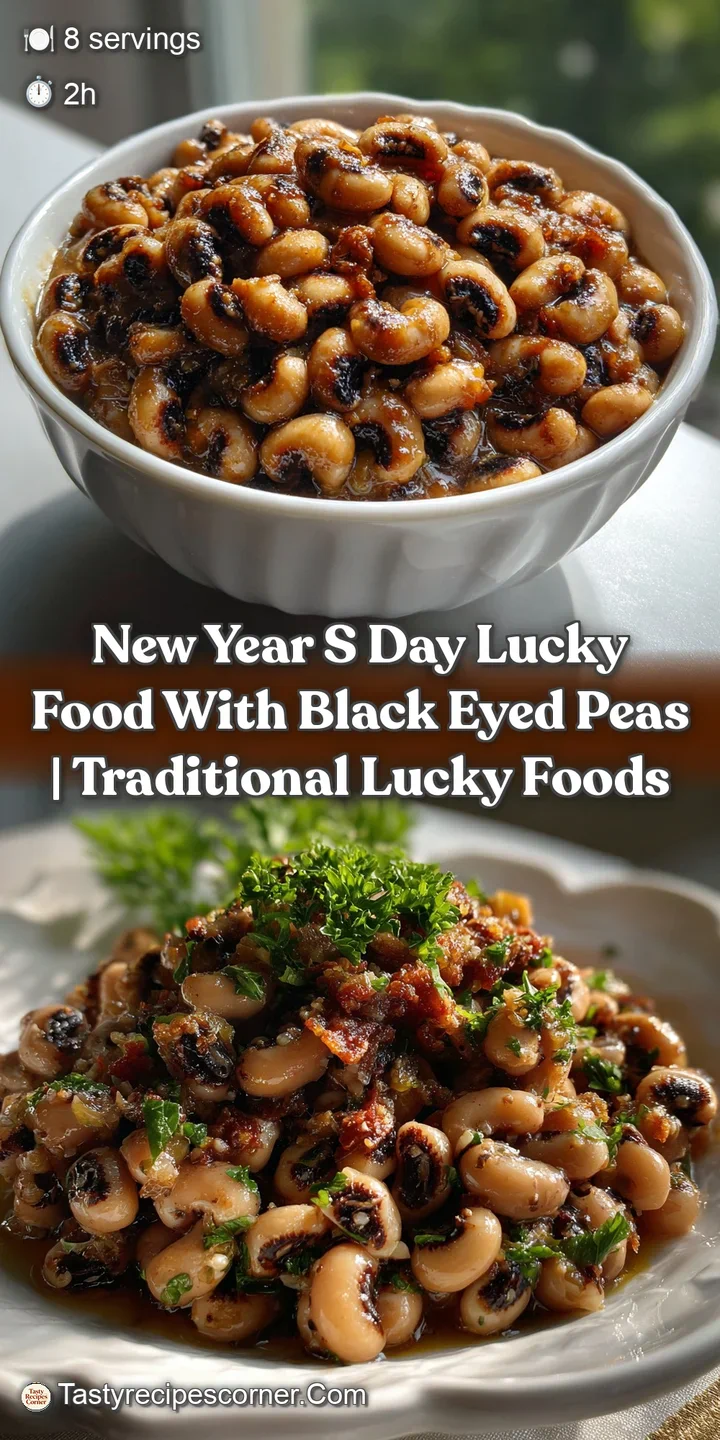
To complete the traditional "luck" meal, you absolutely need a side of cornbread. The gold color of the bread represents prosperity, while the peas represent coins. I always serve mine alongside some slow simmered collard greens (for "greenbacks" or cash).
If you want to break from tradition slightly, try drizzling a little Seafood Boil Sauce recipe over the top. The buttery, spicy Cajun notes complement the smoky ham hock in a way that is absolutely addictive. Honestly, don't even bother with a spoon just use a thick wedge of cornbread to scoop up every last drop of that velvety broth. Trust me on this, once you've had Year's Day Lucky Food with Black Eyed Peas made with this much care, you'll be making it all through the winter, not just on January first. It's the kind of soul warming meal that makes every day feel a little more fortunate.
Common Questions
Why are the peas still crunchy after simmering?
Old beans or high water mineral content causes slow hydration. Water minerals, especially calcium, inhibit the breakdown of pectin in the seed coat, keeping the interior firm.
- Try adding 1/4 tsp baking soda
- Ensure peas are not older than six months
- Verify stock is low-sodium
Do I need to soak the black eyed peas before cooking?
No. Soaking leads to a mushy texture when cooked. These small peas absorb moisture efficiently during the long simmer without pre-soaking needed. This preserves the integrity of the skin.
Should I use smoked ham hock or smoked turkey wing?
Smoked ham hock for superior collagen and texture. The ham hock releases significantly more collagen, which hydrolyzes into gelatin, providing the signature velvety mouthfeel the recipe requires. Turkey wings are leaner and lack this deep flavor base.
Can I make this dish ahead of time?
Yes. This tastes even better when made a day before. The flavors marry and deepen overnight as the starches settle and absorb the smoky broth completely. Reheat gently on the stovetop to prevent scorching the bottom.
Is it better to boil or simmer the peas?
A low and slow simmer prevents the pea skins from bursting. Aggressive boiling causes rapid water expansion inside the seed, leading to rupture and a grainy, rather than creamy, final texture. Maintain 195°F (90°C).
Myth: Salting the cooking liquid too early ruins the peas.
Myth: Salting the water at the start makes beans tough. Reality: High acidity (like tomatoes or vinegar) is the primary cause of tough skins, not sodium chloride alone. However, waiting until the end is recommended due to the salt in the ham hock.
What liquid ratio is ideal for the peas and stock?
Use 6 cups of stock for 1 pound of dried peas. This ratio ensures the peas are covered but allows for necessary reduction into a thick, flavorful "pot likker." Too much water yields soup; too little scorches the bottom.
Lucky Black Eyed Peas Recipe
Ingredients:
Instructions:
Nutrition Facts:
| Calories | 268 kcal |
|---|---|
| Protein | 18 g |
| Fat | 6 g |
| Carbs | 37 g |
| Fiber | 7 g |
| Sugar | 3 g |
| Sodium | 640 mg |
