Homemade Hot Cakes: Fluffy and Golden
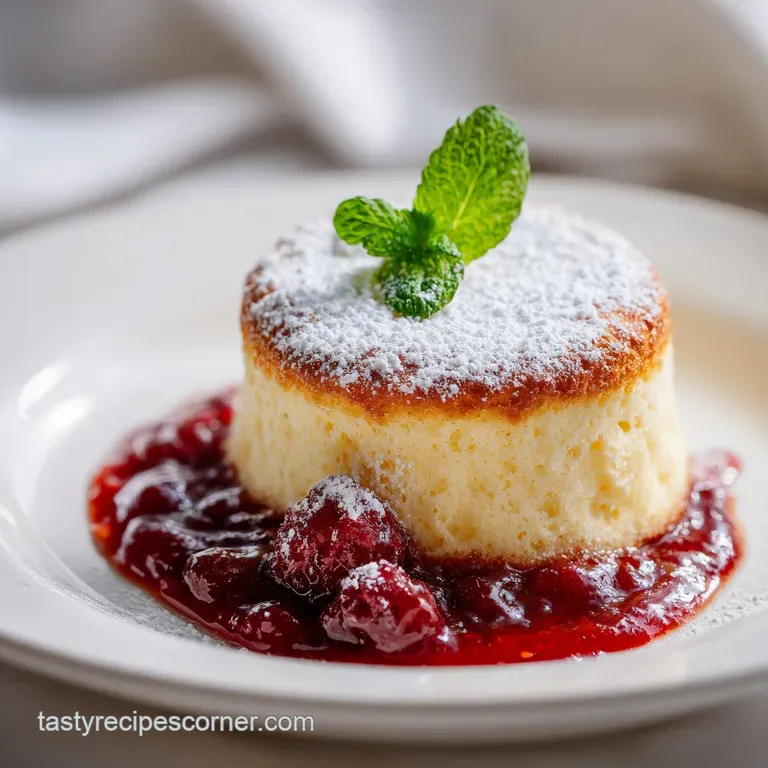
- Time: Active 5 minutes, Passive 10 minutes, Total 15 minutes
- Flavor/Texture Hook: Buttery, golden, and incredibly fluffy
- Perfect for: Speedy weekday mornings or low effort weekend brunches
- Master the Best Homemade Hot Cakes Recipe
- Why This Recipe Works
- Essential Recipe Specs
- Ingredient Deep Dive
- Minimal Equipment Needed
- Crucial Preparation Key Steps
- Fixing What Goes Wrong
- Flexible Dietary Adaptations
- Scaling Your Breakfast
- Myths About Batter
- Storage and Leftover Tips
- Creative Serving Suggestions
- Recipe FAQs
- 📝 Recipe Card
Master the Best Homemade Hot Cakes Recipe
The sound of a whisk hitting the side of a metal bowl at six in the morning is a specific kind of music. It is the sound of waking up. Long before I understood the nuances of gluten or the chemistry of leavening, I knew the scent of vanilla and scorching butter.
In many cultures, especially in the Philippines where "Pinoy hot cakes" are a beloved street food, these are not just pancakes. They are vivid yellow, slightly sweet, and always served with a generous smear of margarine and a sprinkle of sugar.
They represent a fast, accessible joy that doesn't require a pantry full of gourmet ingredients.
That is the spirit I wanted to capture with this homemade hot cakes recipe. I remember sitting at a tiny wooden table while my grandmother worked a cast iron skillet with the speed of a seasoned pro. She never measured, yet every cake came out perfectly circular and airy.
When I started cooking for myself, I realized the "secret" was actually a series of small, smart choices about temperature and texture. We are talking about that specific diner style nostalgia where the edges are slightly crisp but the center is like a soft cloud.
This isn't about creating a fancy, complicated brunch. It is about a 15 minutes total time commitment that yields better results than any boxed mix ever could. We are going to use basic pantry staples to create something that feels like a treat.
If you have been struggling with flat, rubbery, or burnt cakes, you can relax now. We are going to fix all of that today using nothing but a bowl, a whisk, and a little bit of morning energy.
Why This Recipe Works
- Lactose Concentration: The use of 1/3 cup (35g) powdered milk provides extra milk solids that caramelize quickly, giving you that iconic deep golden crust without overcooking the center.
- Controlled Hydration: Using 1 1/4 cups (300ml) of water mixed with powdered milk allows the flour to hydrate evenly without the heavy proteins found in some fresh milks that can lead to toughness.
- Fat Barrier: Drizzling in 3 tablespoons (42g) of melted butter at the very end coats the flour particles, which physically limits how much gluten can form during mixing.
- Double Leavening: The combination of baking powder and the lift from a room temperature egg ensures the batter expands vertically the moment it hits the heat.
| Cooking Method | Time | Texture | Best For |
|---|---|---|---|
| Stovetop Skillet | 10 minutes | Crispy edges, moist center | Traditional diner style |
| Oven (Sheet Pan) | 15 minutes | Uniform, cake like, soft | Feeding a large crowd |
| Electric Griddle | 8 minutes | Perfectly even browning | Consistent batch cooking |
Getting the temperature right is half the battle when you are working on a stovetop. If the pan is too hot, the sugars in that 1/4 cup of granulated sugar will burn before the middle sets. If it is too cold, the hot cakes will soak up the grease and become heavy.
We are aiming for that medium low sweet spot where the butter sizzles but doesn't smoke immediately.
Essential Recipe Specs
| Component | Science Role | Pro Secret |
|---|---|---|
| All Purpose Flour | Provides the structural framework | Spoon and level your flour to avoid a dense, dry cake |
| Powdered Milk | Enhances browning and richness | Sift it with the flour to prevent tiny white clumps in the batter |
| Baking Powder | Creates immediate aeration | Check the expiration; it must fizz when dropped in water |
| Melted Butter | Softens the crumb | Let it cool slightly so it doesn't scramble the egg on contact |
To make sure your breakfast turns out exactly like the photos, you need to respect the ratios. This recipe yields 4 servings, which is usually about 8 to 10 medium sized hot cakes. Each one uses 1/4 cup of batter, which is the perfect size for flipping without making a mess.
If you find yourself running low on ingredients, don't panic. You can find many of these items in bulk, and since we are using powdered milk, you don't even need to worry if the carton in the fridge is empty. It is all about being practical and fast.
Ingredient Deep Dive
- 2 cups (250g) All Purpose Flour: The base of our structure. Why this? It has the right protein content for a soft yet sturdy crumb.
- Substitute: Pastry flour for an even more delicate texture.
- 1/3 cup (35g) Powdered Milk: The secret for that golden color. Why this? Concentrated dairy flavor without the extra liquid volume.
- Substitute: Replace water with fresh milk and omit this.
- 1/4 cup (50g) Granulated Sugar: Provides sweetness and moisture. Why this? Sugar is a tenderizer that keeps the cakes soft.
- Substitute: Coconut sugar for a more caramel like flavor.
- 1 tablespoon Baking Powder: Our primary lift. Why this? This is a high ratio for maximum fluffiness.
- Substitute: 1 teaspoon baking soda plus 1 tablespoon lemon juice.
- 1/2 teaspoon Fine Sea Salt: To balance the sweetness. Why this? Salt makes all the other flavors pop.
- Substitute: Standard table salt (use slightly less).
- 1 Large Egg: For structure and richness. Why this? It binds the ingredients and adds a golden hue.
- Substitute: One "flax egg" (1 tbsp ground flax + 3 tbsp water).
- 1 1/4 cups (300ml) Water: Our hydrating liquid. Why this? Simple, consistent, and always available in every kitchen.
- Substitute: Whole milk for a richer, heavier result.
- 3 tablespoons (42g) Unsalted Butter: The flavor engine. Why this? Provides that velvety mouthfeel we love.
- Substitute: Neutral oil like canola if you want a crisper edge.
- 1 teaspoon Pure Vanilla Extract: For that bakery aroma. Why this? It transforms plain batter into something special.
- Substitute: Almond extract (use only 1/4 teaspoon).
Minimal Equipment Needed
One of the reasons I love this homemade hot cakes recipe is that it doesn't demand a stand mixer or any high tech gadgets. You really only need a large mixing bowl and a sturdy whisk. A non stick griddle or a well seasoned cast iron skillet is the only "heavy lifting" involved here.
If you are using cast iron, remember that it holds heat much longer than aluminum, so you might need to turn the flame down even further after the first few batches.
I also recommend using a 1/4 cup measuring scoop to pour the batter. This ensures every hot cake is the same size, which means they all cook at the same rate. There is nothing more frustrating than having one raw pancake and one burnt one in the same pan. A wide, thin spatula is your best friend for the flip.
You want something that can slide easily under the delicate edges without tearing them.
Crucial Preparation Key Steps
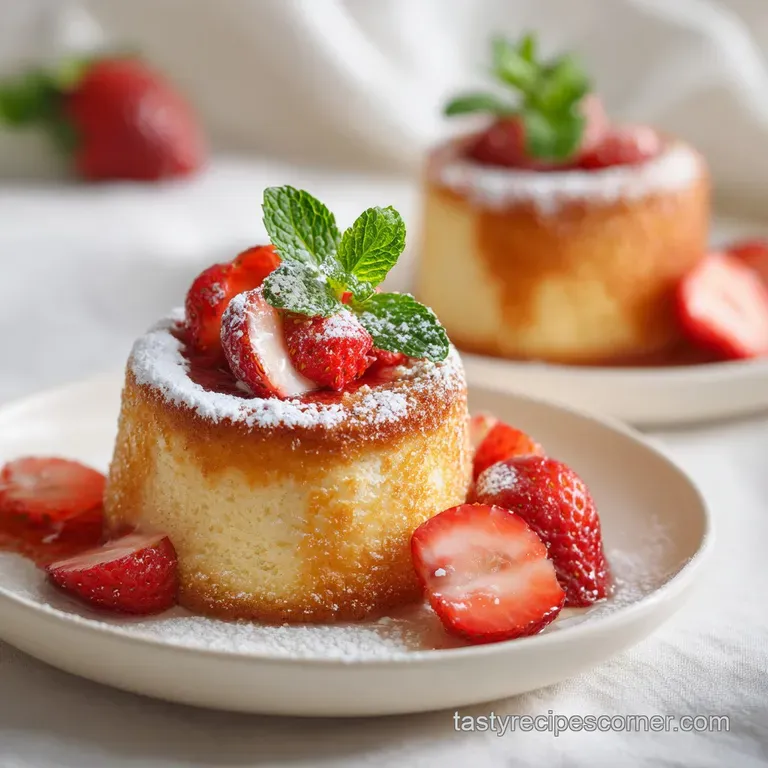
- Whisk dry base. Combine 2 cups flour, 1/3 cup powdered milk, 1/4 cup sugar, 1 tablespoon baking powder, and 1/2 teaspoon salt in a large bowl. Note: This aerates the flour so your cakes aren't heavy.
- Mix wet ingredients. In a separate jug, whisk the large egg, 1 1/4 cups water, and 1 teaspoon vanilla extract until the egg is fully broken down.
- Combine liquids. Pour the egg mixture into the center of the dry ingredients bowl.
- Add melted fat. Drizzle in the 3 tablespoons of melted, cooled butter.
- The gentle fold. Using a spatula, fold the ingredients together until just combined. Note: Small lumps are your friends; they mean you haven't over worked the gluten.
- Prep the pan. Heat your skillet over medium low and add a tiny sliver of butter. Wait for the butter to sizzle and foam before adding batter.
- The pour. Scoop 1/4 cup of batter per cake onto the hot surface.
- Watch for bubbles. Cook for about 2-3 minutes until bubbles pop and stay open and the edges look dry and matte.
- The flip. Carefully slide your spatula under and flip in one quick motion.
- Final sear. Cook the second side for 60-90 seconds until golden brown and puffed.
Fixing What Goes Wrong
If your breakfast isn't looking like a masterpiece, it is usually a simple fix involving heat or mixing technique. Most people have a tendency to over mix the batter because we are taught that lumps are bad.
In the world of hot cakes, lumps are actually tiny pockets of flour that haven't been touched by the liquid yet, which helps keep the final texture tender. If the batter is perfectly smooth, you have likely developed too much gluten, resulting in a "bouncy" or rubbery cake.
Another common issue is the "first cake syndrome," where the first one is always a disaster. This happens because the pan hasn't reached a uniform temperature yet. To avoid this, let your skillet preheat for a full 3 to 5 minutes on low before you even think about dropping the batter.
This ensures the heat is distributed evenly across the entire surface.
Why Your Hot Cakes Are Flat
If you followed the recipe but they aren't rising, check your baking powder. It loses its potency quickly in humid environments. Also, make sure you aren't pressing down on the hot cakes with your spatula after you flip them.
You might think you are helping them cook, but you are actually just squishing out all the air bubbles you worked so hard to create.
Why the Center Is Raw
This is a classic sign of the heat being too high. The outside browns (or burns) before the heat has time to penetrate the thick batter. Lower the flame and be patient. A good hot cake takes time.
If you find the outside is getting too dark too fast, lift the pan off the heat for 30 seconds to let it cool down before continuing.
| Problem | Root Cause | Solution |
|---|---|---|
| Tough or rubbery texture | Over mixing the batter | Fold until just moistened; stop immediately |
| Uneven browning | Pan was not preheated | Let skillet heat for 5 minutes on medium low |
| Greasy or heavy cakes | Pan temperature too low | Increase heat slightly until butter sizzles instantly |
Common Mistakes Checklist
- ✓ Don't over mix; stop when the flour streaks disappear.
- ✓ Use a room temperature egg to prevent the melted butter from re solidifying.
- ✓ Avoid using too much oil or butter in the pan; a light wipe is enough.
- ✓ Wait for the bubbles to "pop and stay open" before you flip.
- ✓ Never press down on the cakes with your spatula after flipping.
Flexible Dietary Adaptations
Making this recipe work for different needs is easier than you think. If you need a dairy-free version, simply swap the butter for a neutral oil or a vegan butter substitute. For the powdered milk, you can find powdered coconut milk or soy milk in most health food stores.
These add a lovely, subtle flavor that pairs beautifully with tropical fruits like mango or banana.
For those looking for a gluten-free option, a 1 to-1 gluten-free flour blend (like King Arthur or Bob’s Red Mill) works quite well here. Just keep in mind that gluten-free batters often need a few extra minutes to rest so the rice flours can fully hydrate, otherwise, you might end up with a slightly gritty texture. If you're in the mood for something heartier, you might also love my Peanut Butter Cake.
If you want to experiment with different textures, try replacing half of the water with some sparkling water or club soda. The extra carbonation creates even more lift, resulting in an exceptionally airy "hot cake." For a different flavor profile entirely, check out this Tuxedo Bar Cake copycat. It shows how much a few clever swaps can change a classic.
Scaling Your Breakfast
- To Halve (2 servings): Use 1 cup flour, 2.5 tbsp powdered milk, 2 tbsp sugar, 1.5 tsp baking powder, and a pinch of salt. Beat one egg and use half of it (about 1.5 tbsp). Reduce water to 2/3 cup.
- To Double (8 servings): Use 4 cups flour, 2/3 cup powdered milk, 1/2 cup sugar, 2 tbsp baking powder, and 1 tsp salt. Use 2 eggs, 2.5 cups water, and 6 tbsp butter.
- Baking Batch: If you are doubling the recipe to bake in a sheet pan, lower the oven temp to 325°F (165°C) and extend the time to 20-25 minutes to ensure the center sets without the edges drying out.
Myths About Batter
One of the biggest misconceptions is that you must rest the batter for 30 minutes. While resting helps some recipes, for this specific homemade hot cakes recipe, the baking powder starts reacting the second it hits the liquid.
If you wait too long, you lose that initial "oomph" of carbon dioxide, and your cakes won't be as fluffy. Modern baking powders are double acting, but that first burst of bubbles is precious!
Another myth is that you should only flip a hot cake once. While it is true that flipping too many times can make them lose heat, if you realize one side isn't quite golden enough, it is perfectly fine to flip it back for another 30 seconds. The "cooking police" won't come for you!
Just be gentle so you don't deflate the structure.
Storage and Leftover Tips
- Fridge
- Store cooled hot cakes in an airtight container for up to 3 days. To keep them from sticking together, place a small square of parchment paper between each one.
- Freezer
- These freeze beautifully! Lay them flat on a baking sheet to freeze individually for 1 hour, then toss them into a freezer bag. They will stay fresh for up to 2 months.
- Reheating
- Avoid the microwave if you can; it makes them rubbery. Instead, pop them in a toaster on a low setting or warm them in a dry skillet over medium heat. This restores that slight exterior crispness.
Zero Waste Tip: If you have leftovers that have gone a bit stale, don't toss them. Tear them into pieces and use them as the "bread" base for a morning bread pudding. Soak them in a mix of egg and milk, add some cinnamon, and bake. It is a fantastic way to use every last scrap.
You can also use the leftover dry flour mixture as a quick breading for French toast.
Creative Serving Suggestions
While maple syrup is the gold standard, don't be afraid to branch out. A dollop of Greek yogurt and a handful of toasted walnuts adds a nice protein boost and a crunch that contrasts the soft cake.
If you want to lean into the cultural heritage of the hot cake, try brushing them with melted margarine while they are still steaming and topping them with a heavy dusting of granulated sugar.
For a more modern twist, macerate some berries in a little bit of lemon juice and sugar for 10 minutes while you are cooking. The juices create a natural "syrup" that is much brighter and fresher than the bottled stuff.
If you are feeling extra indulgent, a smear of peanut butter and some sliced bananas will turn these simple cakes into a meal that will keep you full until dinner. The beauty of this recipe is its simplicity it is a blank canvas for whatever you have in your pantry.
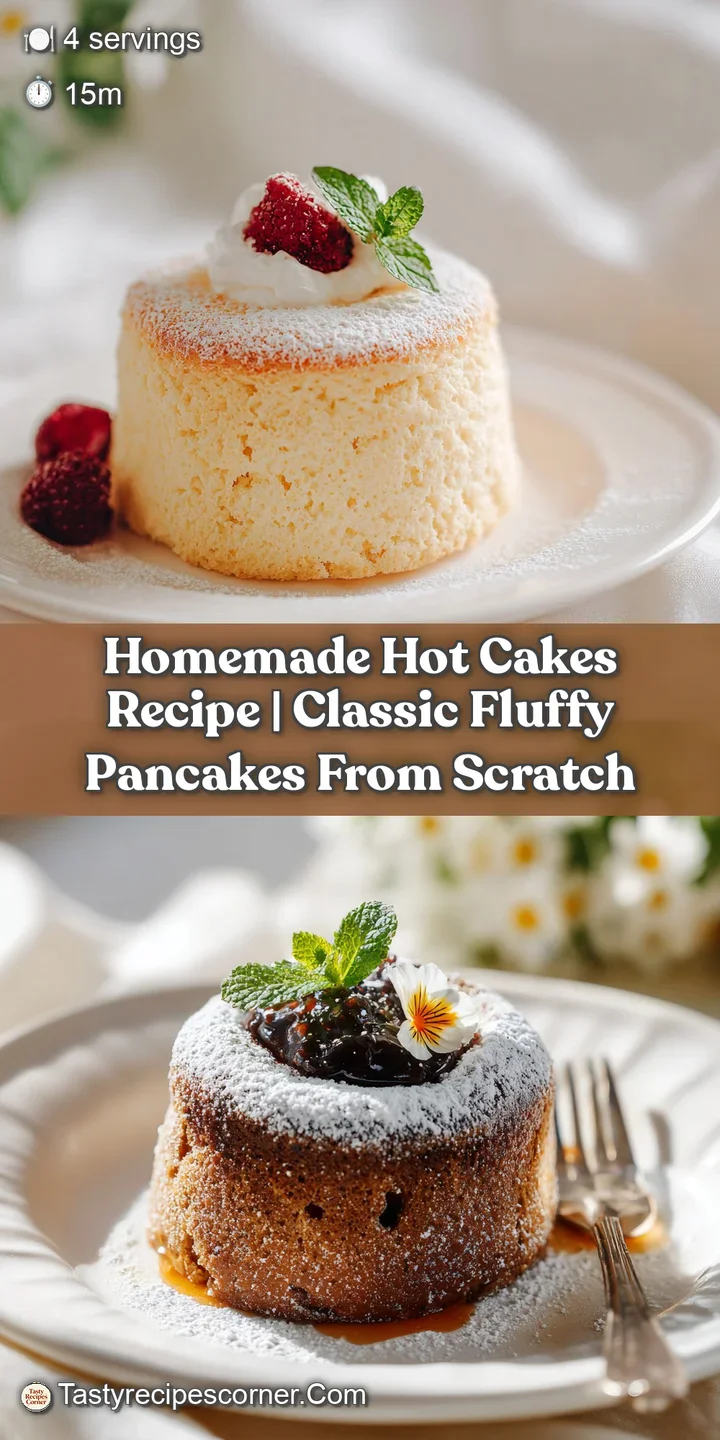
Recipe FAQs
What are the ingredients in hot cakes?
You need a blend of dry and wet components. Combine 2 cups all-purpose flour, 1/3 cup powdered milk, 1/4 cup granulated sugar, 1 tablespoon baking powder, and 1/2 teaspoon fine sea salt.
Whisk these with 1 large room temperature egg, 1 1/4 cups water, 3 tablespoons melted unsalted butter, and 1 teaspoon pure vanilla extract.
Is hotcake mix the same as pancake mix?
Yes, they are generally interchangeable. Both rely on a similar base of flour, leavening agents, and sugar to achieve a light, airy structure.
What is the secret to perfect hotcakes?
Avoid over mixing your batter. Gently fold the ingredients until just combined, leaving small lumps behind to ensure a fluffy interior. If you enjoyed mastering this delicate folding technique, see how we achieve a light texture in our silky Yule Log cake.
How to make pancakes with 3 ingredients?
Use only flour, baking powder, and water if you have no other supplies. While this yields a basic, neutral base, incorporating the full recipe list above is necessary for the traditional flavor and structure you expect from a classic hot cake.
Is it true I must press down on the hot cakes to ensure they cook through?
No, this is a common misconception. Pressing down with your spatula releases the trapped air pockets and results in a dense, flat, and rubbery texture.
How to know exactly when to flip the hot cake?
Wait until bubbles on the surface pop and remain open, while the edges of the cake appear matte. This indicates the bottom is set and firm enough to flip without tearing.
How to store leftovers without them getting soggy?
Cool them completely before storing in an airtight container with parchment paper between each layer. To serve, reheat them in a toaster or a dry skillet over medium heat to restore the crisp exterior instead of using a microwave.
Homemade Hot Cakes
Ingredients:
Instructions:
Nutrition Facts:
| Calories | 416 kcal |
|---|---|
| Protein | 10.1g |
| Fat | 12.6g |
| Carbs | 63.4g |
| Fiber | 1.8g |
| Sugar | 15.5g |
| Sodium | 458mg |
