Chicken and Potatoes
- Time: Active 15 minutes, Passive 45 minutes, Total 1 hour
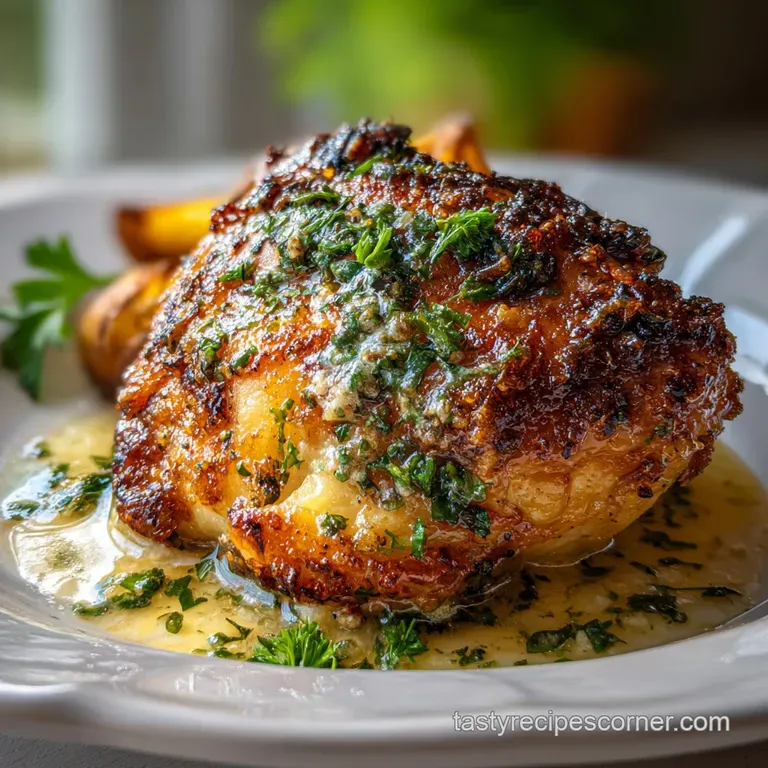
- Flavor/Texture Hook: Shatter crisp skin and velvety, butter soaked centers
- Perfect for: Sunday family dinner or a low stress weeknight meal
- Why This Method Actually Works
- Deep Dive Into Key Components
- Gathering Your Pantry Essentials
- Simple Tools For Better Results
- Steps To Achieve Golden Perfection
- Fixing Common Kitchen Hiccups
- Exploring Flavorful Recipe Twists
- Storing And Reusing Every Scrap
- Best Ways To Serve Dinner
- Adjusting For Larger Families
- Debunking Traditional Cooking Tales
- Recipe FAQs
- 📝 Recipe Card
There is a specific sound that defines a Sunday afternoon in my Tennessee kitchen. It is the steady, rhythmic sizzle of chicken fat hitting a hot roasting pan. Whenever I pull a tray of Chicken and Potatoes out of the oven, the aroma of toasted rosemary and schmaltz fills the hallway before I even set the timer.
This isn't just food, it is a hug on a plate that reminds me of my grandmother’s heavy cast iron skillet and the way she could turn five simple ingredients into a feast.
I used to struggle with this dish. My potatoes would either stay hard as rocks or turn into a mushy pile of regret, while the chicken skin stayed pale and rubbery. It took a few years of burnt garlic and soggy wedges to realize that success isn't about complexity, it is about heat management and fat.
You want that chicken to behave like a seasoning agent for the vegetables below it.
We are going to build this meal in layers. We start with the heavy hitters, the bone in thighs and the waxy Yukon Golds, then we layer in the aromatics like smashed garlic and fresh herbs. By the time the timer dings, you will have a pan full of textures that shouldn't coexist, but somehow do.
Let's get into the mechanics of why this works so you can stop guessing and start cooking.
Why This Method Actually Works
The magic here happens through a process called Schmaltz Confit, where the rendering chicken fat slowly fries the potatoes from the bottom up. Simultaneously, Protein Denaturation allows the chicken thighs to remain juicy even at high heat, as the connective tissue breaks down into gelatin.
- Surface Dehydration: High oven heat evaporates moisture from the skin, allowing the Maillard reaction to create that deep brown, crispy exterior.
- Starch Gelatinization: The Yukon Golds absorb the melted butter and chicken juices, causing the internal starches to swell and create a velvety texture.
- Aromatic Infusion: Smashed garlic and rosemary oils are fat soluble, meaning they hitch a ride on the olive oil to coat every square inch of the potato chicken.
- Thermal Mass: Using a heavy pan helps maintain a consistent temperature, preventing the bottom of the potatoes from scorching before the middle is cooked through.
Deep Dive Into Key Components
Understanding the role of each player in the pan helps you make better decisions when you're standing in the grocery aisle. If you've ever wondered why some recipes fail while others become family favorites, the answer is usually found in the chemistry of the ingredients. For a slightly different take on this concept, you might enjoy looking at this one pan baked chicken and potatoes which uses a similar heat exchange principle.
| Ingredient | Science Role | Pro Secret |
|---|---|---|
| Bone in Thighs | Provides essential fat (schmaltz) for frying potatoes | Pat skin bone dry with paper towels before seasoning |
| Yukon Gold Potatoes | High starch to sugar ratio prevents falling apart | Leave the skins on for extra texture and fiber |
| Unsalted Butter | Emulsifies with chicken juices for a silky sauce | Use European style butter for higher fat content |
The interaction between the chicken skin and the dry heat of the oven is the most critical part of the entire process. If the skin is wet, it will steam instead of crisping, and you'll end up with a texture that is more like boiled leather than a crispy treat.
Gathering Your Pantry Essentials
For this Chicken and Potatoes recipe, we are using hearty, accessible items that you likely already have. I always reach for kosher salt (like Diamond Crystal) because the larger grains are easier to control by hand than fine table salt.
- 2 lbs bone in, skin on chicken thighs: Why this? The bone keeps the meat moist during the 45 minute roast time.
- 1.5 lbs Yukon Gold potatoes, cut into 1 inch wedges: Why this? These hold their shape better than Russets when cooked in fat.
- 1 large yellow onion, thickly sliced: Why this? Onions provide a sweet, caramelized base for the pan juices.
- 6 cloves garlic, smashed: Why this? Smashed cloves release oils slowly without burning as fast as minced garlic.
- 4 tbsp unsalted butter, melted: Why this? Adds a rich, creamy mouthfeel to the roasted vegetables.
- 2 tbsp extra virgin olive oil: Why this? Raises the smoke point of the butter to prevent scorching.
- 1 tbsp fresh rosemary, chopped: Why this? Robust needles stand up to high oven temperatures.
- 1 tbsp fresh thyme, chopped: Why this? Adds a bright, floral woodiness to the savory meat.
- 2 tsp kosher salt: Why this? Essential for drawing out moisture and enhancing natural flavors.
- 1 tsp cracked black pepper: Why this? Provides a sharp, biting contrast to the rich fats.
- 1 tsp smoked paprika: Why this? Gives the dish a beautiful sunset hue and deep earthiness.
| Original Ingredient | Substitute | Why It Works |
|---|---|---|
| Chicken Thighs | Chicken Drumsticks | Similar fat content and cook time. Note: Meat is slightly leaner. |
| Yukon Gold Potatoes | Red Bliss Potatoes | Waxy texture that holds up well. Note: Skin is thinner and more delicate. |
| Fresh Rosemary | Dried Rosemary | Use 1/3 the amount. Note: Soak in oil first to prevent needle like texture. |
Simple Tools For Better Results
You don't need a high end laboratory to make a great meal, but a few specific tools will make your life significantly easier. I swear by my 12 inch cast iron skillet for this, but a heavy rimmed baking sheet (half sheet pan) works wonders if you want more surface area for the potatoes to brown.
One tool I cannot live without is a reliable instant read thermometer. Guessing if chicken is done by poking it with a fork is a recipe for dry meat. You want to see 165°F on that digital screen. Also, a sharp chef's knife is non negotiable for getting those Yukon Golds into uniform 1 inch wedges.
If the sizes vary too much, some will be mush while others are still crunchy.
2 Must Have Tools
- Heavy Roasting Pan: A pan with high sides can trap steam; use a low rimmed sheet pan for the crispiest results.
- Metal Spatula: You need something thin and sturdy to flip the potatoes without leaving the golden crust stuck to the bottom of the pan.
Steps To Achieve Golden Perfection
- Heat the oven. Set your rack to the center position and preheat to 425°F. Note: This high heat is necessary for skin crisping.
- Dry the protein. Use paper towels to pat the 2 lbs of chicken thighs until the skin feels tacky and bone dry.
- Prep the vegetables. Cut 1.5 lbs of potatoes into 1 inch wedges and thickly slice the yellow onion.
- Whisk the fats. Combine the 4 tbsp melted butter, 2 tbsp olive oil, and all herbs/spices in a small bowl.
- Coat the base. Toss the potatoes, onions, and 6 smashed garlic cloves directly on the baking sheet with half of the butter mixture.
- Nestle the chicken. Arrange the thighs on top of the vegetables, skin side up, and brush them with the remaining herb butter.
- Initial roast. Slide the pan into the oven and bake for 30 minutes until the onions begin to caramelize and the chicken skin turns golden.
- The Tumble. Carefully stir the potatoes around the chicken to ensure they are being coated in the rendered schmaltz.
- Final blast. Bake for another 15 minutes until the chicken reaches an internal temperature of 165°F and the potatoes are tender.
- The Rest. Let the pan sit for 5 minutes before serving. Note: This allows the juices to redistribute back into the meat fibers.
Fixing Common Kitchen Hiccups
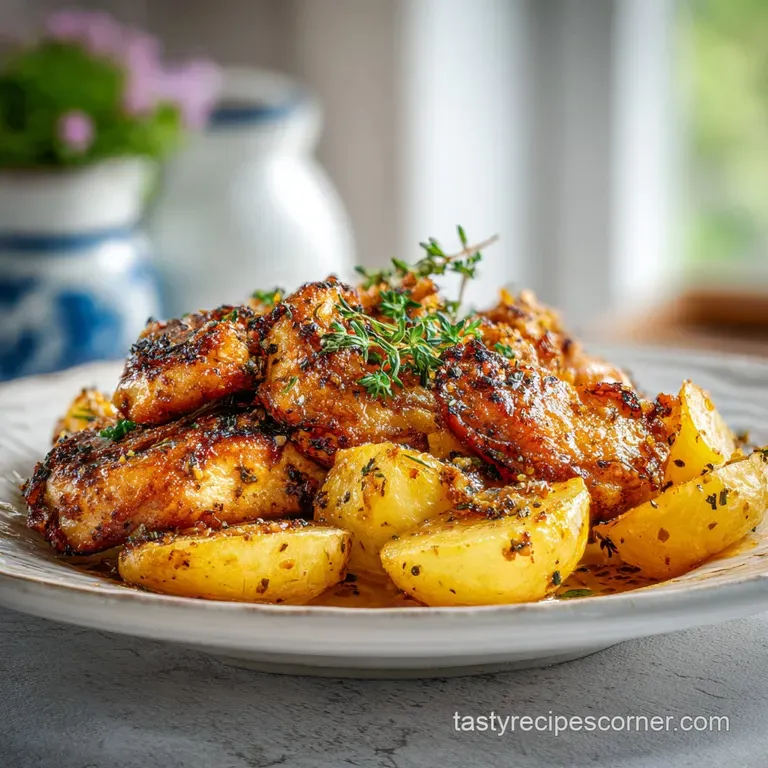
Sometimes things don't go exactly as planned, and that is okay. I once made a potato chicken recipe where I crowded the pan so much the vegetables basically boiled in their own juice. It was a tragedy, but it taught me the importance of airflow.
Solving The Sogginess Problem
If your potatoes look pale and feel soft rather than crispy, it is usually a moisture issue. This often happens if the potatoes were still wet when you tossed them in oil, or if the pan was too crowded. Space is your friend.
You want at least a little bit of metal showing between the wedges so the hot air can circulate and dehydrate the surface.
Avoiding Bitter Burnt Garlic
Garlic is delicate. If you mince it finely, it will turn into bitter black charcoal long before the chicken is done. That is why we use smashed whole cloves. They offer a mellow, roasted sweetness.
If you notice the garlic is browning too fast halfway through, simply tuck the cloves underneath a chicken thigh or a larger potato wedge to shield them from the direct heat.
Checking Bone In Doneness
Checking the temperature near the bone is vital. Sometimes the meat looks white on the outside, but it is still pink and raw near the joint. Always aim the probe of your thermometer into the thickest part of the thigh, making sure not to hit the bone itself, which can give a false high reading.
| Problem | Root Cause | Solution |
|---|---|---|
| Rubbery Skin | Oven temp too low | Increase heat to 425°F and ensure skin is dry before oiling. |
| Hard Potatoes | Wedges too large | Cut into consistent 1 inch pieces; ensure they are coated in fat. |
| Dry Chicken | Overcooking | Pull from oven at 160°F; carryover cooking will hit 165°F during rest. |
Exploring Flavorful Recipe Twists
Once you master the basic technique, you can start playing with the flavor profiles. I love a good Chicken and Potatoes Recipe that leans heavily into the garlic parmesan side of things, but the foundation remains the same.
Indian Potato Chicken Curry Twist
You can easily pivot this into a dry curry style by swapping the rosemary and thyme for 1 tbsp of garam masala and a teaspoon of turmeric. Instead of butter, use ghee. The over high heat roasting method creates a texture that is remarkably similar to traditional tandoori cooking but with the convenience of a sheet pan.
Easy Chicken Potato Bake Casserole
If you prefer something more "set it and forget it," you can move everything into a deep 9x13 dish. Add a half cup of chicken stock to the bottom. This will result in a softer, more "stewed" potato, but the flavor is incredibly concentrated.
It’s perfect for those cold nights when you want something that feels like a chicken and potato casserole but with less cleanup.
Potato Chicken Soup Pivot
Got leftovers? This is where the magic happens. Pull the leftover meat off the bone, dice the roasted potatoes, and throw them into a pot with a quart of chicken stock and a splash of heavy cream.
Because everything is already roasted and caramelized, the soup will have a depth of flavor that you just can't get starting from raw ingredients.
Storing And Reusing Every Scrap
Leftovers are a gift to your future self. I genuinely believe this dish tastes better the next day because the potatoes have had time to fully absorb the garlic and herb oils. Just make sure you store them correctly to keep that texture from turning into a sad, grainy mess.
Storage: Place leftovers in an airtight container and keep in the fridge for up to 4 days. I don't recommend freezing roasted potatoes, as the cell structure breaks down when frozen, leaving them mealy and watery upon thawing.
The chicken, however, freezes beautifully for up to 3 months if kept in a vacuum sealed bag.
Zero Waste: Never throw away those chicken bones or the onion skins! Toss the bones, onion ends, and any herb stems into a freezer bag. Once the bag is full, simmer everything with water for 4 hours to make a rich, roasted chicken stock. It's liquid gold for your next soup or risotto.
Reheating: Avoid the microwave if you can. It turns the chicken skin into wet paper. Instead, put the chicken and potatoes back on a tray in a 350°F oven for 10-12 minutes.
This will revive the crispiness of the skin and the edges of the potatoes while heating them through gently.
Best Ways To Serve Dinner
When I serve this at home, I usually keep it simple. The pan itself is so beautiful that I often just bring the whole thing to the table on a trivet. It feels rustic and communal, which is exactly how a soul warming meal should feel.
Since the dish is quite rich with the butter and schmaltz, you need something acidic to cut through the fat. A simple green salad with a sharp lemon vinaigrette is my go to. Alternatively, some quick pickled red onions scattered over the top right before serving can provide that bright pop of color and flavor that makes the whole plate sing.
If you are feeding a crowd, a side of crusty sourdough bread is essential for mopping up the garlic infused pan juices. Trust me, you do not want to let a single drop of that liquid gold go to waste. If you're looking for more inspiration on this classic pairing, check out this Chicken Potato Recipe for another perspective on seasoning and layout.
- If you want more crunch, add a handful of panko breadcrumbs mixed with parmesan to the top of the chicken in the last 10 minutes.
- If you want more heat, toss the potatoes with a half teaspoon of cayenne pepper or red chili flakes.
- If you want more tang, squeeze half a fresh lemon over the tray the moment it comes out of the oven.
Adjusting For Larger Families
Cooking for a big group or just yourself requires a little bit of math, but don't let it intimidate you. Scaling this dish is mostly about managing the "real estate" in your oven.
Down (½ or ¼): If you're cooking for one or two, use a smaller pan like an 8 inch skillet. Keep the temperature the same but start checking for doneness about 10 minutes earlier. Since there is less mass in the pan, it will reach temperature faster.
If the recipe calls for an egg (not this one, but for future reference), beat it in a cup and use half.
Up (2x-4x): When doubling the recipe, do not double the salt and spices exactly. Use about 1.5 times the amount and taste as you go. You will likely need two separate baking sheets. Do not try to cram everything onto one pan, or you will end up with steamed chicken and soggy potatoes.
Rotate the pans halfway through the cooking time (top to bottom and front to back) to ensure even browning in a standard home oven.
Baking (2x): If you are doing a massive batch, lower the oven temp to 400°F and extend the cooking time by 15-20 minutes. This prevents the outside from burning while the large volume of food in the center struggles to heat up.
Debunking Traditional Cooking Tales
We've all heard the "rules" passed down through cookbooks, but science has debunked a few of the big ones.
- Searing seals in juices: This is a myth. Moisture loss happens regardless of a sear. We sear (or roast at high heat) for the Maillard reaction, which creates hundreds of new flavor compounds on the surface. It’s about taste, not "locking in" moisture.
- Don't wash your chicken: Seriously, don't. Splashing water on raw poultry just spreads bacteria all over your sink and counters. It doesn't make the chicken cleaner. The heat of the oven is what kills any pathogens.
- Potatoes must be boiled first: While par boiling can lead to an extra thick crust, it isn't strictly necessary for a sheet pan meal. If you cut your wedges to 1 inch and use enough fat, the oven will do all the work of softening the inside while crisping the outside.
| Comparison | Fresh Yukon Golds | Canned Potatoes |
|---|---|---|
| Texture | Creamy, velvety interior | Rubbery or overly soft |
| Flavor | Naturally buttery and earthy | Metallic or salty from brine |
| Roasting | Crisps up beautifully | Struggles to brown properly |
This dish is a testament to the fact that the best meals don't require fancy ingredients or complicated techniques. It's just about heat, fat, and a little bit of patience. Grab your favorite pan, some good chicken, and those Yukon Golds, and let the oven do what it does best. Your kitchen is about to smell incredible.
Recipe FAQs
Is it okay to cook potatoes with raw chicken?
Yes, it's standard practice. They cook together beautifully on a sheet pan, allowing the chicken fat to baste and flavor the potatoes as they roast. Ensure both reach their safe internal temperatures.
Can we eat chicken and potatoes together?
Absolutely! Chicken and potatoes are a classic, comforting pairing that works in countless dishes, from hearty roasts to creamy gratins. The starch from the potatoes complements the richness of the chicken perfectly.
Should you boil potatoes before roasting?
Not always, but it can help. For super crispy results, roasting raw potatoes cut into uniform pieces with plenty of fat is ideal, like in a Winter Dinner Recipe with Roasted Chicken. Par-boiling can speed up cooking and ensure a tender interior if you're aiming for a quicker bake or a specific texture.
What can I make from chicken and potatoes?
Many delicious dishes! You can make simple sheet pan roasts, hearty stews, creamy gratins, or even components for a comforting Chicken Dressing Recipe: Structurally Sound & Velvety. Shredded chicken and potatoes can also be used in tacos or savory pies.
How do I ensure chicken skin is crispy when roasting with potatoes?
Start with dry chicken skin. Pat it thoroughly dry with paper towels before seasoning and roasting. High initial oven heat, around 425°F (220°C), and ensuring the chicken isn't crowded on the pan are key to achieving that desirable crispness.
What kind of potatoes are best for roasting with chicken?
Waxy potatoes like Yukon Golds or red potatoes are excellent. They hold their shape well during the roasting process and absorb the chicken drippings beautifully, developing a creamy interior and a lovely golden exterior.
Starchy potatoes like Russets can also work but may require careful monitoring to avoid them becoming too soft.
Can I add other vegetables when cooking chicken and potatoes?
Yes, absolutely! Onions, garlic, carrots, bell peppers, or even broccoli florets can be added. Just ensure they have similar cooking times or cut them into appropriate sizes so they cook through at the same rate as the chicken and potatoes. A great example of this versatility is found in Shredded Chicken Recipes: Smoky Chipotle Chicken for Tacos, where additional components enhance the dish.
Chicken And Potatoes
Ingredients:
Instructions:
Nutrition Facts:
| Calories | 812 calories |
|---|---|
| Protein | 42.1 g |
| Fat | 54.2 g |
| Carbs | 38.6 g |
| Fiber | 4.8 g |
| Sugar | 3.9 g |
| Sodium | 1045 mg |
