Buffalo Sauce Recipe
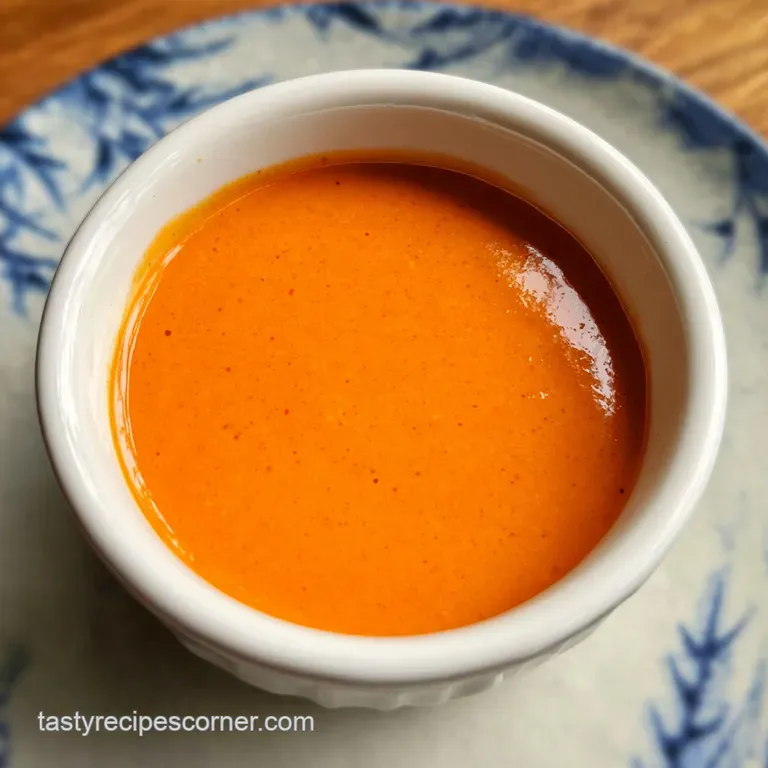
- Time: Active 2 mins, Passive 8 mins, Total 10 mins
- Flavor/Texture Hook: Velvety and tangy with a creeping cayenne warmth
- Perfect for: Game day gatherings, quick weeknight seasoning, or beginner meal prep
- Creating a Hearty Homemade Buffalo Sauce Recipe
- Science Behind a Soul Warming and Silky Glaze
- Selecting Essential Pantry Components for Maximum Heat
- Using the Proper Tools for Kitchen Consistency
- Simmering and Whisking Your Tangy Red Glaze
- Fixing Common Texture Issues and Kitchen Disasters
- Personalizing Your Heat with Unique Flavor Swaps
- Storing and Preserving Your Soul Warming Batch
- Serving Suggestions for Your Hearty Family Table
- Recipe FAQs
- 📝 Recipe Card
Creating a Hearty Homemade Buffalo Sauce Recipe
Walking into my kitchen on a Saturday afternoon, the first thing that hits you isn't the sight of the game on TV, it's that sharp, nose tingling sting of vinegar and cayenne hitting a warm pan. It's a smell that wakes up the senses and promises something soul warming is about to happen.
I remember the first time I tried to make a sauce from scratch, I just dumped everything in a bowl and hoped for the best. The result was a greasy, broken mess that looked more like an oil slick than a dip. I realized then that while the ingredients are simple, the technique is what makes it sing.
In my Tennessee kitchen, we don't settle for the thin, watery stuff you find on the bottom shelf of the grocery store. We want something with body, something that clings to a chicken wing like a hug.
This buffalo sauce recipe is the result of years of tinkering, failing, and finally understanding how to make butter and spice live together in harmony. You’re not just making a condiment here, you’re creating a velvety glaze that transforms basic poultry into a centerpiece.
We are going to focus on a few key movements: the gentle simmer, the careful emulsification of chilled butter, and the optional starch slurry for those who like their sauce extra thick. It’s a quick process, but you have to stay present.
If you walk away to check the score of the game, you might miss the moment the sauce turns from a liquid to a silky coating. Trust me, once you smell that garlic powder melding with the aged cayenne, you won't want to be anywhere else anyway.
Science Behind a Soul Warming and Silky Glaze
The Physics of the Emulsion: Whisking chilled butter into a warm acidic base creates a stable emulsion where tiny fat droplets are suspended evenly, preventing the sauce from breaking into a greasy layer.
Starch Gelatinization: Adding a cornstarch slurry provides a structural network that traps moisture, ensuring the sauce achieves a heavy "cling" that won't slide off your food.
| Feature | Fresh Homemade Version | Bottled Shortcut |
|---|---|---|
| Heat Control | Adjustable with ground cayenne | Fixed and often muted |
| Texture | Velvety and rich from real butter | Gummy due to xanthan gum |
| Sodium | Controlled by the cook | Often excessively high |
Creating a sauce like this requires a bit of patience, much like the slow simmered base of my Buffalo Chicken Dip recipe. When you understand that heat is a flavor and not just a sensation, the whole cooking process changes. The aged cayenne provides the sharp top notes, while the butter rounds out the finish, coating your palate so the spice doesn't become overwhelming. It is a delicate balance of acidity and fat.
| Sauce Thickness | Internal Temp | Rest Time | Visual Cue |
|---|---|---|---|
| Thin/Drizzle | 140°F | 1 min | Runs quickly off a spoon |
| Classic Wing | 160°F | 2 mins | Coats the back of a spoon |
| Extra Thick | 175°F | 5 mins | Leaves a visible trail when stirred |
Selecting Essential Pantry Components for Maximum Heat
To get that authentic, hearty flavor, you need to start with the right foundation. I always reach for an aged cayenne red pepper hot sauce, specifically something like Frank's RedHot, because the fermentation adds a depth you just can't get from fresh peppers alone.
The vinegar in the sauce provides the necessary lift, but we add a splash of white distilled vinegar to sharpen that edge. It’s all about layers.
| Component | Science Role | Pro Secret |
|---|---|---|
| Unsalted Butter | Emulsifier & Fat | Use chilled cubes to slow the melt for a creamier finish |
| Worcestershire Sauce | Umami Booster | Adds fermented depth that mimics long simmered stocks |
| Cornstarch Slurry | Stabilizer | Prevents the butter from separating if the sauce is reheated |
- 1 cup Aged Cayenne Red Pepper Hot Sauce: This is your base. Why this? Aged peppers offer a complex, fermented tang that raw peppers lack.
- 1/2 cup Unsalted Butter: Chilled and cubed. Why this? Controlling the melt rate is the key to a velvety texture.
- 1.5 tablespoons White Distilled Vinegar: For extra punch. Why this? Cuts through the richness of the butter and heightens the spice.
- 1/4 teaspoon Worcestershire sauce: For savory depth. Why this? Provides a hidden layer of salt and funk.
- 1/2 teaspoon Garlic Powder: Traditional savory note. Why this? Distributes more evenly than fresh garlic in a smooth sauce.
- 1/4 teaspoon Ground Cayenne Pepper: For an extra kick. Why this? Boosts the heat without changing the liquid ratio.
- 1 pinch Kosher Salt: To brighten everything. Why this? Salt is a flavor magnifier for both heat and acid.
- 1 teaspoon Cornstarch & 1 teaspoon Cold Water: The slurry. Why this? Acts as an insurance policy for a thick, stable sauce.
Chef's Tip: If you want a deeper, more rounded heat, toast the garlic powder and cayenne in a dry pan for 30 seconds before adding the liquid. It wakes up the oils in the spices.
Using the Proper Tools for Kitchen Consistency
You don't need a professional kitchen to master this, but a few specific tools will make your life much easier. I prefer a small stainless steel saucepan because it allows me to see the color of the sauce as it changes.
Cast iron is great for many things, but it holds onto heat too long for a delicate emulsion like this. You need to be able to pull the pan off the burner and have the temperature drop quickly if things start to look greasy.
A high-quality balloon whisk is also non negotiable. You’re not just stirring, you’re incorporating air and fat into a liquid. A fork simply won't cut it here. I also recommend having a small glass bowl for your cornstarch slurry.
Mixing it in a tiny container ensures no clumps are left behind before it hits the main pot. It’s the small details that prevent a kitchen disaster.
Finally,, a silicone spatula is your best friend for the final stages. Once the sauce is finished, you’ll want to scrape every single drop of that liquid gold out of the pan. The way the sauce clings to the spatula will be your first indicator of success.
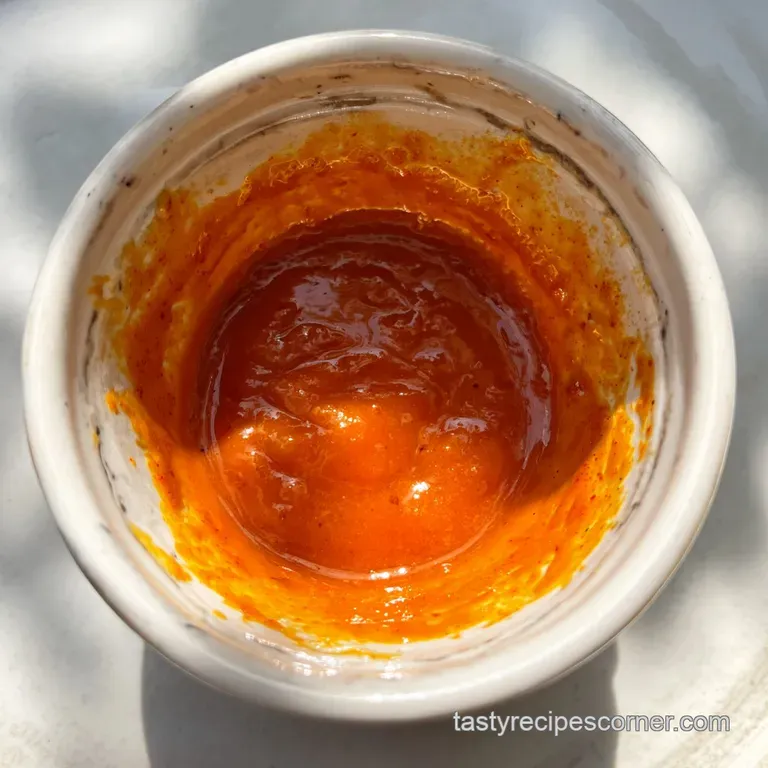
If it leaves a thick, orange coating that doesn't immediately run off, you've nailed the consistency.
Simmering and Whisking Your Tangy Red Glaze
- Combine the 1 cup aged cayenne pepper sauce, 1.5 tablespoons white distilled vinegar, and 1/4 teaspoon Worcestershire sauce in a small saucepan. Note: This creates the acidic base needed to eventually hold the fat.
- Whisk in the 1/2 teaspoon garlic powder, 1/4 teaspoon ground cayenne, and a pinch of kosher salt until no clumps remain.
- Place the pan over medium heat and bring the mixture to a gentle simmer. Cook 5 minutes until the aroma is sharp and the liquid has reduced slightly.
- While the sauce simmers, whisk 1 teaspoon cornstarch with 1 teaspoon cold water in a small ramekin until smooth.
- Slowly pour the slurry into the simmering sauce while whisking constantly. Simmer 2 more minutes until the sauce begins to look glossy and thick.
- Reduce the heat to the lowest setting possible. This is a critical moment to prevent the sauce from breaking.
- Add the 1/2 cup chilled, cubed butter one or two pieces at a time. Whisk vigorously until each cube is fully melted before adding the next.
- Watch for the sauce to transform from a translucent red to an opaque, creamy orange. Stop whisking once the last bit of butter disappears.
- Remove the pan from the heat immediately. Let the sauce rest 1 minute to allow the proteins to settle.
- Pour the finished glaze into a glass jar or toss immediately with your favorite protein.
As you whisk in that butter, you’ll notice the smell change from a sharp, aggressive vinegar to something much more rounded and soul warming. It’s like the kitchen is giving you a high five. If you’re looking for a meal to pair this with, the technique of building flavors here is very similar to how I approach the sauce in my Creamy Garlic Chicken recipe. Both rely on controlling the heat to keep the sauce silky.
Fixing Common Texture Issues and Kitchen Disasters
The most common heartbreak with any buffalo sauce recipe is separation. You finish whisking, turn your back for a second, and suddenly there's a layer of yellow oil sitting on top of the red sauce. This usually happens because the sauce got too hot after the butter was added.
Butter is an emulsion of water, fat, and milk solids. If you boil it, that emulsion breaks, and the fat flees.
Why Your Sauce Looks Greasy
If your sauce has broken, don't panic and throw it out. The fat has simply separated from the liquid. This often happens if the butter was added too fast or the heat was too high. You can usually save it by adding a teaspoon of warm water and whisking like your life depends on it off the heat.
The water gives the fat something to grab onto again.
| Problem | Root Cause | Solution |
|---|---|---|
| Oily surface | Sauce boiled after butter was added | Remove from heat, add 1 tsp warm water, and whisk rapidly |
| Gritty texture | Garlic powder clumped or starch didn't dissolve | Strain through a fine mesh sieve or use an immersion blender |
| Too thin | Not enough reduction or slurry | Simmer for 2 extra minutes before adding butter |
Why Your Sauce Tastes Like Pure Vinegar
Sometimes the vinegar can be a bit overwhelming, especially if your hot sauce brand is particularly acidic. This is a balance issue. You can fix this by adding a tiny pinch of sugar or a bit more butter. The fat masks the acid, and the sugar neutralizes the "burn" on the back of the throat.
Common Mistakes Checklist ✓ Always use chilled butter, never room temperature (slow melt is better). ✓ Don't let the sauce boil once the butter is in the pan. ✓ Whisk the cornstarch slurry thoroughly before adding it to avoid lumps.
✓ Pat your wings or chicken dry before saucing to ensure the glaze clings. ✓ Taste your hot sauce base first, brands vary wildly in salt content.
Personalizing Your Heat with Unique Flavor Swaps
One of the best things about making this from scratch is that you aren't stuck with one flavor profile. You can adapt this hearty sauce to fit whatever mood you're in. If I'm feeling like I need a bit more sweetness to balance a salty side dish, I'll whisk in a tablespoon of honey at the very end.
It gives the sauce a beautiful sheen and a "sticky" quality that is fantastic on grilled drumsticks.
- For a Smokey Profile
- Add 1/2 teaspoon of smoked paprika or a drop of liquid smoke.
- For a Garlic Punch
- Sauté two cloves of minced fresh garlic in a teaspoon of oil before adding the hot sauce.
- For a Creamier Dip
- Stir in two tablespoons of heavy cream or Greek yogurt after the butter is incorporated.
| Original Ingredient | Substitute | Why It Works |
|---|---|---|
| Unsalted Butter | Ghee | Higher smoke point, but adds a nuttier, toasted flavor |
| White Vinegar | Apple Cider Vinegar | Softer acidity with a hint of fruitiness |
| Garlic Powder | Onion Powder | Provides savory depth without the specific garlic "bite" |
If you want to go the vegan route, you can use a high-quality plant based butter. Look for one with a high fat content rather than an oil based spread, as the water content in tub margarines will cause the sauce to be too thin.
It won't have the exact same soul warming richness of dairy butter, but it'll still beat anything in a bottle.
Storing and Preserving Your Soul Warming Batch
Because this sauce contains a high amount of butter and vinegar, it actually keeps quite well. I like to keep a jar of it in the fridge for those nights when I just want to roast some frozen cauliflower and call it a day. In the refrigerator, it will stay fresh for about 7 days.
Just keep in mind that the butter will solidify, so it will look like a thick orange paste when you take it out.
When you're ready to use it again, don't just microwave it on high. That's a one way ticket to a broken sauce. Instead, put it in a small pan over low heat and whisk it as it melts. This gently coaxes the emulsion back together.
If you're in a rush, 15 second intervals in the microwave at 50% power, with plenty of stirring in between, can also work.
- Fridge: Store in an airtight glass jar for 7 days.
- Freezer: You can freeze this for up to 3 months, though the texture may change slightly. Thaw in the fridge overnight before reheating.
- Zero Waste Tip: If you have just a tablespoon or two left in the jar, don't wash it out! Toss in some hot popcorn or use it as a base for a spicy vinaigrette by adding a little more oil and honey.
Serving Suggestions for Your Hearty Family Table
In my house, this sauce isn't just for wings. We use it to bring a bit of life to almost everything. One of my favorite ways to serve it is drizzled over a big plate of crispy potato wedges. The starch of the potatoes soaks up the tangy butter, making every bite feel like a treat.
It’s a great way to feed a crowd without spending hours in the kitchen.
If you're hosting a game day, try setting up a "wing station." Keep the sauce warm in a small slow cooker on the "warm" setting and have bowls of celery, carrots, and blue cheese dressing ready to go. The aroma of the warm sauce will draw everyone into the kitchen.
It’s those moments, sharing a hearty meal with friends and family, that make cooking so rewarding.
For a lighter option, toss roasted chickpeas or cauliflower florets in the sauce immediately after they come out of the oven. The heat from the vegetables will help the sauce penetrate and create a "shatter" of flavor when you bite into them.
No matter how you serve it, this buffalo sauce recipe is a versatile tool in your kitchen arsenal that brings a little bit of Tennessee warmth to every plate. It's simple, honest, and far better than anything you can buy in a store. Enjoy the process and the heat!

Recipe FAQs
What are the ingredients in buffalo sauce?
The core ingredients are hot sauce, butter, and vinegar. Most recipes also include Worcestershire sauce for umami, garlic powder for savory depth, and a pinch of salt for brightness.
What is a 2-ingredient buffalo sauce?
It's a simplified version of hot sauce mixed with melted butter. This gets you the basic flavor profile but lacks the complexity and emulsification of a traditional recipe.
What can I use instead of buffalo sauce?
Consider a homemade Hoisin Sauce: Authentic Homemade Recipe, Rich Umami, Ready in Minutes for a sweet and savory alternative. Other options include BBQ sauce, sriracha based sauces, or a spicy garlic sauce.
What are the basics of wing sauce?
Wing sauces typically balance heat, fat, and acidity. The classic buffalo sauce uses cayenne based hot sauce for heat, butter for richness and a smooth mouthfeel, and vinegar for tang to cut through the fat.
How do I make buffalo sauce thicker?
Whisk in a cornstarch slurry. Combine 1 teaspoon of cornstarch with 1 teaspoon of cold water until smooth, then stir it into the simmering sauce and cook for 2 more minutes until glossy.
Why did my buffalo sauce break?
This usually happens if the sauce gets too hot after the butter is added. To fix it, remove from heat, add a teaspoon of warm water, and whisk vigorously until the emulsion reforms.
Can I make buffalo sauce ahead of time?
Yes, it can be made ahead and stored for up to 7 days in the refrigerator. Reheat gently over low heat, whisking constantly, or use short bursts in the microwave at 50% power to avoid separation.
Buffalo Sauce Recipe
Ingredients:
Instructions:
Nutrition Facts:
| Calories | 74 kcal |
|---|---|
| Protein | 0.2 g |
| Fat | 7.7 g |
| Carbs | 0.7 g |
| Fiber | 0.1 g |
| Sugar | 0.1 g |
| Sodium | 645 mg |
