Authentic Louisiana Dirty Rice
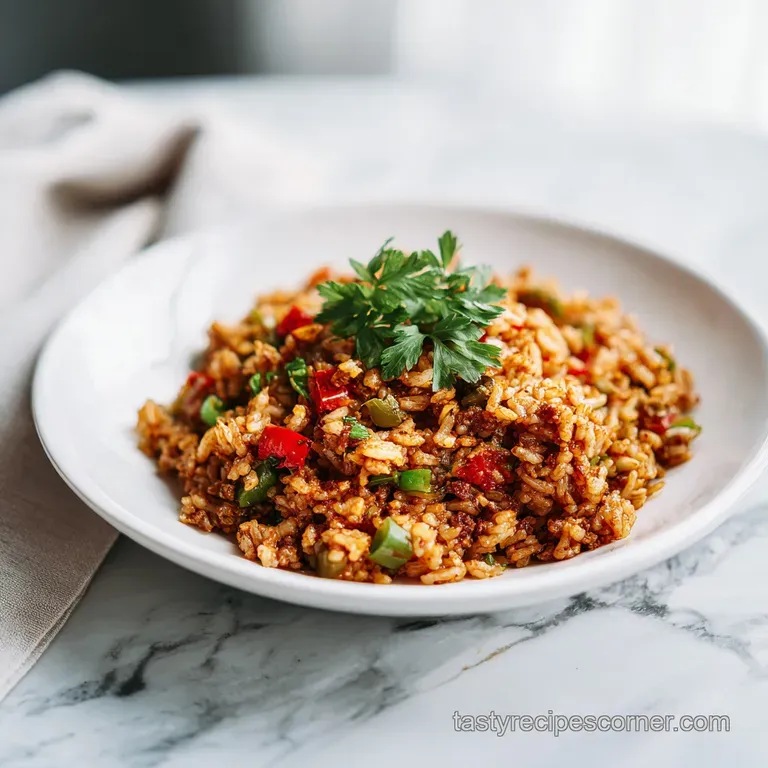
- Time: Active 20 minutes, Passive 35 minutes, Total 55 minutes
- Flavor/Texture Hook: Earthy, peppery, and fluffy with crispy meat crumbles
- Perfect for: Sunday family dinners or big batch meal prepping
- Master This Authentic Hearty Dirty Rice Recipe
- Why This Hearty Southern Dish Works
- Analyzing Components for Maximum Flavor Depth
- Essential Ingredients and Smart Substitutes
- Necessary Tools for Perfect Searing
- Layering Flavors Step by Step
- Solving Common Texture and Taste
- Flavor Swaps for Every Occasion
- Safe Storage and Zero Waste
- Finishing Touches and Serving Ideas
- Myths Regarding Cajun Rice Dishes
- Recipe FAQs
- 📝 Recipe Card
Master This Authentic Hearty Dirty Rice Recipe
The moment that hot pork sausage hits the cast iron and sends a cloud of sage and cayenne through my Tennessee kitchen, I know it’s a good day. There is a specific, heavy sizzle that happens when the 80/20 ground beef meets the rendered fat of the sausage, creating those little crispy, dark brown bits we call the fond.
It’s not just cooking; it's building a foundation of flavor that reminds me of Sunday afternoons where the humidity was high but the spirits were higher.
I used to be intimidated by the idea of "dirty" rice because of the livers, but honestly, that’s where the soul lives. When you mince them fine enough, they don't taste "offal" at all they just provide this velvety, mineral depth that makes the rice feel expensive and rich.
This isn't a dish that's meant to look pretty in a gourmet magazine; it’s meant to be piled high on a plate next to some fried catfish or collard greens, steaming and fragrant.
We’re going to walk through how to layer these flavors so they don't just sit on top of each other but actually melt together. You’ll learn how to treat the rice like a sponge for all that beefy goodness while keeping the grains separate and distinct. No mushy rice allowed in this house.
Let's get that skillet hot and start building something truly comforting.
Why This Hearty Southern Dish Works
Understanding the mechanics of this dirty rice recipe helps you avoid the common pitfalls of soggy grains or flat flavor. We aren't just boiling rice; we are performing a series of flavor extractions that turn a simple grain into a vehicle for umami.
- The Fat Barrier: By stirring the dry rice into the rendered meat fat before adding liquid, we coat each grain in a hydrophobic layer. This prevents the rice from absorbing water too quickly and exploding into a mushy texture.
- Fond Extraction: The dark crust left on the bottom of the pan after searing the beef and sausage contains concentrated protein sugars. The moisture from the "Holy Trinity" (onion, pepper, celery) deglazes the pan, lifting those savory notes into the sauce.
- Mineral Enrichment: Chicken livers act as a natural flavor intensifier. When finely minced, they dissolve into the "gravy" of the meat mixture, providing a creamy mouthfeel and a deep, savory anchor that salt alone cannot achieve.
- Starch Control: Rinsing the long grain rice removes excess surface starch. Without this step, the cooking liquid would turn into a thick paste, causing the grains to stick together in clumps rather than remaining fluffy and separate.
| Meat Cut | Internal Temp | Rest Time | Visual Cue |
|---|---|---|---|
| Ground Beef (80/20) | 160°F | 2 mins | No pink, deep brown crumbles |
| Hot Pork Sausage | 160°F | 2 mins | Crispy edges, rendered oil |
| Chicken Livers | 165°F | 1 min | Firm, brown, no gray center |
Using a cast iron skillet for this process is non negotiable for me because it holds heat so evenly. The way the metal interacts with the proteins creates a superior sear compared to non stick pans. If you're looking for another comfort classic to add to your rotation, you might find my Crock Pot Chicken Chimichangas hits that same satisfying, crispy meets tender note that makes family dinner so special.
Analyzing Components for Maximum Flavor Depth
Every ingredient in this list serves a structural or aromatic purpose. We aren't just throwing things in a pot; we are composing a symphony of textures and scents that define the Creole experience.
| Ingredient | Science Role | Pro Secret |
|---|---|---|
| Long grain White Rice | Structural base | Rinse until water is crystal clear to ensure fluffiness. |
| Chicken Livers | Umami anchor | Mince while semi frozen to get them fine enough to "disappear." |
| Bone Broth | Flavor conductor | Use a broth with high gelatin content for a richer mouthfeel. |
| Holy Trinity (Onion/Pepper/Celery) | Aromatic foundation | Sauté until the onions are translucent but the celery still has a tiny bite. |
The ratio of meat to rice is what separates a side dish from a meal. This version is protein heavy, making it a "stick to your ribs" staple. The choice of 80/20 beef is intentional; we need that 20% fat to properly toast the rice grains later in the process.
Essential Ingredients and Smart Substitutes
To get that authentic cajun dirty rice recipe taste, you really need the pork sausage and the livers. However, I know life happens and sometimes the grocery store is out of the good stuff. Here is how you can pivot without losing the soul of the dish.
- 225g ground beef (80/20): Why this? Provides the beefy base and essential fat for toasting the rice grains.
- 225g hot pork sausage: Why this? Adds heat and sage notes that define the traditional Louisiana flavor profile.
- 115g chicken livers: Why this? The "dirty" element that provides deep, earthy umami and mineral richness.
- The Holy Trinity (150g onion, 120g green pepper, 100g celery): Why this? The vegetable backbone of all Creole and Cajun cooking.
- 400g long grain white rice: Why this? Holds its shape better than short grain varieties during the long simmer.
- 840ml beef or chicken bone broth: Why this? Offers more depth and protein than plain water or standard stock.
- Creole Spice Blend (Paprika, Cayenne, Thyme, Oregano): Why this? Builds the heat and herbaceous top notes.
| Original Ingredient | Substitute | Why It Works |
|---|---|---|
| Chicken Livers | Minced mushrooms | Adds earthy umami. Note: Lacks the iron rich depth of authentic versions. |
| Hot Pork Sausage | Ground turkey with sage | Lower fat. Note: Requires an extra tablespoon of oil for searing. |
| Beef Bone Broth | Vegetable Stock | Lighter flavor. Note: Use a mushroom based stock to maintain the "dirty" look. |
When you're building your spice cabinet for this, don't be afraid of the cayenne. It's meant to have a little "back of the throat" tickle that balances the richness of the fats.
Necessary Tools for Perfect Searing
You don't need a high tech kitchen to make this, but a few specific pieces of gear make the job much easier and the results much more consistent.
- Large Cast Iron Skillet or Dutch Oven: I prefer a 12 inch Lodge skillet. It provides enough surface area to sear the meat without crowding, which is the enemy of a good crust.
- Fine Mesh Sieve: This is essential for rinsing the rice. Standard colanders have holes too large, and you’ll lose half your grains down the drain.
- Wooden Spoon or Stiff Spatula: You need something sturdy to scrape the fond off the bottom of the pan. Metal spatulas can work in cast iron, but a flat edged wooden spoon is the gold standard for deglazing.
- Tight Fitting Lid: If your lid doesn't fit perfectly, steam escapes, and you end up with crunchy, undercooked rice. If yours is loose, place a piece of foil over the pot before putting the lid on.
Chef's Tip: If you find your rice often sticks to the bottom, try using a heavy bottomed Dutch oven. The thick base prevents "hot spots" that can scorch the rice during the 18 minute simmer.
Layering Flavors step-by-step
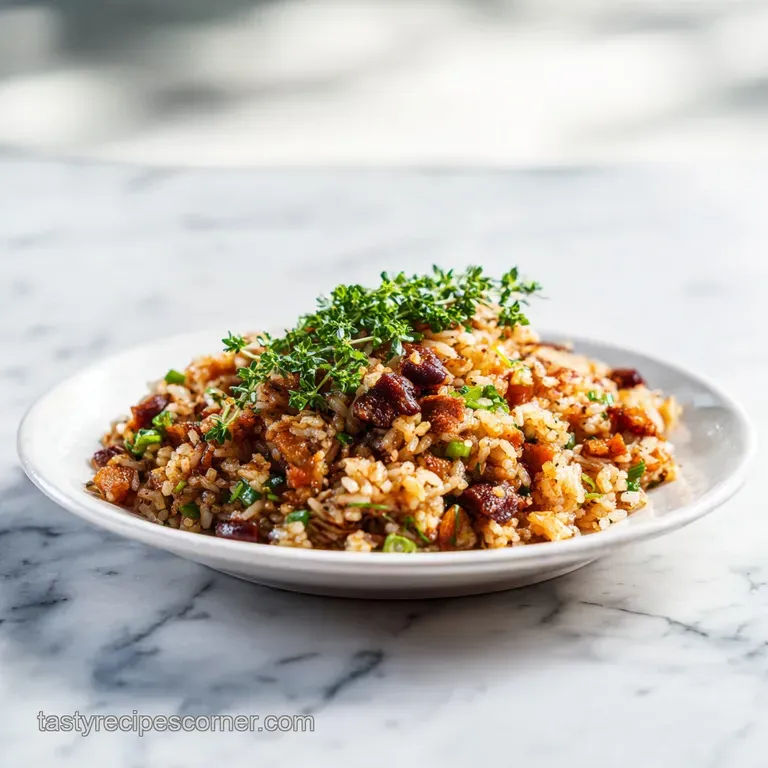
Follow these steps closely to ensure your homemade dirty rice with sausage has the correct texture and depth. Each stage builds on the last, so don't rush the browning process.
- Rinse the rice thoroughly in a fine mesh sieve under cold water until the water runs clear. Note: This removes the starch that causes stickiness.
- Sear the proteins by heating your skillet over medium high heat and adding the ground beef and pork sausage. Break them into crumbles and cook until a dark, crispy crust forms.
- Incorporate the livers by adding the finely minced chicken livers to the mixture. Sauté for 3-4 minutes until they are fully browned and integrated with the other meats.
- Sauté the Trinity by tossing in the diced onion, green bell pepper, and celery. Cook for 5-7 minutes until soft, using the vegetable moisture to scrape up the browned bits.
- Toast the aromatics by stirring in the minced garlic and spice blend. Fry for 1 minute until fragrant and the kitchen smells like a dream.
- Coat the grains by adding the rinsed rice to the pan. Stir constantly for 2 minutes to ensure every grain is shimmering with rendered fat.
- Simmer the mixture by pouring in the bone broth and bringing it to a rolling boil. Reduce heat to low, cover, and cook for 18-20 minutes.
- Rest and fluff the dish by removing it from the heat and letting it sit, covered, for 5 minutes. Gently fluff with a fork to separate the grains before serving.
The secret is in step 6. If you skip toasting the rice in the fat, you lose that "nutty" flavor and increase the risk of a gummy outcome. For those who love a variety of rice textures, my Mushroom Rice Recipe uses a similar toasting technique but with a focus on butter and fungi.
Solving Common Texture and Taste
Even the best cooks run into a batch of rice that doesn't quite behave. Here is how to diagnose and fix the most common issues with this simple cajun rice dish.
The Rice Grain Structure
If your rice feels like a brick or a puddle, it's usually a heat management issue. High heat during the simmer phase causes the liquid to evaporate before the rice heart has softened, leading to "crunchy center" syndrome. Conversely, lifting the lid too often lets out the steam needed to finish the grain.
Balancing the Salt Levels
Because we use bone broth and sausage, the salt levels can escalate quickly. Always taste your mixture before the final simmer. If it tastes slightly too salty, don't panic the rice will absorb a significant portion of that seasoning as it expands.
| Problem | Root Cause | Solution |
|---|---|---|
| Crunchy rice | Not enough liquid or heat too high | Add 2 tbsp broth, cover, and steam on low for 5 mins. |
| Greasy mouthfeel | Too much fat rendered from meat | Blot excess fat with a paper towel before adding rice. |
| Bitter flavor | Garlic or spices burnt during toasting | Add a pinch of sugar or extra onion to balance the char. |
Common Mistakes Checklist
- ✓ Never skip the rice rinse; starch is the enemy of fluffy dirty rice.
- ✓ Don't peek! Lifting the lid during the simmer ruins the steam cycle.
- ✓ Mince the livers as small as possible so they provide flavor without chunky texture.
- ✓ Use room temperature broth to avoid shocking the hot pan and stalling the cook.
- ✓ Let the rice rest for the full 5 minutes after cooking to finish the hydration.
Flavor Swaps for Every Occasion
While this easy dirty rice recipe with ground beef is a classic, you can scale it or change the protein to fit your crowd.
Adjusting for Large Groups
When doubling this recipe (serving 14), use a large stockpot or two Dutch ovens. Increase the salt and spices to only 1.5x the original amount, then adjust at the end. Large volumes of rice trap more steam, so reduce the total liquid by about 10% to prevent the bottom from becoming soggy.
Quick Weeknight Speed Hacks
If you're in a rush, you can use pre cooked rice. Simply cook the meat and vegetable mixture as directed, but reduce the broth to 120ml. Toss in 4 cups of cooked rice and simmer uncovered for 5 minutes until the liquid is absorbed and the flavors have melded.
It’s not quite as deep in flavor, but it gets the job done in half the time.
| Method | Time | Texture | Best For |
|---|---|---|---|
| Traditional Stovetop | 55 mins | Fluffy, layered | Authentic Sunday dinner |
| Cast Iron Finish | 60 mins | Crispy bottom (Socarrat) | Texture lovers |
| Quick Prep Hack | 25 mins | Softer, less integrated | Busy Tuesday nights |
Safe Storage and Zero Waste
Dirty rice is one of those rare dishes that actually tastes better the next day. The spices have time to fully permeate the rice grains, and the fats solidify into a rich coating.
- Fridge Storage: Keep in an airtight container for up to 4 days. When reheating, add a splash of broth or water to restore moisture, as rice tends to dehydrate in the cold.
- Freezer Guidelines: This dish freezes beautifully for up to 3 months. Thaw overnight in the fridge before reheating on the stovetop over low heat.
- Zero Waste Tip: Don't throw away the celery leaves! Chop them up and mix them with the green onions for a bright, herbal garnish that adds a punch of fresh flavor. If you have leftover meat trimmings, they can be simmered with your next batch of bone broth for extra richness.
Finishing Touches and Serving Ideas
Presentation is where you can make this "ugly" dish shine. I always save a generous handful of sliced green onions for the very end. The bright green against the deep, "dirty" brown of the rice makes the dish pop.
For a complete Southern feast, serve this alongside some hot sauce and a side of cornbread. If you're looking for a refreshing drink to cut through the spice and richness, an Authentic Homemade Horchata provides a creamy, cinnamon laced contrast that cools the palate perfectly.
Another fun way to serve this is as a stuffing for bell peppers. Simply spoon the finished rice into hollowed out peppers, top with a little cheddar cheese, and bake at 350°F (180°C) until the peppers are tender.
It turns a one pot meal into a fancy looking dinner with almost zero extra effort.
Myths Regarding Cajun Rice Dishes
There are plenty of misconceptions about what makes a "real" dirty rice recipe, mostly fueled by restaurant versions that take shortcuts.
Myth: The "Dirty" color comes from soy sauce. Truth: Absolutely not. The color comes from the finely minced livers and the fond (browned bits) from searing the beef and sausage. Using soy sauce adds a saltiness and flavor profile that is completely foreign to Cajun cuisine.
Myth: You must use specialized "Creole" rice. Truth: Any high-quality long grain white rice will work perfectly. The technique of rinsing and toasting is far more important than the brand of rice you buy.
Myth: Dirty rice and Cajun rice are the same thing. Truth: While similar, traditional dirty rice must include organ meats (livers or gizzards) to earn the name. Cajun rice (or "brown rice" in some parishes) often just uses ground meat and the Trinity without the offal component.

Recipe FAQs
What are the ingredients for dirty rice?
This dish requires ground beef, hot pork sausage, and finely minced chicken livers as the base. You will also need the "Holy Trinity" of onion, green bell pepper, and celery, plus garlic, long grain white rice, and beef or chicken bone broth seasoned with paprika, cayenne, thyme, oregano, black pepper,
and salt.
Is fried rice good for dialysis patients?
No, this dish is typically not suitable for those on dialysis. The high levels of sodium in bone broth and spice blends, combined with the phosphorus content in meat and rice, usually exceed standard dietary restrictions for kidney health.
How to make rice healthy for diabetics?
Control the starch content by rinsing the long grain rice in a fine mesh sieve until the water runs clear before cooking. If you enjoyed mastering the fat barrier technique here to keep grains separate, you can apply similar logic to manage how fats and fiber impact the digestion rate of your starches.
Is dirty rice a healthy meal?
It depends on your nutritional goals. While it provides high-quality protein and nutrients from chicken livers, it is a calorie dense dish with 452 kcal per serving, making it more appropriate as a hearty main rather than a low-calorie side.
How to prevent the rice from getting mushy?
Stir the dry, rinsed rice in the rendered meat fats for 2 minutes before adding the broth. This step coats every grain, creating a barrier that prevents excess moisture absorption and ensures a fluffy texture.
How to properly cook the chicken livers?
Mince the livers as finely as possible and cook them with the meat mixture for 3-4 minutes until browned. This ensures the iron rich flavor integrates fully into the dish without leaving large, distinct pieces of liver texture.
Is it true I can lift the lid to check if the rice is done?
No, this is a common misconception. Lifting the lid during the 18-20 minute simmer releases essential steam, which ruins the cycle required to cook the rice evenly and often leads to an unevenly textured final dish.
Authentic Louisiana Dirty Rice
Ingredients:
Instructions:
Nutrition Facts:
| Calories | 452 kcal |
|---|---|
| Protein | 17.9 g |
| Fat | 14.1 g |
| Carbs | 49.3 g |
| Fiber | 1.8 g |
| Sugar | 1.4 g |
| Sodium | 586 mg |
